Product Overview
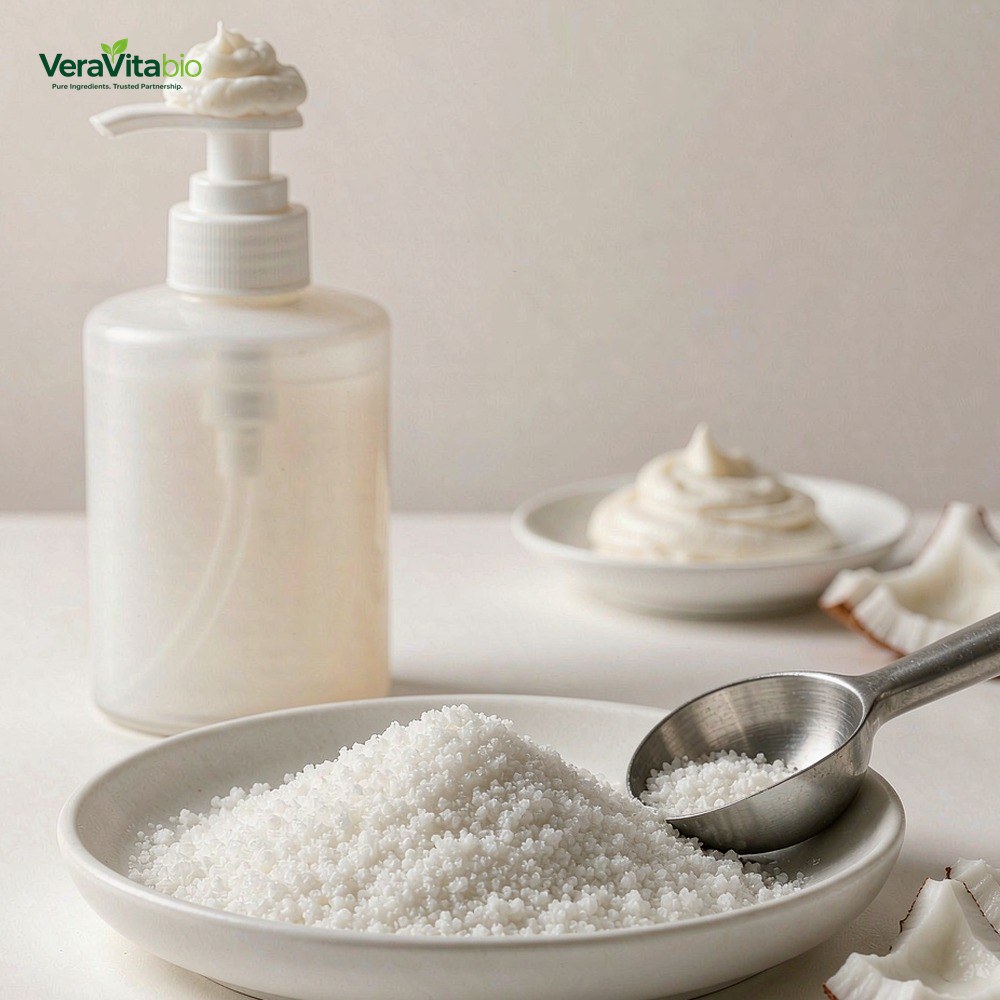
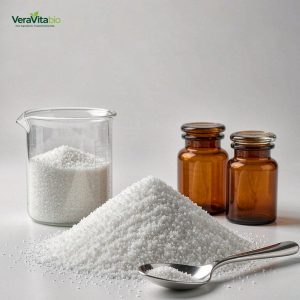
Sodium Cocoyl Glutamate (SCG; Chinese name 椰油酰谷氨酸钠) is the monosodium salt of N-cocoyl-L-glutamic acid — a coconut-fatty-acid chain (predominantly C12 lauroyl and C14 myristoyl homologues) joined through an amide bond to the amino-acid head of L-glutamic acid, with one of the two carboxyl groups neutralised to sodium. INCI Sodium Cocoyl Glutamate, CAS 68187-32-6, EC 269-087-2; the nominal headgroup formula is C5H9NO4·Na (the molecular weight varies with the coconut-chain distribution). It is supplied as a colourless to pale-yellow clear liquid at 25–30% active or as a white to off-white powder at ≥95% (high-purity grades ≥99%), with the faint natural coconut note typical of the acyl chain.
The industrial route is a Schotten–Baumann acylation: coconut fatty acids are converted to the acid chloride and reacted with fermentation-derived L-glutamic acid (commercially, monosodium glutamate from corn or cane fermentation) in alkaline water, then neutralised. Two consequences matter commercially. First, the acyl chloride step generates sodium chloride as a stoichiometric by-product — which is why NaCl carries its own spec line (≤ 1.0% on the 30% liquid) and is the fastest single read on how well a plant washes its product. Second, the glutamate comes from fermentation and the chain from coconut oil, so the ingredient is plant-derived and readily biodegradable — the basis of its ECOCERT / COSMOS acceptance and of every “amino-acid surfactant” claim on the retail shelf.
VeraVita Bio supplies cosmetic-grade SCG in both physical forms with COA, SDS and documentation. We quote the lines that actually separate one amino-acid surfactant plant from another: which sodium salt you are buying, pH with its dilution basis, NaCl, and active matter on a stated solids basis.
Key Features
- Mono-sodium or di-sodium — the first question on any quotation. Sodium Cocoyl Glutamate is the monosodium salt (CAS 68187-32-6, EC 269-087-2); Disodium Cocoyl Glutamate is a different INCI with two sodium ions (CAS 68187-30-4, EC 269-085-1, CosIng 75827), a near-neutral-to-alkaline pH (typically 6.0–7.0) and one extra hydrophilic group, which buys easier initial solubility and easier clear systems at the cost of the acidic, skin-close character. Both trade as “sodium cocoyl glutamate” in some catalogues; a quotation that does not state the salt is not a comparable price.
- The pH window is the formulation constraint. SCG is a carboxylate surfactant: it delivers its best stability, foam and skin compatibility around pH 5.2–6.5. Push the system below roughly pH 5 and the carboxylate protonates to cocoyl glutamic acid, which is markedly less water-soluble — expect haze, then precipitation. Push it above pH 7 and foam volume falls while the “acidic, skin-barrier-friendly” positioning that justifies the ingredient disappears. A 30% liquid reads pH 6.5–7.5 at a 10% dilution (25 °C); a ≥95% powder reads pH 5.0–6.0 at 5%. Always read a supplier pH figure together with its grade and dilution — a one-unit difference moves the free-acid fraction materially.
- Mildness with actual human data, not just marketing. In a published head-to-head, Corazza et al. patch-tested eight surfactant classes in 105 patients (Dermatitis 2010; PMID 20920412): none of the eight produced allergic reactions or induced irritation, and the best tolerated were sodium cocoyl glutamate and sodium lauroyl oat amino acids among the anionics. The CIR Expert Panel’s safety assessment of amino acid alkyl amides (Burnett et al., Int. J. Toxicol. 2017; 36(Suppl 1):17S–56S; PMID 28553738) concluded the family is safe in present practices of use when formulated to be non-irritating — noting honestly that the read-across anchor was the highest-use members, lauroyl lysine and sodium lauroyl glutamate. Mildness is a property of the finished system and its pH, not of the INCI name alone.
- Creamy foam, not voluminous foam — plan the co-surfactants. SCG produces a fine, dense, creamy lather with a comfortable after-feel and low degreasing, but its foam volume is modest next to SLES. Real formulas pair it with cocamidopropyl betaine, alkyl polyglucosides or SCI to build density and flash foam. It is not a drop-in 1:1 SLES replacement by weight — the cleanser must be reformulated, and most successful ones keep 20–40% of the foaming package as co-surfactants.
- Hard-water tolerance is a quiet commercial advantage. Unlike soap, the calcium and magnesium salts of acyl glutamates stay reasonably soluble, so the lather does not collapse and no bath-tub ring forms in hard-water markets — supplier data show foam and cleansing efficiency essentially unchanged with Ca/Mg ions. Chelation (phytic acid or a whisper of EDTA) still helps colour stability and foam top-end.
- Natural-origin and biodegradability credentials. Coconut-derived chain + fermentation glutamate, accepted by ECOCERT / COSMOS frameworks, readily biodegradable (supplier data commonly quote >90% in 28 days), compliant with EU CosIng listing, REACH and China IECIC. The claim belongs to the ingredient route — the finished formula still needs its own certification.
How It Works
Surfactant mildness is mostly monomer physics. Irritation tracks how much single-molecule surfactant penetrates the stratum corneum and denatures skin proteins. SCG’s headgroup is bulky and permanently ionised (a carboxylate with an amide-linked glutamate backbone), its CMC is low, and its micelles hold the monomer concentration down; the amide bond also makes the molecule chemically quieter than sulfate esters. Net effect: membranes and proteins are disturbed far less than with SLS/SLES at cleansing-effective doses — the mechanism behind both the patch-test result and the comfortable after-feel.
Cleansing follows the same anionic logic as any carboxylate — adsorption at the oil/water interface, roll-up and emulsification of sebum and particulate soil, rinsing away — but the balance point differs: acyl glutamates remove surface lipid soil without stripping barrier lipids to the same depth, which is why skin feels soft rather than tight after rinse-off. Foam quality is pH-dependent because the ionisation state of the carboxylate is: fully ionised near pH 6–7 for maximum solubility and lather, partially protonated below pH 5 as the free acid crashes out.
One positioning claim deserves caution: some marketing says SCG “releases glutamic acid on the skin, feeding the NMF”. The amide bond is hydrolysis-resistant at cosmetic pH and room temperature, so meaningful in-situ glutamate release during a 30-second wash is not a defensible mechanism. The comfortable after-feel is real; build claims on the mildness data, not on NMF feeding.
Compatibility boundary: as an anionic, SCG is broadly compatible with non-ionics, amphoterics and other anionics. With cationic conditioning polymers (Polyquaternium-10, cationic guar) the anion/cation interaction forms coacervates — exploitable at low levels for 2-in-1 deposition, but it must be tuned, or it turns into precipitation and lost conditioning.
Typical Applications
- Amino-acid facial cleansers — the core use: SCG as primary surfactant at roughly 5–20% of a 25–30% liquid (1.25–5% active), or as powder at 8–30% active in cleansing powders and syndet bars; positioned for sensitive, dry and post-procedure skin.
- Sulfate-free shampoos and body washes — 15–40% of the liquid grade (3.75–10% active) with CAPB / APG / SCI co-surfactants; pairs with our Cocamidopropyl Betaine, Sodium Cocoyl Isethionate, Sodium Cocoyl Glycinate and Coco-Glucoside pages for complete mild-cleansing packages.
- Baby and sensitive-skin lines — where the human patch-test record and the pH 5.5–6.5 window are the whole point; tear-free positioning still requires the finished-product ocular work.
- Conditioning / 2-in-1 systems — SCG anionic base with low-level cationic polymer for coacervate deposition; see our Polyquaternium-10, Cationic Guar and BTMS-50 pages.
- Oral care — 1–3% in toothpaste and mouthwash where a mild, low-flavour-distortion foaming agent is wanted.
- Shaving, makeup removal and intimate hygiene — creamy low-volume foam and barrier-respectful rinse-off fit these formats; leave-on exposure should be kept ≤ 2.5% active.
Key Specifications
| Parameter | Specification (cosmetic grade, typical offer) |
|---|---|
| INCI name | Sodium Cocoyl Glutamate |
| CAS No. / EC No. | 68187-32-6 / 269-087-2 (monosodium salt) |
| Chemical identity | N-cocoyl-L-glutamic acid, monosodium salt; C8–C18 homologue mixture (C12/C14 dominant) |
| Appearance | 30% grade: colourless to pale-yellow clear liquid · powder grade: white to off-white crystalline powder |
| Active matter / solids | Liquid 25.0–30.0% · powder ≥95.0% (high-purity ≥99.0%) |
| pH (25 °C) | Liquid 6.5–7.5 (10% aq.) · powder 5.0–6.0 (5% aq.) — always read with grade and dilution |
| Sodium chloride | ≤ 1.0% (route fingerprint — acyl chloride by-product) |
| Transmittance / colour | ≥ 90% · Hazen ≤ 50 (liquid) |
| Water solubility | Readily soluble with gentle warming (up to ~50 °C for the powder); solubility drops sharply below pH ~5 as the free acid forms |
| Heavy metals / arsenic | Pb ≤ 10 mg/kg · As ≤ 2 mg/kg |
| Microbiology | Total plate count ≤ 100 CFU/mL (or /g); pathogens absent |
| Preservative (liquid) | None, or sodium benzoate on some grades — declared per lot |
| Recommended use level | Rinse-off: 1.25–10% active · oral care 1–3% · leave-on ≤ 2.5% active |
| Shelf life | Liquid 18 months unopened, protected from light · powder 12–24 months, cool & dry |
Active-matter arithmetic: a “30%” liquid is ~30% solids (active matter plus dissolved salts), not 30% purity of a concentrate you can dilute to 100%. Price per kilogram of solution and price per kilogram of active matter differ by roughly 3.3× — quotes that do not state the basis are not comparable, and freight on water is a real cost at scale.
Formulation & Handling Notes
- Build the system inside pH 5.2–6.5. Dissolve/hydrate first (gentle heat to ~50 °C for the powder; the liquid is cold-processable), then adjust final pH with citric or lactic acid. Below ~pH 5 the free acid precipitates; above ~pH 7 foam drops and the positioning is lost. If clarity clouds after acid adjustment, add CAPB or APG as solubilising co-surfactants rather than more base.
- The salt curve is not the SLES salt curve. Carboxylate surfactants respond to electrolytes differently from sulfate ether sulfates: NaCl additions that thicken an SLES system can flatten or thin an acyl-glutamate system. Build viscosity with amphoterics (CAPB), alkyl polyglucosides, PEG-120 methyl glucose dioleate or gum/ polymer thickeners (our Xanthan Gum E415 page covers the hydrocolloid route), and construct the salt curve empirically for the exact grade.
- Preservation needs intent. pH 5–6.5 is hospitable to moulds and yeasts, and a surfactant raw material is not self-preserving. Confirm whether the liquid grade ships with sodium benzoate and declare it in the INCI list; finish with an appropriate system (phenoxyethanol/ethylhexylglycerin or benzoate+sorbate) validated by an ISO 11930 challenge test.
- Colour and odour are quality signals. The liquid should stay colourless-to-pale-yellow (Hazen ≤50); darkening on storage tracks heat, light and trace metals — store away from light, keep headspace low, and treat a yellowing lot as an oxidation flag.
- Cationic conditioning: dose carefully. Small amounts of Polyquaternium-10 or cationic guar coacervate usefully for deposition; excess causes anionic/cationic complexation, haze and viscosity collapse. Screen the pair in the finished surfactant base, not in water.
- Packaging of the raw material: 30% liquid in 200 kg drums or IBC; powder in 25 kg fibre drums or cartons with double PE liner. Protect the liquid from light and frost.
Regulatory Position
European Union. Sodium Cocoyl Glutamate is listed in CosIng with surfactant / cleansing functions and has no entry in Annexes II–VI of Regulation (EC) 1223/2009 — no statutory concentration limit; safety is demonstrated through the CPSR by the Responsible Person, supported by the CIR amino-acid alkyl amide assessment (2017) and the published human patch-test record. Accepted by ECOCERT / COSMOS natural-cosmetics frameworks as a surfactant of natural origin.
China. Listed in the IECIC (Inventory of Existing Cosmetic Ingredients in China, 2021 edition) as 椰油酰谷氨酸钠, with no statutory maximum; ordinary-cosmetic filing (备案) applies — no special-cosmetic registration trigger unless claims drift into the regulated categories.
United States. Cosmetic use under the FDA framework; the CIR conclusion (safe as used, formulated to be non-irritating) is the reference safety position. No OTC monograph relevance unless therapeutic claims are made.
Customs classification. SCG is declared as an anionic organic surface-active agent under HS 3402.11 (“organic surface-active agents (other than soap), anionic, whether or not put up for retail sale”; China 10-digit code 3402110000, where Chinese customs declaration examples for 椰油酰谷氨酸钠 exist directly under this code). China MFN import duty 6.5%, VAT 13%, export VAT rebate 13%. As with every surfactant classification, confirm the code with your broker for the exact grade and pack.
Why Choose VeraVita Bio
VeraVita Bio (Xi’an VeraVita Biotech Co., Ltd.) supplies Sodium Cocoyl Glutamate from audited Chinese amino-acid surfactant plants — the same fermentation-and-acylation cluster that supplies most of the world’s acyl glutamates — with lot-level traceability from coconut fatty acid and fermentation glutamate to finished grade. When you send an enquiry, please tell us: (1) the physical form and salt state you need — 30% liquid or ≥95% powder, mono- or di-sodium; (2) the application and target pH of your system, because the co-surfactant and viscosity guidance follow from it; (3) the destination market, so the documentation pack (CPSR support, IECIC documentation, ECOCERT/COSMOS paperwork) matches the rules in force; and (4) pack size and annual volume. We reply with pricing on a stated active-matter basis, the current-lot COA and a sample lead time.
Email: info@veravitabio.com | WhatsApp: +86 157 7194 0528
VeraVita Bio — Xi’an VeraVita Biotech Co., Ltd. | Botanical & Functional Ingredient Sourcing Partner
Email: info@veravitabio.com | WhatsApp: +86 157 7194 0528 | veravitabio.com
Need pricing, a sample or full documentation?
Send your specification, target volume and destination country — our team replies within one business day.
Disclaimer: The information provided is for general technical and commercial reference only and does not constitute regulatory, legal, medical or formulation advice. Sodium Cocoyl Glutamate’s regulatory status, permitted claims and classification vary by market and change over time; they must be verified against the requirements in force in the destination market before any product is labelled, marketed or shipped. The CIR conclusion applies to the amino-acid alkyl amide group as used and formulated to be non-irritating; mildness of the finished product must be established in the finished system. Supplier biodegradability figures, hard-water performance data and pH ranges are supplier data, not independent findings. Specifications are subject to batch confirmation from the lot COA; grade, dilution basis and salt state must be read together when comparing quotations. HS-code classification practice varies by destination and form and must be confirmed with a licensed customs broker. Sodium Cocoyl Glutamate is a raw material supplied to qualified business customers, not a finished consumer product. Responsibility for finished-product safety, stability, shelf-life, labelling, claims and regulatory compliance in the destination market remains with the manufacturer.
Reviews
There are no reviews yet.