Product Overview
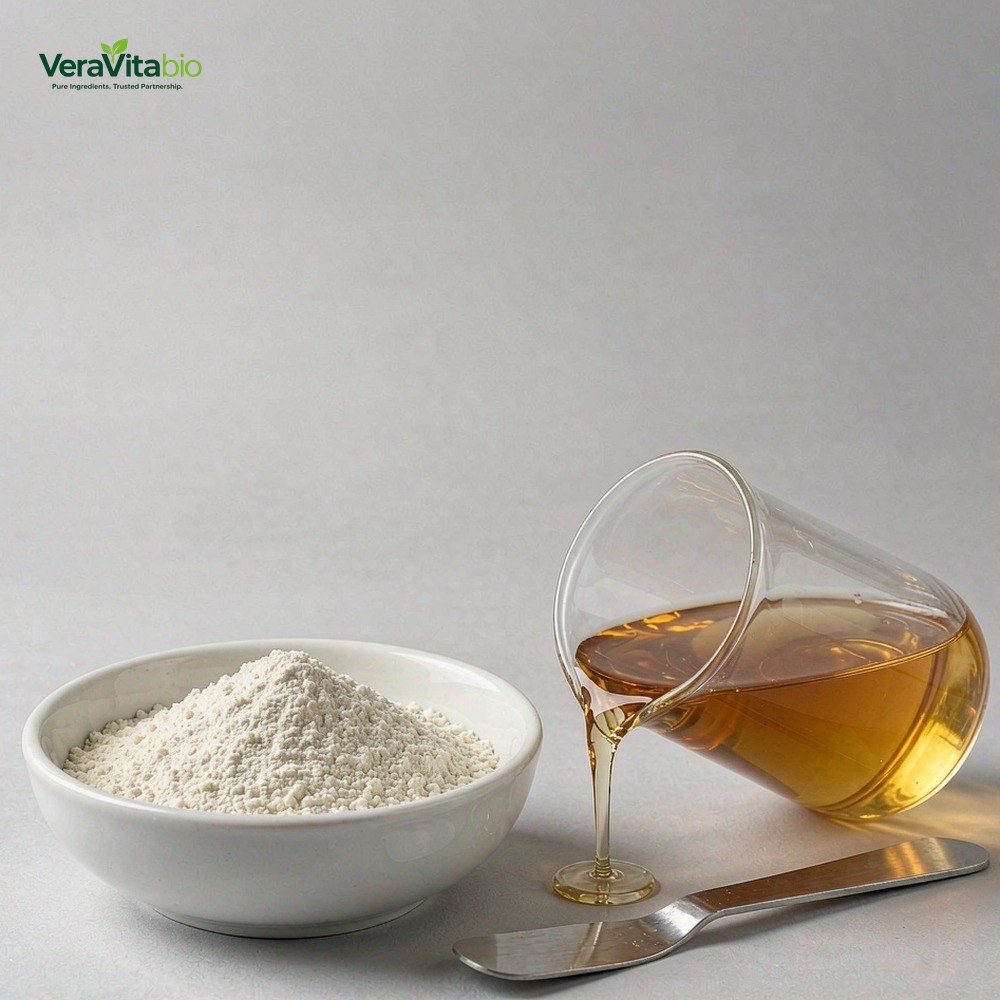
Xanthan Gum is an anionic, high-molecular-weight exopolysaccharide produced commercially by aerobic fermentation of the bacterium Xanthomonas campestris on glucose- or sucrose-based substrates, recovered by alcohol precipitation and dried and milled to the required particle size. It is designated E415 in the EU, INS 415 internationally, and CAS 11138-66-2 / EINECS 234-394-2 in chemical registries. China is the world’s largest producer and exporter of xanthan gum, supplying the majority of global capacity from dedicated fermentation plants in Shandong, Henan and Inner Mongolia.
Xanthan gum occupies a unique position among hydrocolloids for three reasons. First, an almost unrivalled stability envelope: its solution viscosity is essentially unchanged across pH 1–13, in systems containing up to 10–15% salt, through repeated freeze–thaw cycles and through 120 °C retort sterilisation — where most other gums thin, precipitate or break. Second, strong shear-thinning rheology with genuine yield stress: xanthan solutions pour easily under shear yet suspend particles, pulp and herbs indefinitely at rest, which is why it is the default suspending agent in sauces, dressings and beverages. Third, regulatory maturity: xanthan gum is approved essentially worldwide, with JECFA setting its ADI at “not specified”, reflecting one of the cleanest safety profiles in the additive family.
VeraVitabio supplies xanthan gum in food grade (E415, 80 and 200 mesh), agglomerated rapidly-dispersible grade for instant beverages, cosmetic/pharma grade (USP/NF conforming) and oilfield grade, from 1 kg trial packs to container loads.
Key Features
- 1% viscosity 1,200–1,600 cP (1% in 1% KCl, Brookfield LVDV, 25 °C) — the standard trading specification; batch-verified on every COA.
- pH-insensitive performance (pH 1–13) — viscosity is maintained from vinegar-based dressings to alkaline personal-care and detergent systems.
- Outstanding salt tolerance — viscosity unaffected in high-salt sauces, brines, marinades and surfactant blends where gums such as CMC or carrageenan lose performance.
- True suspension capability — a yield stress keeps pulp, herbs, particulates and pigments evenly dispersed with no settling and no long-term creaming.
- Heat, freeze–thaw and retort stable — recommended for hot-fill, UHT and retorted products and for frozen systems needing ice-crystal control.
- Proven synergies — with locust bean gum forms a thermoreversible elastic gel; with guar gum a pronounced viscosity boost — enabling texture engineering and cost optimisation.
- Grades for every process — 80-mesh standard, 200-mesh fine powder for fast hydration, and agglomerated / pre-dispersible (RD-type) grade that wets out without fisheyes in dry-mix beverages.
- Clean-label compatible — non-GMO supply route available with IP documentation; fermentation-derived and suitable for vegan, HALAL and KOSHER formulations.
How It Works
Xanthan’s molecular architecture explains nearly every practical property it is bought for.
1. Structure — a rigid, charged cellulose backbone. The polymer has a β-(1→4)-D-glucose backbone identical to cellulose, bearing a trisaccharide side chain (mannose – glucuronic acid – mannose) on every other glucose unit, with internal pyruvate and acetate substituents. These charged side chains hold the chain in a stiff, extended conformation that resists collapse under heat, acid and salt — the molecular reason viscosity survives where other gums fail. Typical molecular weight is around 2×10⁶ Da.
2. Rheology — shear-thinning with yield stress. In solution, xanthan chains form weakly associated networks. Under shear (pumping, pouring, shaking) the network aligns and viscosity drops by orders of magnitude, so the product flows easily; at rest the network re-forms within seconds, giving a yield stress that holds particles in suspension and a body or “cling” in sauces. Viscosity recovers instantly and is completely reversible — no thixotropy damage over repeated cycles.
3. Synergies — controlled interaction with galactomannans. Guar gum (a substituted galactomannan) simply co-thickens, raising viscosity further at reduced total gum cost. Locust bean gum (a less-substituted galactomannan) associates directly with the xanthan backbone, producing a genuinely elastic, thermoreversible gel stronger than either gum alone — the classic system for pet-food gravies, dessert gels and ice cream.
Typical Applications
- Sauces, dressings and condiments — suspension of herbs, spices and pulp with cling and a rich mouthfeel; typically 0.1–0.6%, often blended with guar or LBG.
- Beverages — clouding and suspension of juice cells and cocoa at 0.02–0.1%; agglomerated grade for instant drink powders and protein shakes where smooth, fast hydration is critical.
- Gluten-free bakery — partially replaces gluten’s viscoelasticity, improving crumb structure, moisture retention and shelf life at 0.5–2% on flour weight.
- Dairy and desserts — ice cream (ice-crystal control, heat-shock protection), cream cheese and yogurt stabilisation, syrups and toppings.
- Personal care & oral care — INCI Xanthan Gum: thickener and suspension aid for shampoos, body washes, natural toothpastes (0.8–1.2%) and cosmetic serums (0.2–1.0%); a natural positioning answer to carbomer in sulfate-free and “naturally formulated” ranges.
- Household and industrial — gel air fresheners, detergents, paints, ceramic glazes, and by far its largest single market, oilfield drilling fluids, where salt and temperature tolerance are decisive.
- Pharmaceutical and pet formats — suspending agent in oral suspensions and in gravies/stews for wet pet food (frequently with LBG).
Key Specifications
| Parameter | Specification |
|---|---|
| INCI / Trade names | Xanthan Gum; E415 / INS 415; CAS 11138-66-2; EINECS 234-394-2 |
| Origin | Produced by fermentation of Xanthomonas campestris; China-sourced, export-grade |
| Viscosity (1% in 1% KCl) | 1,200–1,600 cP (Brookfield LVDV, spindle 3, 60 rpm, 25 °C); other cuts on request |
| Viscosity (1% in water) | typically 600–1,400 cP (lower than the KCl figure — see formulation notes) |
| Particle size | 80 mesh (≥95% through) standard; 200-mesh fine and agglomerated grades available |
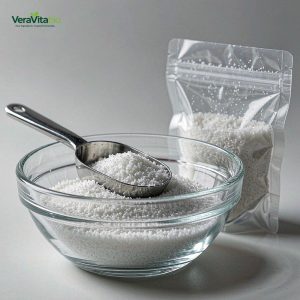
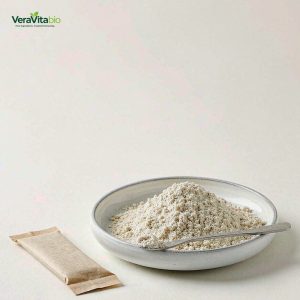
| Appearance | White to cream-coloured free-flowing fine powder, slight characteristic odour |
| pH (1% solution) | 6.0–8.0 |
| Loss on drying | ≤ 15% (JECFA) |
| Ash (total) | ≤ 16% (JECFA) |
| Total nitrogen | 0.7–1.6% (JECFA) |
| Pyruvic acid | ≥ 1.5% (JECFA) |
| Isopropanol residue | ≤ 500 mg/kg (EU 231/2012 limit; JECFA permits ≤ 750 mg/kg) |
| Heavy metals | Pb ≤ 2 ppm; As ≤ 3 ppm; heavy metals (as Pb) ≤ 20 ppm |
| Microbiology | Total plate count ≤ 2,000 cfu/g; yeast & mould ≤ 100 cfu/g; E. coli and Salmonella absent / 25 g |
| Regulatory references | FDA 21 CFR 172.695 (US); EU Regulation (EC) No 1333/2008 with E415 purity criteria; JECFA ADI “not specified”; China GB 1886.x national standard for xanthan gum; FCC / USP-NF grade available |
| Shelf life | 24 months in unopened original packaging |
| Packaging | 25 kg paper-plastic composite bags / fibre drums with PE liner; 1 kg / 5 kg trial packs available |
| Certifications | ISO 9001 / HACCP / HALAL / KOSHER; non-GMO documentation available on request |
Formulation Notes
- Normalise the viscosity test method before comparing quotes. Xanthan viscosity is specified as “1% in 1% KCl” in international practice; some certificates quote “1% in water”, which reads lower for the same material, and others omit the instrument setup entirely. Always compare like-for-like: concentration, solvent (KCl), instrument, spindle and speed. A certificate without the full method is not comparable.
- Dispersion is where xanthan projects fail. Fine-mesh powder hydrates on contact and clumps (“fisheyes”). Successful practice: pre-blend the gum with other dry ingredients (sugar, salt, protein powders) before adding to water, or add slowly into a vortex under high shear; agglomerated (RD-type) grades avoid the problem in dry-mix systems. Do not hydrate in strongly acidic liquid — add acid after the gum has fully hydrated (typically 15–30 minutes with warm water).
- Watch the salt timing, not the salt level. Xanthan tolerates very high final salt concentrations, but hydrate it in low-ionic water first where possible; viscosity develops best before the brine is added.
- In personal care, mind cationic combinations. Anionic xanthan is compatible with most anionic and nonionic surfactants (APGs, betaines, sarcosinates, sodium cocoyl glycinate) but high levels of cationic conditioning polymers can complex with it, causing haze or precipitation. In 2-in-1 shampoos, dose xanthan low and verify stability, or use it as the sole thickener in cationic-free “naturally mild” systems where it is excellent.
- Detecting adulterated or cut material. Genuine xanthan has a characteristic nitrogen (cell biomass residue) and pyruvate content; “xanthan gum” offered far below market price is frequently cut with guar gum or CMC. Require the full JECFA panel (nitrogen, pyruvic acid, isopropanol residue) — cheaper gums fail these tests — and run FTIR comparison against a retained reference if the supplier is new.
- Grade choice drives cost-in-use. 80-mesh is the most economical and fully adequate for dressings and bakery; 200-mesh hydrates faster and is preferred for toothpaste and clear cosmetics; agglomerated grade is worth its premium in instant beverages because it eliminates fisheye defects on the production line.
- GMO substrate declaration. The fermentation glucose is typically corn-derived. EU and some Asian customers require a non-GMO declaration with IP traceability — confirm this at RFQ stage rather than after order.
- Regulatory status is settled but market-specific wording is not. Xanthan gum is a permitted additive essentially worldwide (US, EU, China, JECFA “ADI not specified”); max-use levels are quantum satis in most food categories. Finished-product claims and regional additive-table confirmations remain the manufacturer’s responsibility.
Storage & Handling
Store in a cool, dry, well-ventilated area away from direct sunlight, heat sources and strong odours. Keep containers tightly closed when not in use and reseal promptly after sampling — the powder is hygroscopic and moisture pick-up gradually reduces viscosity. Recommended storage below 25 °C and below 60% relative humidity, on pallets rather than directly on the floor. Handle with standard powder dust-control practice (local exhaust ventilation, dust mask and gloves). Shelf life is 24 months in unopened original packaging; viscosity retesting against the release specification is recommended thereafter.
Why Choose VeraVitabio
- Method-verified quotation. We quote with the full viscosity test method, mesh cut and JECFA purity panel stated up front, so your incoming QC and our COA speak the same language.
- Batch documentation as default. COA with viscosity, pH, nitrogen, pyruvate, isopropanol residue, heavy metals and microbiology; MSDS, allergen, GMO and HALAL / KOSHER statements available as standard.
- Grade breadth from one supplier. 80-mesh, 200-mesh, agglomerated instant grade, cosmetic/pharma grade and oilfield grade can be combined in one shipment to cover an entire formulation portfolio.
- Trial-friendly quantities. 1 kg and 5 kg sample packs for formulation and stability work, scaling to 25 kg bags, pallet and container-load volume at production pricing.
- Stable China-side supply. Direct relationships with large-scale fermentation plants keep lead time, price and batch-to-batch viscosity consistency predictable across the year.
- Responsive technical support. Practical guidance on dispersion procedures, gum blending (LBG / guar synergies), use levels and label wording for your target market, provided during evaluation rather than after order.
Request a Quote
Tell us your required grade (80 mesh / 200 mesh / agglomerated / cosmetic or pharma grade), target application and annual volume, and we will respond with a quotation, current COA and available sample lead time. Trial quantities are dispatched quickly so you can validate viscosity and dispersion in your own process.
Email: info@veravitabio.com | WhatsApp: +86 157 7194 0528
VeraVita Bio — Xi’an VeraVita Biotech Co., Ltd. | Botanical & Functional Ingredient Sourcing Partner
Email: info@veravitabio.com | WhatsApp: +86 157 7194 0528 | veravitabio.com
Disclaimer: The information provided is for general technical and commercial reference only and does not constitute medical, regulatory or legal advice. Xanthan Gum is a bulk raw material supplied to qualified business customers, not a finished consumer product. Specifications are subject to batch confirmation. Use levels, purity criteria and additive-table status must be verified against the regulations of the destination market, and finished-product safety, labelling and claims remain the responsibility of the manufacturer.
Need pricing, a sample or full documentation?
Send your specification, target volume and destination country — our team replies within one business day.
Reviews
There are no reviews yet.