Product Overview
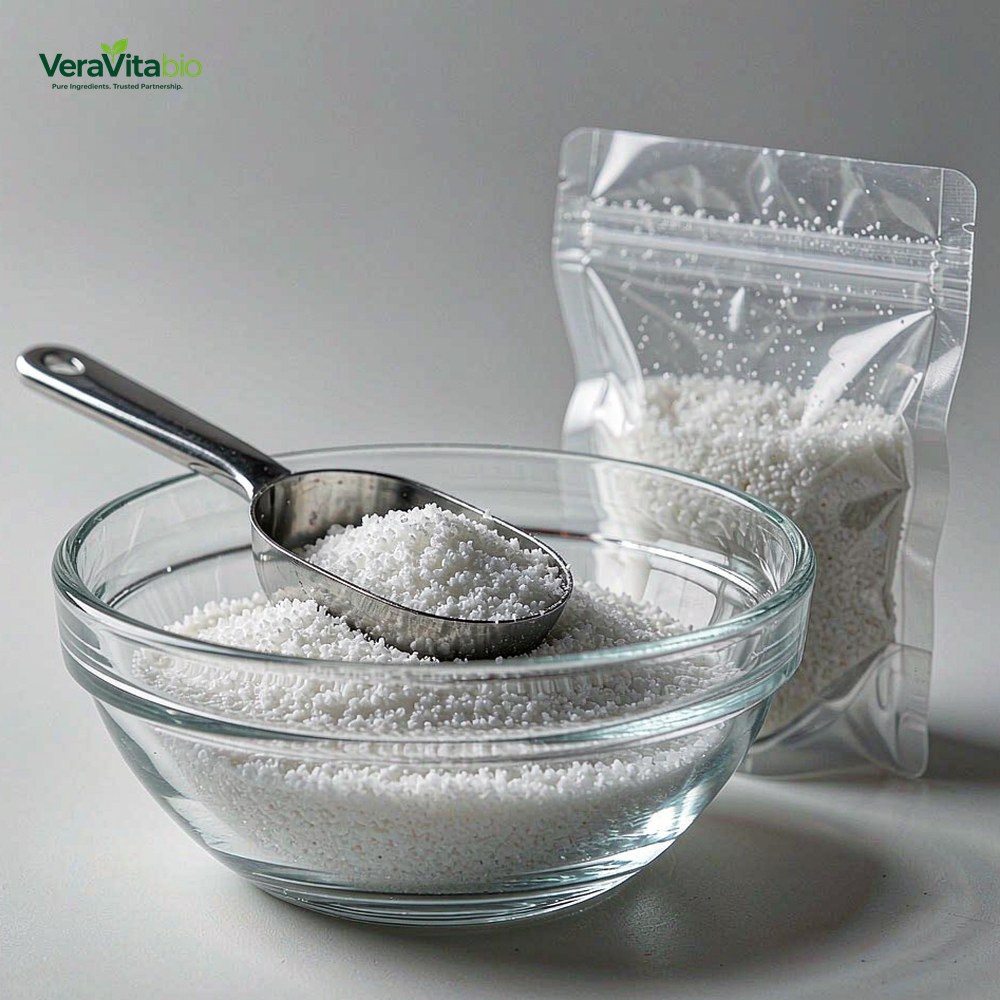
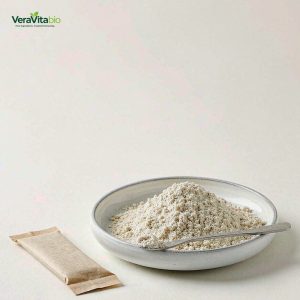
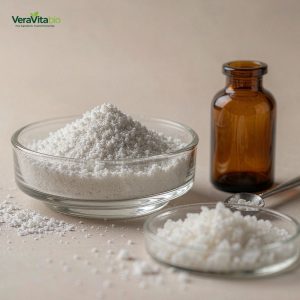
Sucralose is a non-caloric high-intensity sweetener manufactured by the selective chlorination of sucrose, in which three hydroxyl groups of the sugar molecule are replaced by chlorine atoms. The result is a molecule that is not recognised or metabolised as a carbohydrate by the human body, yet delivers a clean, sugar-like sweetness approximately 600 times stronger than sucrose (typical commercial range 400–800× depending on the application matrix). Approved for use in more than 100 countries and listed as E955 in the European Union, it carries the CAS number 56038-13-2 and is supplied as a white to off-white, odourless, free-flowing crystalline powder.
What keeps sucralose at the top of the global sweetener market after three decades is its processing robustness: unlike aspartame it survives pasteurisation, UHT treatment, retorting, extrusion and baking, and unlike saccharin or acesulfame-K it has no intrinsic bitter or metallic aftertaste at normal use levels. In practice, most modern “zero sugar” launches use it in combination with a bulk sweetener — erythritol, allulose or maltodextrin for body and mouthfeel, and stevia or monk fruit to round out the sweetness curve — which is exactly how our buyers build cost-optimised, clean-tasting systems.
Key Features
- Sweetness intensity ~600× sucrose — use levels in the 0.01–0.03% range, so cost-in-use per tonne of finished product is very low
- Clean sugar-like taste profile — no persistent bitter, metallic or liquorice off-note at typical use levels
- Heat stable — retains sweetness through baking, UHT, pasteurisation, retorting and extrusion
- pH stable — stable across the pH 3–7 range typical of beverages, dairy and fruit preparations
- Zero calories, zero glycaemic impact — not metabolised for energy, suitable for diabetic and keto-positioned products
- Non-cariogenic — not fermented by oral bacteria, suitable for sugar-free oral-care and confectionery
- Highly soluble — approx. 28 g / 100 mL in water at 20 °C; dissolves quickly in cold water for RTD beverages
- Excellent blending partner — synergistic with erythritol, allulose, stevia (Reb A / Reb M), monk fruit (Mogroside V) and polyols
- Multiple compendial grades — FCC, USP/NF, EP and JECFA specifications available; assay 98.0–102.0% on dried basis
- Particle-size options — granular (20–60 mesh), standard powder (80–100 mesh) and micronised (200–325 mesh) for tabletop and dry blends
How It Works
- Molecular substitution: replacing three hydroxyl groups on the sucrose molecule with chlorine atoms yields 1,6-dichloro-1,6-dideoxy-β-D-fructofuranosyl-4-chloro-4-deoxy-α-D-galactopyranoside. The change makes the molecule roughly 600× sweeter while preventing enzymatic cleavage.
- Receptor activation: sucralose binds the T1R2/T1R3 sweet-taste receptor on the tongue. Because the receptor response is what generates sweetness, the gram-per-kilogram load in a finished formulation drops by two to three orders of magnitude versus sugar.
- Pass-through metabolism: the majority of an ingested dose is not metabolised and is excreted unchanged; the small fraction that is hydrolysed yields chlorinated monosaccharides that pass through without contributing meaningful energy — hence the zero-calorie positioning.
- Thermal resilience: the chlorinated glycosidic bond resists hydrolysis under normal food-processing temperatures, which is why sucralose survives UHT and baking where aspartame degrades.
- Aqueous stability: in beverage systems held at pH 3–7, solution stability over shelf life is strong; prolonged storage at very low pH and elevated temperature will slowly hydrolyse the molecule, so formulation trials should confirm the target shelf life for high-acid, ambient-stored products.
- Synergy and masking: blending with bulk polyols (erythritol, allulose) restores the body and mouthfeel lost when sugar is removed, while small additions of stevia or monk fruit smooth the sweetness onset — the basis of most modern sugar-reduction systems.
Typical Applications
- Beverages: carbonated soft drinks, still and sparkling waters, juice drinks, iced tea and coffee, flavoured dairy and plant-based drinks, sports and energy drinks, powdered drink mixes
- Bakery: cakes, cookies, muffins, pastries, fillings and glazes — sweetness survives the oven
- Confectionery: sugar-free chewing gum, mints, hard candy, chocolate and compound coatings, fondants, jellies and gummies
- Dairy & frozen desserts: ice cream, yogurt and drinkable yogurt, flavoured milk, dessert creams and puddings
- Sauces, dressings & preserves: ketchup, salad dressings, barbecue and sweet-and-sour sauces, jams, marmalades and canned fruit
- Tabletop sweeteners: sachets, tablets and spoon-for-spoon granular blends bulked with erythritol or maltodextrin
- Nutraceuticals & sports nutrition: protein powders, meal replacements, collagen and collagen-peptide beverages, gummies, chewable tablets, sugar-free vitamin and mineral formats
- Pharmaceuticals: syrups, suspensions, lozenges, chewable and orally disintegrating tablets requiring a pleasant taste without sugar
- Oral care: toothpaste and mouthwash — non-cariogenic and stable in aqueous systems
- Pet food & animal nutrition: palatability enhancement in reduced-sugar treat and supplement formats
Key Specifications
| Product Name | Sucralose (food grade) |
|---|---|
| CAS Number | 56038-13-2 |
| EINECS / EC Number | 259-952-2 |
| E Number (EU) | E955 |
| Chemical Name | 1,6-Dichloro-1,6-dideoxy-β-D-fructofuranosyl-4-chloro-4-deoxy-α-D-galactopyranoside |
| Molecular Formula | C12H19Cl3O8 |
| Molecular Weight | 397.64 g/mol |
| Grade / Standard | FCC, USP/NF, EP, JECFA |
| Assay (on dried basis) | 98.0 – 102.0% |
| Appearance | White to off-white crystalline powder, free-flowing |
| Odour & Taste | Odourless; intensely sweet, sugar-like |
| Sweetness Intensity | Approx. 600× sucrose (application dependent) |
| Specific Rotation [α]D20 | +84.0° to +87.5° |
| Loss on Drying (moisture) | ≤ 2.0% |
| Residue on Ignition (sulphated ash) | ≤ 0.7% |
| pH (10% aqueous solution) | 5.0 – 7.0 |
| Solubility in Water | Approx. 28 g / 100 mL at 20 °C; freely soluble |
| Solubility in Ethanol / Methanol | Soluble (per compendial limits); practically insoluble in fixed oils |
| Methanol | ≤ 0.1% |
| Hydrolysis Products | Within FCC limits |
| Related Substances | Within FCC / EP limits (chlorinated sucrose derivatives controlled per batch) |
| Heavy Metals (as Pb) | ≤ 10 ppm |
| Lead (Pb) | ≤ 1 ppm |
| Arsenic (As) | ≤ 3 ppm |
| Microbiology | TPC ≤ 1,000 cfu/g; yeast & mould ≤ 100 cfu/g; E. coli and Salmonella absent / 25 g |
| Particle Size | 20–60 mesh (granular), 80–100 mesh (standard powder), 200–325 mesh (micronised) on request |
| Acceptable Daily Intake | JECFA / EU SCF: 0–15 mg/kg body weight; US FDA: 5 mg/kg body weight per day |
| Shelf Life | 24 months in unopened original packaging (36 months available on selected lots) |
| Packaging | 1 kg / 5 kg aluminium-foil bags (samples and small lots); 25 kg fibre drums or cartons with double food-grade PE liners |
| MOQ | Available on request |
Formulation Notes
- Use level: start from a 600× equivalence calculation against the sucrose load you are replacing, then tune by sensory panel — typical finished-product levels are 0.01–0.03% (100–300 ppm range for beverages, higher for confectionery).
- Restore the body: removing sugar also removes bulk, viscosity and browning. Pair sucralose with erythritol, allulose, polydextrose or maltodextrin to rebuild mouthfeel, and account for the lost browning in baked applications.
- Blend for curve: a 90:10 or 80:20 sucralose-to-stevia / monk-fruit ratio is a common commercial approach to round out the sweetness onset and lift the cost advantage further.
- Dissolution: sucralose dissolves quickly in cold water, but for concentrated pre-mixes prepare a 1–5% stock solution under moderate agitation to guarantee homogeneity before dosing into the main batch.
- High-acid systems: stability is good across pH 3–7, but for ambient-stored products below pH 3 with a long target shelf life, run an accelerated storage trial on your own matrix before locking the formula.
- Regulatory check: permitted use levels, maximum dosages and labelling requirements (including the EU “with sweetener(s)” statement) differ by market and category — confirm against the regulations of your destination country before launching.
- Handling in-plant: because the dose is tiny, weigh on a calibrated balance and pre-blend with a portion of the bulk sweetener or carrier to avoid distribution errors in the finished batch.
Storage & Handling
Store in the original, tightly closed container in a cool, dry, well-ventilated area away from direct sunlight, heat sources and strong odours. Recommended storage is below 25 °C with relative humidity under 60%. The powder is mildly hygroscopic — reseal partly used bags and drums promptly. Although sucralose is thermally stable under food-processing conditions, avoid prolonged exposure to temperatures above 120 °C in dry form. Use standard personal protective equipment (gloves, eye protection, dust mask) and avoid generating airborne dust during transfer and weighing.
Why Choose VeraVitabio
- Bulk B2B supply of food additives, sweeteners, plant extracts and functional ingredients — from sample quantities to full container loads
- Complete sweetener portfolio under one roof — sucralose, stevia (Reb A / Reb M), monk fruit (Mogroside V), erythritol, allulose and inulin, so blending systems can be sourced as one shipment
- Full documentation — COA against FCC / USP / EP / JECFA, MSDS, TDS, allergen and non-GMO statements available on request
- OEM / ODM support — custom sweetener blends, tabletop sachets and private-label formulation assistance
- Export experience to the US, EU, Middle East and Southeast Asia, with documentation support for importers and brand owners
- Vetted manufacturing partners with batch-level traceability and pre-shipment verification
Request a Quote — Sourcing sucralose (E955) for a beverage, bakery, confectionery or sugar-free supplement line? Send your required grade, particle size, assay and target volume to info@veravitabio.com or WhatsApp +86 157 7194 0528. Samples, COA and full documentation are available for qualified B2B buyers. Web: veravitabio.com
Need pricing, a sample or full documentation?
Send your specification, target volume and destination country — our team replies within one business day.
For food, beverage, nutraceutical and oral-care formulation use. This product is not intended to diagnose, treat, cure, or prevent any disease. Specifications shown are for general reference; full Certificate of Analysis and supporting documentation are available upon request. Buyers are responsible for confirming permitted use levels, maximum dosages and labelling requirements for sucralose (E955) in their target markets.
Reviews
There are no reviews yet.