Product Overview
Nisin (E 234 / INS 234; Chinese inventory name 乳酸链球菌素, CNS 17.019) is a 34-amino-acid antibacterial polypeptide — a class I bacteriocin (lantibiotic) — produced by controlled fermentation of Lactococcus lactis subsp. lactis (historically Streptococcus lactis, Lancefield group N). CAS 1414-45-5, EINECS 215-807-5, chemical formula C143H230N42O37S7, molecular weight 3,354.12. Its sequence is packed with post-translationally modified residues — the thioether amino acids lanthionine and β-methyllanthionine plus the unsaturated dehydroalanine and dehydrobutyrine — cyclised into five intramolecular thioether rings that give the molecule its rigidity and its target selectivity. Two commercial variants exist, nisin A and nisin Z (a single Asn27→Asp27 substitution); China’s GB 2760 lists both under the same name.
Nisin is the first bacteriocin ever approved as a food preservative: first reported in the late 1920s, commercialised in the 1950s as the reference preparation Nisaplin, cleared by the FAO/WHO in 1969, and affirmed GRAS in the United States in 1988 (21 CFR 184.1538). Today it is authorised in more than 60 countries, and China has become the world’s production centre — domestic producers account for roughly 70% of global output, with the global nisin market valued around USD 235 million in 2024 and forecast near USD 260 million in 2025.
Its commercial value is a single, rare property: it kills Gram-positive bacteria and stops their spores from growing out — including Listeria, Bacillus and Clostridium botulinum — at use levels of a few tens to a few hundred IU per gram of food, while being digested like a dietary peptide in the human gut. In practice, nisin may be evaluated as one hurdle within a product-specific preservation system. It does not establish commercial sterility or, by itself, justify reducing a scheduled thermal process; any process change requires validation for the exact food, package, process and target market by appropriately qualified process authorities.
VeraVita Bio supplies nisin preparation, potency ≥ 1,000 IU/mg (1×10⁶ IU/g), standardised on the conventional sodium-chloride carrier, with COA, SDS, non-GMO and HALAL / KOSHER documentation. We quote the numbers that actually differentiate one fermentation plant from another: potency in IU/mg by the JECFA-compatible assay, loss on drying, heavy metals, NaCl content, and the milk-derived-carrier allergen position.
Key Features
- The only preservative of its class: a spore-directed bacteriocin. Nisin’s most valuable effect is not killing vegetative cells — it is inhibiting the outgrowth of spores of Clostridium and Bacillus. Germinating spores are far more sensitive than the parent cells, which is why a few ppm of nisin in canned vegetables, processed cheese or cooked meats controls the organisms that ordinary heat treatment or acidification miss. Typical effective concentrations in food are 25–500 IU/g, matrix-dependent.
- A dual mechanism with no easy work-around for the target. Nisin binds lipid II — the membrane carrier every Gram-positive bacterium needs to build its cell wall — and uses it as a docking site to punch transient pores in the membrane. That is two lethal hits at once: peptidoglycan synthesis is blocked and intracellular K+ and ATP leak out, collapsing the proton-motive force. Because lipid II is essential and highly conserved, broad resistance has not emerged in more than fifty years of use.
- Potency is a bioassay number, not a purity number — read the units first. Commercial nisin is quoted in IU/mg. The conversion anchors everything: 1 IU = 0.025 µg of pure nisin, so 1 µg = 40 IU (JECFA 2013), putting pure nisin A near 4×10⁷ IU/g. The standard commercial grade, standardised at 1,000 IU/mg (1×10⁶ IU/g), is therefore about 2.5% nisin on a sodium-chloride carrier — and the EU E 234 specification requires the concentrate to hold ≥ 900 units/mg with a minimum 50% NaCl. A quote saying “nisin 99%” has told you nothing about activity; ask for IU/mg and the assay method (JECFA-compatible, HPLC validated against it).
- The EU purity set is short but sharp. E 234 in Commission Regulation (EU) 231/2012: loss on drying ≤ 3% (102–103 °C to constant weight), arsenic ≤ 1 mg/kg, lead ≤ 1 mg/kg, mercury ≤ 1 mg/kg, on the NaCl / non-fat-milk-solids carrier described above. China’s product standard is GB 1886.231-2016. A COA missing LOD or the heavy-metal block is not an E 234-compliant COA.
- Stable where most preservatives cook off — but only on the acid side. Nisin’s activity is most stable at pH 2–4.5: at pH 3.0–3.5 it withstands autoclaving at 121 °C for 15 min with less than 10% activity loss. Move toward neutrality and everything reverses — above roughly pH 6.5 activity and heat tolerance fall away rapidly, and heating near pH 7 destroys the bulk of the activity. Practical consequence: nisin is a tool for acid and low-acid chilled foods processed to a mild heat treatment, not for neutral-pH ambient shelf-stable systems on its own.
- Digested like a peptide, not persistent like a drug. Ingested nisin is rapidly hydrolysed by digestive enzymes (α-chymotrypsin) in the upper gastrointestinal tract to ordinary amino acids; it does not accumulate, does not alter gut flora and shows no cross-resistance with therapeutic antibiotics. Rat oral LD50 is of the order of 7,000 mg/kg. JECFA set the ADI at 0–2 mg/kg bw/day; EFSA’s 2017 re-evaluation (NOAEL 225 mg nisin A/kg bw/day in a 90-day rat study, uncertainty factor 200) raised the EU-side ADI from the old SCF value of 0.13 to 1 mg/kg bw/day and concluded that the estimated exposure stays below it for all population groups.
- One carrier question most quotations forget: milk. Nisin preparation is standardised on sodium chloride with non-fat milk solids — the EU specification says so explicitly. Milk is a priority allergen in the EU, US FALCPA and China’s GB 7718 regime, so buyers should confirm the allergen-labelling position for the finished food before committing to a formula; we supply the carrier and allergen documentation per lot.
- Narrow spectrum is a feature, if you engineer around it. Nisin leaves yeasts, moulds and Gram-negative bacteria untouched — which is exactly why it pairs naturally with potassium sorbate (yeast and mould), sodium benzoate (acidified beverages) or ε-polylysine, and why EDTA (a chelator that strips the Gram-negative outer membrane) is the classical co-formulation when Gram-negative control is wanted.
How It Works
1. Lipid II docking — the dual hit. Lipid II carries peptidoglycan precursors across the bacterial membrane for cell-wall assembly. Nisin’s N-terminal rings bind lipid II with high affinity; from that docking site the molecule inserts into the membrane and forms short-lived pores, while the bound lipid II is simultaneously removed from the wall-building machinery. The cell therefore loses structural synthesis and membrane potential at the same time — ATP and K+ efflux follow within minutes, and sensitive cells lyse or stop dividing. This “two-target” behaviour is why single-step, high-level resistance has not become a practical problem in food systems.
2. Spores: the lowest-hanging fruit. Dormant bacterial spores are barely affected by nisin — but the moment a spore germinates and begins outgrowth, its membrane becomes nisin-sensitive. Nisin therefore acts as a germination trap: it does not need to survive into the finished product at high levels, it needs to be present while spores attempt to grow out, which is precisely the failure mode of pasteurised cheese spreads, canned vegetables and vacuum-packed cooked meats. This is also the mechanistic basis for the classic heat-synergy: a mild heat process damages spores just enough, and nisin stops the survivors from re-establishing — but it does not establish commercial sterility or authorise a lower scheduled F0. Any proposed process reduction must be validated for the exact product, package and process by a qualified process authority.
3. The pH and matrix physics that decide real-world performance. Nisin’s activity in food is a function of pH, fat, protein and salt. Activity and solubility are both highest at low pH and fall toward neutrality; food proteins and fat adsorb part of the added nisin, so plant dosages are routinely higher than laboratory MIC values suggest. Salt at moderate levels generally helps by weakening competitors; high fat and high protein quietly consume dose. Plan the addition on the finished matrix, not on a broth assay.
4. What it does not do. Nisin has no meaningful activity against Gram-negative bacteria, yeasts or moulds — its lipid II-dependent access route simply does not exist across the Gram-negative outer membrane unless a chelator such as EDTA opens it. It is not an antioxidant, not a mould inhibitor, and not a substitute for refrigeration or a validated thermal process. Every formula still needs its own hurdle design, and the finished product’s shelf-life claim must be backed by the appropriate challenge test.
Typical Applications
- Processed cheese and cheese spreads — the flagship global use and the US GRAS anchor: nisin preparation controls Clostridium botulinum outgrowth and toxin formation in pasteurised process cheese spread (US cap 250 ppm, 21 CFR 184.1538), and EU Annex II authorises E 234 in ripened and processed cheese at 12.5 mg/kg (with clotted cream and mascarpone at 10 mg/kg).
- Cooked and cured meats — ham, sausages, luncheon meat, braised and ready-to-eat lines: Listeria and spore control through the mild heat step. China caps nisin at 0.5 g/kg in cooked meat products under GB 2760-2024; EFSA’s 2017 opinion supported extension to heat-treated meat products at 25 mg/kg in the EU — confirm the current Annex II entry before labelling.
- Canned and retorted foods — vegetables, mushrooms, soups, congee-style products: nisin may be evaluated as an additional hurdle alongside a separately validated thermal process. Do not claim equivalent commercial sterility or reduce a scheduled heat process without product-specific validation and regulatory review.
- Dairy beyond cheese — flavoured and recombined milks, cream products, dairy desserts, yoghurt drinks: control of spore-forming and lactic-acid-bacteria spoilage. Note China’s GB 2760-2024 excludes pasteurised milk, sterilised milk, plain fermented milk, milk/cream powders and plain cream from nisin use — check the category number before formulating.
- Beverages — plant-protein drinks, fruit-juice drinks, tea and coffee drinks: control of acid-tolerant spore-formers such as Bacillus coagulans/alcalophilus. GB 2760-2024 allows 0.2 g/kg across the 14.0 beverage categories except packaged water and straight fruit/vegetable juices.
- Soy sauce, vinegar and brewed sauces — control of film-forming and spoilage lactic-acid bacteria; GB 2760-2024 sets 0.2 g/kg for soy sauce and compound seasonings and 0.1 g/kg for vinegar.
- Bakery and starch products — bread, cakes, mooncakes, instant rice/noodle items: Bacillus rope control alongside the permitted levels (typically 0.5 g/kg band in China).
- Pasteurised liquid egg, pickled vegetables, bean products, cooked aquatic products — additional GB 2760 categories; EU authorises nisin in pasteurised liquid egg at 6.25 mg/kg.
- Beer and wine — control of lactic-acid bacteria (Lactobacillus, Pediococcus, Leuconostoc) during fermentation and packaging without disturbing yeasts.
- Oral care and adjacent niches — nisin is used in toothpaste and mouthwash concepts against Streptococcus mutans, and is being studied in wound care and animal-health formats; these are regulated on their own terms, not as food-additive uses.
Key Specifications
| Parameter | Specification |
|---|---|
| Product name | Nisin preparation (E 234 / INS 234; Chinese name 乳酸链球菌素, CNS 17.019) |
| Identity | CAS 1414-45-5; EINECS 215-807-5; C143H230N42O37S7; MW 3,354.12; 34-amino-acid lantibiotic (class I bacteriocin) from Lactococcus lactis subsp. lactis; variants nisin A and nisin Z (Asn27→Asp27) |
| Potency | ≥ 1,000 IU/mg (1×10⁶ IU/g) standard commercial grade, assayed by the JECFA-compatible bioassay (HPLC methods validated against it are accepted); unit conversion 1 IU = 0.025 µg pure nisin (1 µg = 40 IU), pure nisin A ≈ 4×10⁷ IU/g. EU E 234 minimum: ≥ 900 units/mg |
| Carrier | Sodium chloride (≥ 50% per EU 231/2012) with non-fat milk solids; higher-potency and alternative-carrier grades available on request — always confirm the carrier on the COA |
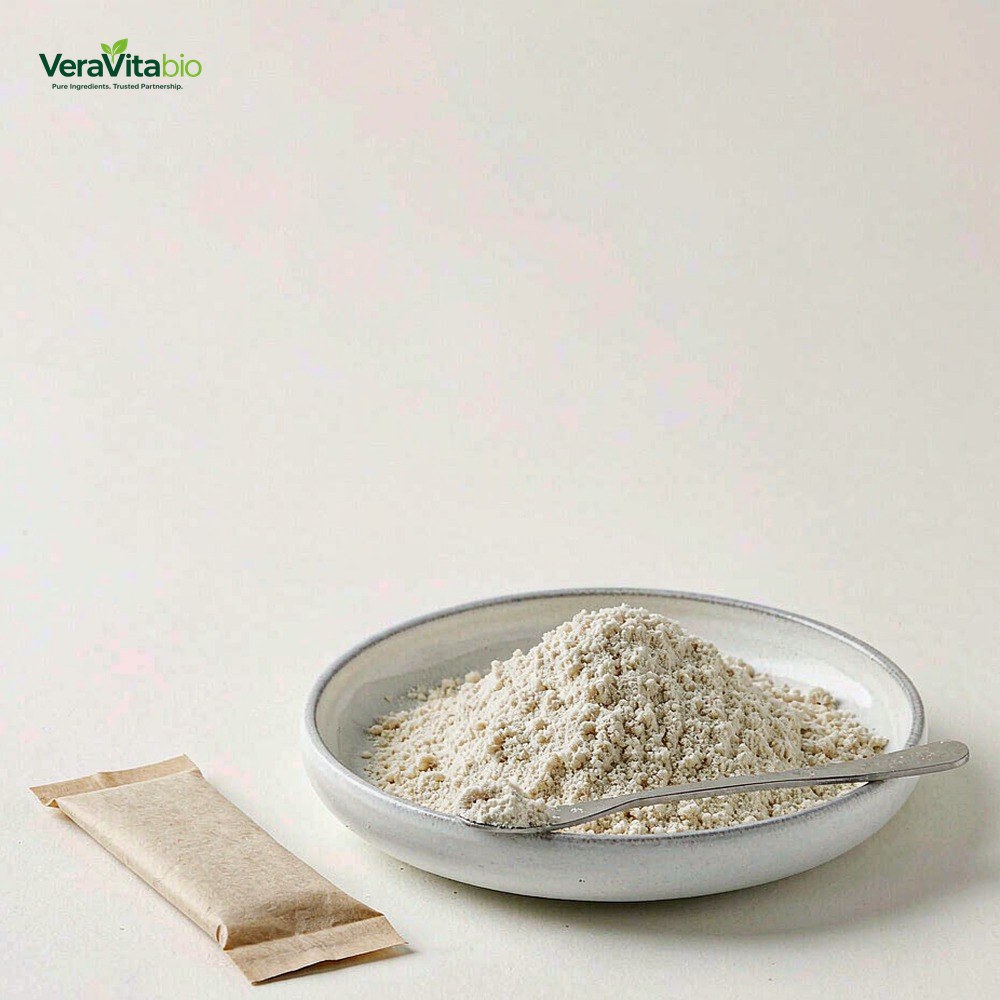
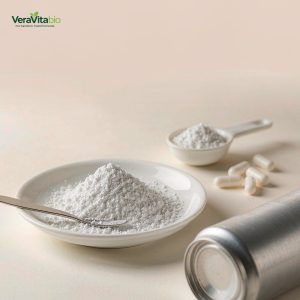
| Appearance | Off-white to light brownish-yellow free-flowing powder, characteristically salty (NaCl carrier) |
| Purity criteria (EU 231/2012) | Loss on drying ≤ 3% (102–103 °C, constant weight); arsenic ≤ 1 mg/kg; lead ≤ 1 mg/kg; mercury ≤ 1 mg/kg |
| Product standards | China: GB 1886.231-2016; EU: Commission Regulation (EU) 231/2012 (E 234); assay anchored to the JECFA monograph |
| Solubility | Readily soluble in water on the acid side — dissolve at pH 2–4 (dilute 0.02 N HCl is the practical vehicle); solubility falls steeply as pH rises toward neutrality |
| pH / heat stability | Most stable at pH 2–4.5; 121 °C / 15 min at pH 3.0–3.5 with < 10% activity loss; activity and heat tolerance fall rapidly above pH 6.5 |
| Spectrum | Gram-positive bacteria and spores: Listeria monocytogenes, Bacillus spp., Clostridium spp. incl. C. botulinum, Staphylococcus aureus, lactic-acid bacteria. Inactive against Gram-negatives, yeasts, moulds; EDTA co-formulation sensitises Gram-negatives |
| Typical use levels | 25–500 IU/g in food, matrix-dependent; regulatory caps below |
| Regulatory — China (GB 2760-2024) | CNS 17.019, max 0.5 g/kg across dairy (01.0, with pasteurised milk, sterilised milk, plain fermented milk, milk/cream powders and plain cream excluded), processed and ripened cheese, premade and cooked meats (excl. canned 08.03.08), bread and cakes (incl. mooncakes), pickled vegetables, processed mushrooms/algae, bean products, instant rice/noodle products, cooked aquatic and heat-set egg products; 0.2 g/kg soy sauce, brewed sauces, compound seasonings and the 14.0 beverage categories (excl. packaged water and straight juices); 0.1 g/kg vinegar |
| Regulatory — EU / US / JECFA | EU: E 234, Annex II of Reg. (EC) 1333/2008 — ripened & processed cheese 12.5, mascarpone & clotted cream 10, pasteurised liquid egg 6.25, semolina/tapioca puddings 3 mg/kg (EFSA 2017 additionally supported unripened cheese 12 and heat-treated meat 25 mg/kg — verify the current entry). US: GRAS affirmation 21 CFR 184.1538 (53 FR 11247, effective 1988-04-06), nisin preparation from Streptococcus lactis group N, antimicrobial against C. botulinum in pasteurised process cheese spread, ≤ 250 ppm. JECFA: ADI 0–2 mg/kg bw/day; EFSA 2017: ADI 1 mg nisin A/kg bw/day (NOAEL 225 mg/kg bw/day, UF 200); Codex GSFA lists INS 234. Approved in 60+ countries |
| Market position | China supplies roughly 70% of global output; global market ≈ USD 235 million (2024); principal Chinese producers led by Zhejiang Silver-Elephant (Shengda Bio) with multi-plant capacity; domestic trade quotes for the 1,000 IU/mg grade cluster in the low thousands of RMB per kg — potency, not tonnage, is what you are buying |
| Allergen note | Standardised on non-fat milk solids (milk-derived carrier) — verify allergen-labelling consequences in the destination market; non-GMO, HALAL and KOSHER grades available |
| HS code | Commonly declared under HS 2941.90 (“other antibiotics”; China subheading practice 2941909090) — classification practice varies by destination and form; agree the code with your broker before shipping |
| Shelf life | 24 months in sealed original pack, cool, dry, protected from light; re-test potency on aged stock — potency is the shelf-life-defining parameter, not appearance |
| Packaging | 500 g / 1 kg aluminium foil bags; 20–25 kg fibre drums with PE liner; evaluation sample with current-lot COA |
| Documentation | Lot COA with potency (IU/mg), NaCl content, loss on drying, heavy metals; SDS; non-GMO statement; allergen statement (milk-derived carrier); HALAL / KOSHER certificates on request |
Formulation & Handling Notes
- Make a stock solution on the acid side. Suspend the powder in water adjusted to pH 2–4 (0.02 N HCl is the standard vehicle), dissolve fully, then dose. Dropping dry nisin into a neutral-pH batch wastes part of the dose immediately: solubility and stability both collapse toward pH 7.
- Add before the heat treatment, not after, for retorted and pasteurised foods. At the food’s natural pH (3.5–5.5) nisin is heat-robust, and distributing it before the thermal step lets it intercept germinating spores as the product cools. Post-addition is the right call only for chilled products where the heat step is mild or absent.
- Price the matrix, not the MIC. Food proteins and fat adsorb nisin; pH of the finished food governs how much activity survives. Expect production dosages meaningfully above broth values, and validate on the finished recipe with the relevant challenge test rather than scaling from a laboratory plate.
- Design the hurdle pair, not the solo act. Natural pairings: nisin + potassium sorbate (covers yeast/mould, nisin covers bacteria) in dairy desserts and beverages; nisin + sodium benzoate in acidified drinks; nisin + ε-polylysine for Gram-negative coverage; nisin + EDTA where Gram-negative sensitisation is intended. This is the standard clean-label architecture that lets you reduce synthetic preservative loads without losing shelf life.
- Mind the process pH curve. A neutral-pH product (pH > 6.5, e.g. some plant-protein or soy systems) will destroy nisin during retorting — do not select nisin for such systems; either acidify into the active window or choose a different preservative.
- Allergen and label homework is part of the formula. The conventional carrier is NaCl with non-fat milk solids: confirm milk-allergen labelling in your market, or specify an alternative-carrier grade where the destination rules demand it. Confirm the GB 2760 category number for Chinese-market formulas — several popular categories (plain milk, plain yoghurt, straight juices) are explicitly excluded.
- Keep the claims honest. “Natural preservative from fermented milk fermentation” is defensible; “prevents botulism” as a consumer-facing line is not the way to say it — the claim belongs in the HACCP/technical file, where it genuinely earns its place.
Storage & Handling
Store sealed, below 25 °C, dry and away from direct light; the NaCl carrier keeps the powder free-flowing but a part-used drum in a humid warehouse will still take up moisture and cake. Reseal immediately after sampling. Potency — not appearance — is the parameter that ages: re-test IU/mg on stock past roughly two-thirds of shelf life, especially if the drum was opened repeatedly. As a fermentation-derived proteinaceous powder, treat it as a low-hazard organic dust: gloves, eye protection and dust control at weighing stations per your site’s standard practice.
Why Choose VeraVita Bio
- We quote potency the way buyers should demand it: IU/mg on the current lot, with the assay method named — never a vague “purity %” that conceals a low-activity grade.
- Full E 234 / GB 1886.231 documentation in one pack: loss on drying, NaCl content, As/Pb/Hg, micro-limits, plus SDS, non-GMO, allergen (milk-carrier) statement and HALAL / KOSHER certificates — the file your audit needs on the first pass.
- China-based sourcing from the world’s production centre. With ~70% of global capacity, Chinese fermentation plants set the world price; buying through a supplier who works the major producers daily gets you the right potency-to-price point without the trading-layer markup.
- System quotes, not single drums. Source nisin together with potassium sorbate, sodium benzoate and citric acid on one purchase order — a complete preservation system with matched documentation and one shipment.
- Regulatory reality-check at quotation stage. We flag the GB 2760-2024 category caps and exclusions, the EU Annex II levels, the US 250 ppm cheese-spread cap and the milk-carrier allergen position before you commit a formula — so the dossier ships with the drum.
- Sample to container. Evaluation packs with current-lot COA, 20–25 kg drums for production, annual-programme pricing for container volumes.
Request a Quote
Send us five things and we will quote precisely rather than generically: (1) the potency grade you need — 1,000 IU/mg standard or higher-potency / alternative-carrier grades; (2) the destination market, so documentation, allergen position and category limits match the rules in force; (3) the food category and pH/process profile — canned, dairy, meat, beverage, sauce — which determines the effective dosage, not just the legal cap; (4) the co-preservatives already in the system, so we can flag synergy gaps before your first trial; and (5) the pack size and annual volume. We reply with pricing, the current-lot COA and a sample lead time.
Email: info@veravitabio.com | WhatsApp: +86 157 7194 0528
VeraVita Bio — Xi’an VeraVita Biotech Co., Ltd. | Botanical & Functional Ingredient Sourcing Partner
Email: info@veravitabio.com | WhatsApp: +86 157 7194 0528 | veravitabio.com
Disclaimer: The information provided is for general technical and commercial reference only and does not constitute regulatory, legal, medical or formulation advice. Nisin’s regulatory status, permitted food categories, maximum use levels, potency standards, allergen-labelling obligations and permitted claims vary by market and change over time; they must be verified against the requirements in force in the destination market before any product is labelled, marketed or shipped. The non-fat-milk-solids carrier may carry allergen-labelling consequences in some jurisdictions. HS-code classification practice varies by destination and form and must be confirmed with a licensed customs broker. Specifications are subject to batch confirmation from the lot COA. Nisin is a raw material supplied to qualified business customers, not a finished consumer product. Responsibility for finished-product safety, stability, shelf-life, labelling, claims and regulatory compliance in the destination market remains with the manufacturer.
Need pricing, a sample or full documentation?
Send your specification, target volume and destination country — our team replies within one business day.
Reviews
There are no reviews yet.