Product Overview
Sodium benzoate (E 211, INS 211, CAS 532-32-1, EINECS 208-534-8, C7H5O2Na, MW 144.11) is the sodium salt of benzoic acid (CAS 65-85-0, MW 122.12) — the oldest industrial food preservative still in daily use, and still the default answer for acidic beverages, soy sauce, vinegar and pickled vegetables. Benzoic acid occurs naturally in cranberries, prunes, cinnamon and cloves, but all commercial material is synthetic: toluene is oxidised to benzoic acid and neutralised with sodium hydroxide or carbonate, and China holds the largest share of global capacity, which means the export price curve is set here.
The salt exists for one reason — solubility. Benzoic acid dissolves to roughly 0.29 g per 100 mL of water at 20 °C; the sodium salt dissolves to about 63 g per 100 mL. You buy the salt, you get the acid in solution.
VeraVita Bio supplies food-grade (E 211 / GB 1886.184-2016 / FCC / BP / USP) and cosmetic-grade (INCI: Sodium Benzoate) material in granular and powder forms, specified against the numbers that decide whether the lot works: assay on the dried basis, chlorinated organic compounds, acidity/alkalinity, readily oxidisable substances, and heavy metals — plus the acid-equivalent arithmetic that converts your dose into the legal basis your market actually regulates.
Key Features
- pKa 4.20 — the tightest working window of any mainstream preservative. Only undissociated benzoic acid crosses the microbial membrane. Roughly 83% of the molecule is in the active form at pH 3.5, 61% at pH 4.0, 33% at pH 4.5, 14% at pH 5.0, 5% at pH 5.5 and 1.5% at pH 6.0. Sorbate (pKa 4.76) is the more forgiving molecule; benzoate is the sharper, cheaper, more beverage-native tool. Buy it for pH ≤ 4.5 systems.
- Every legal limit is written as benzoic acid — your dose is written as the salt. The conversion factor is 122.12/144.11 = 0.847: 1.00 g sodium benzoate delivers 0.847 g benzoic acid, so a limit of 150 mg/kg as acid permits 177 mg/kg of salt. Quoting “0.2 g/kg sodium benzoate” against a 0.2 g/kg acid limit over-doses by 18% and can put a compliant formula out of spec.
- The chlorinated-compound limit tells you which factory made it. The EU specification caps chlorinated organic compounds at 0.06% expressed as chloride (0.25% as monochlorobenzoic acid) — a limit that exists because part of the industry still routes through benzotrichloride hydrolysis rather than clean liquid-phase toluene oxidation. A COA that omits this line is not a cheaper COA; it is an incomplete one, and monochlorobenzoic acid is the classic impurity fingerprint of the older route.
- Benzene is the interaction that has to be designed out, not tested for afterwards. Benzoate plus ascorbic acid (E 300) in an acidic drink can generate trace benzene — a route that surfaced in the 2005–2007 regulatory surveys and led to wide reformulation. It is a formulation question (vitamin C level, pH, trace metals, light and heat exposure, storage time), not a raw-material impurity question, and it is the first thing a serious beverage buyer asks about a benzoate quote.
- Sodium load, stated plainly. Sodium benzoate is 15.96% sodium by mass — 1 g carries 160 mg Na, roughly 7% of the WHO 2 g/day sodium guidance. In “reduced sodium” or “no added salt” platforms, potassium benzoate (E 212) or a sorbate-based system is the structural alternative, not a marketing tweak.
- Spectrum: yeasts and moulds first, bacteria second. Strong against yeasts and moulds, useful against many spoilage bacteria at beverage pH, weak against lactic acid bacteria and largely ineffective in neutral matrices — which is precisely why it is blended with sorbate (complementary pKa) rather than used alone at the top of its window.
- Three cosmetic ceilings, and the leave-on one binds. EU Annex V entry 1 sets 2.5% (as acid) for rinse-off except oral care, 1.7% for oral care, 0.5% for leave-on — in salt terms 2.95% / 2.01% / 0.59%. The 0.5% leave-on ceiling is the one formulators actually hit, and a ceiling is not an efficacy guarantee: at pH 6 a leave-on cream can sit inside the limit and still be inadequately preserved.
- The hyperactivity story needs precision, in both directions. The 2007 Southampton study tested colour-plus-benzoate mixtures. The mandatory EU warning “may have an adverse effect on activity and attention in children” attaches to the six colours, not to sodium benzoate — yet benzoate carries the reputational spillover. Neither over-claiming safety nor accepting a warning label you do not legally need is good practice; quantify the exposure and label what the regulation actually requires.
How It Works
1. The pH gate. Sodium benzoate is a delivery vehicle for benzoic acid. In solution the two species sit in equilibrium set by pH and pKa 4.20: the anion is charged and membrane-impermeant, the free acid is lipophilic and crosses the cell membrane freely. Inside the near-neutral cytoplasm it re-dissociates, collapsing the internal pH gradient and inhibiting phosphofructokinase and the glycolytic flux, with secondary effects on oxidative phosphorylation and, in moulds, on spore germination. Everything else about the molecule is secondary to one number: how much of your dose is undissociated at the finished-product pH.
2. Static, not cidal, at legal levels. At permitted concentrations benzoate is predominantly microbiostatic — it stops growth and buys shelf life rather than sterilising a contaminated batch. That is why hygienic filling, post-pasteurisation dosing and clean packaging do more for shelf life than any increase in preservative level, and why raising the dose above the legal maximum is both illegal and largely futile.
3. Metabolism and the ADI. Absorbed benzoate is conjugated with glycine in the liver to hippuric acid and excreted in urine within roughly 9–15 hours — no accumulation in healthy people, which is why the toxicology is benign at regulated intakes. The current reference is EFSA’s 2016 re-evaluation (EFSA Journal 14(3):4433): a group ADI of 5 mg/kg bw/day expressed as benzoic acid, derived from a NOAEL of 500 mg/kg bw/day in a four-generation rat reproductive study with an uncertainty factor of 100 — JECFA later revised its group ADI in 2021 to 0–20 mg/kg bw/day, expressed as benzoic acid equivalents; the earlier 0–5 mg/kg bw/day group ADI was withdrawn. The same opinion flagged that high-consuming toddlers and children drinking several benzoate-preserved flavoured drinks in a day can approach or exceed that ADI — a real constraint for brands whose portfolio is beverage-heavy.
4. The benzene pathway, mechanically. Ascorbic acid in acidic solution autoxidises through dehydroascorbic acid and hydrogen peroxide; in the presence of benzoate, trace transition metals (iron, copper) and light or heat, the benzoate ring can be decarboxylated to benzene. Levels found in the 2005–2007 surveys were in the tens of micrograms per litre in the worst cases, against a 5 µg/L US drinking-water MCL and a 10 µg/L WHO guideline — low, but a known carcinogen with no legal tolerance in most beverage specs. Controls are formulation-side: reduce or remove ascorbic acid where the vitamin claim is not essential, keep pH and storage temperature down, control trace metals in water and ingredients, and validate by analysis on the finished product rather than assuming absence.
5. In cosmetics it is a partner, not a standalone. Benzoate performs below pH 5 and is therefore at home in acidic toners, AHA/BHA systems, rinse-off cleansers and shampoos at pH 4.5–5.5 — and largely decorative in a pH 6.5 cream. The common industry pairing, sodium benzoate with phenoxyethanol, is usually run at pH 5.5–6.0, where the benzoate contribution is small: the system is carried by the phenoxyethanol and the challenge test, not by the benzoate number on the label. Validate with ISO 11930.
Typical Applications
- Carbonated soft drinks, flavoured waters and RTD tea — the classic use, at pH 2.5–4.0. Typical EU ceiling for flavoured drinks is 150 mg/L expressed as benzoic acid (= 177 mg/L of salt); in China, carbonated drinks are capped at 0.2 g/kg as acid — and note that GB 2760 does not permit benzoates in fruit/vegetable juice (pulp) at all, a category where exporters routinely assume otherwise.
- Soy sauce, vinegar, fermented bean paste and pickles — China’s highest-volume benzoate categories: 1.0 g/kg as acid for soy sauce, vinegar, jams and pickled vegetables; 1.5 g/kg for chewing gum; 0.8 g/kg for other confectionery; 0.6–1.0 g/kg across compound condiments. High-salt, low-pH matrices suit benzoate better than sorbate on cost per unit of protection.
- Jams, preserves, fruit preparations and syrups — together with sorbate in reduced-sugar products, where water activity is higher and the preservative has to do more of the work.
- Oral care — mouthwashes and dentifrices at up to 1.7% as acid under EU Annex V entry 1, one of the few preservatives with an explicit, higher oral-care ceiling.
- Cosmetics and personal care — rinse-off cleansers, shampoos and body washes (2.5% acid ceiling), leave-on emulsions and toners (0.5%), typically 0.1–0.5% in practice, paired with sorbate, phenoxyethanol or benzyl alcohol.
- Pharmaceutical — bacteriostatic preservative in multi-dose injectables and oral liquids (BP/USP grade), and the active moiety in sodium benzoate therapy for urea-cycle disorders, where it scavenges nitrogen as hippuric acid.
- Industrial — corrosion inhibitor in engine coolants and metalworking fluids, and a dyeing auxiliary in textiles — lower-value outlets that absorb off-spec or non-food material and explain some of the price spread in this commodity.
Key Specifications
| Parameter | Specification |
|---|---|
| Product name | Sodium Benzoate (E 211, INS 211, CNS 17.002; INCI: Sodium Benzoate) |
| Identity | CAS 532-32-1, EINECS 208-534-8; C7H5O2Na, MW 144.11; sodium salt of benzenecarboxylic acid. Reference: benzoic acid CAS 65-85-0, MW 122.12, pKa 4.20 |
| Grades | Food grade (E 211 / GB 1886.184-2016 / FCC); Pharma grade (BP/EP, USP); cosmetic grade (INCI Sodium Benzoate) — same molecule, different documentation and impurity control |
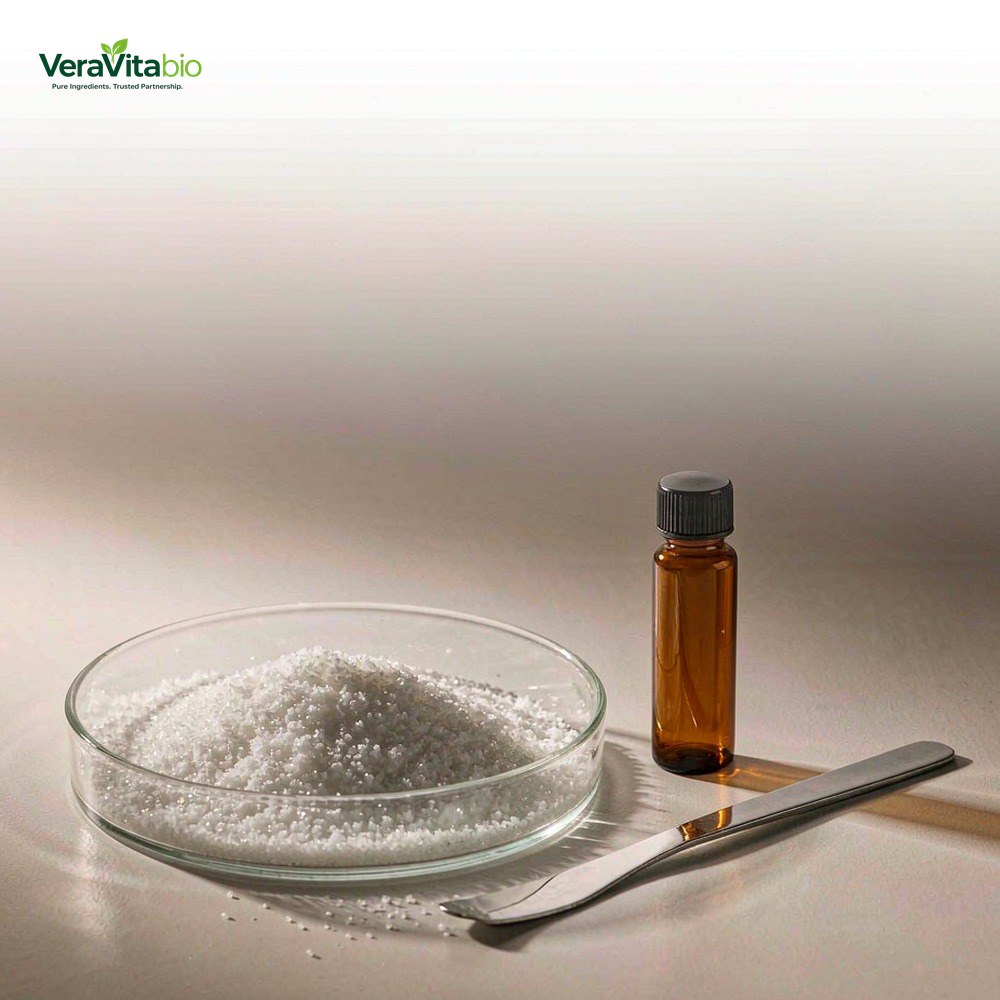
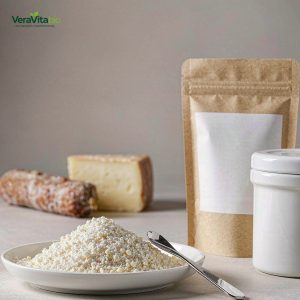
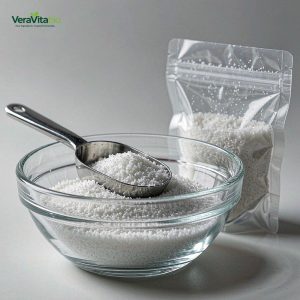
| Appearance | White, almost odourless, crystalline powder or granules (EU 231/2012 wording); free-flowing, non-caking under normal storage |
| Assay | ≥ 99.0% C7H5O2Na, after drying at 105 °C for 4 h (EU 231/2012); Ph. Eur./USP 99.0–100.5% on the dried basis. Read moisture with the assay, always |
| Loss on drying | ≤ 1.5% (105 °C, 4 h) — a lot at 1.4% delivers ~1.4% less preservative than a lot at 0.1% at the same “99%” headline |
| Chlorinated organic compounds | ≤ 0.06% expressed as chloride, corresponding to ≤ 0.25% expressed as monochlorobenzoic acid — the route fingerprint; routinely missing from COAs that only quote assay and heavy metals |
| Acidity / alkalinity | Neutralisation of 1 g must not require more than 0.25 mL of 0.1 N NaOH or HCl — residual free alkali means under-neutralised acid and a lot that pushes your product pH up |
| Readily oxidisable substances | ≤ 0.5 mL of 0.1 N KMnO4 per 1 g — the general “how clean was this batch” test for oxidisable organic impurities |
| Polycyclic acids | On fractional acidification of a neutralised solution, the first precipitate must show the melting range of pure benzoic acid (121.5–123.5 °C) — an identity/eutectic purity check that catches substituted benzoic acids |
| Heavy metals | As ≤ 3 mg/kg; Pb ≤ 5 mg/kg; Hg ≤ 1 mg/kg; heavy metals as Pb ≤ 10 mg/kg (EU 231/2012). Note the contrast with the sorbates, whose limits were tightened to As/Pb 0.1 mg/kg by Reg. (EU) 2024/2597 — the benzoate entry still carries the legacy figures, and buyers who assume otherwise over-specify |
| pH / solubility | 1% aqueous solution mildly alkaline (~pH 8); freely soluble in water (~63 g/100 mL at 20 °C), sparingly soluble in ethanol; benzoic acid conversely ~0.29 g/100 mL in water |
| Acid equivalent | 1.00 g sodium benzoate = 0.847 g benzoic acid (122.12/144.11); to convert a legal maximum expressed as acid into a salt dose, multiply by 1.180 |
| Sodium content | 15.96% Na by mass (160 mg Na per 1 g) — relevant to sodium-reduction claims; potassium benzoate E 212 is the low-sodium analogue |
| Regulatory position — food | EU: authorised preservative, Reg. 1333/2008 Annex II (E 210–213 group, all limits expressed as benzoic acid, category by category); purity per Reg. (EU) 231/2012. US: GRAS, 21 CFR 184.1733 (sodium benzoate) / 184.1021 (benzoic acid), GMP. China: GB 2760-2024, CNS 17.001/17.002, INS 210/211, preservative; limits as benzoic acid — 1.0 g/kg for soy sauce, vinegar, jams, pickled vegetables and flavoured ice; 1.5 g/kg chewing gum; 0.8 g/kg other confectionery; 0.2 g/kg carbonated drinks; not permitted in fruit/vegetable juice, bakery, fresh and frozen meat, or dairy; product standard GB 1886.184-2016. JECFA 2021 group ADI 0–20 mg/kg bw/day as benzoic acid equivalents; EFSA 2016 group ADI 5 mg/kg bw/day as benzoic acid |
| Regulatory position — cosmetics | EU: Annex V entry 1 — 2.5% (acid) rinse-off except oral care / 1.7% (acid) oral care / 0.5% (acid) leave-on; converted to salt: 2.95% / 2.01% / 0.59%. IECIC-listed in China; ISO 11930 challenge test expected; not permitted in EU organic processed food (closed positive list, Annex VIII of Reg. (EU) 2018/848 — confirm with your certification body) |
| HS code | 2916.31 (benzoic acid, its salts and esters) — confirm the national subheading with your broker |
| Shelf life | 24–36 months sealed, cool and dry; re-test assay, loss on drying and chlorinated compounds on aged stock |
| Packaging | 25 kg PE-lined kraft bag or fibre drum; 500 g / 1 kg evaluation packs; granular form preferred for dry blends and manual weighing |
| Certifications | ISO 9001 / FSSC 22000 or GMP manufacturing; HALAL and KOSHER on request; non-GMO, allergen and BSE/TSE declarations; heavy-metal and chlorinated-compound statements per lot |
Formulation & Handling Notes
- Do the acid maths before the dose maths. Convert the legal maximum (as benzoic acid) into a salt weight — multiply by 1.180 — then decide the dose inside that ceiling. Two suppliers quoting “0.2 g/kg” can mean 0.169 g/kg and 0.200 g/kg of acid equivalent; only one of them is the same product.
- Set the pH first, add the preservative second, and re-check the pH after. Sodium benzoate solution is mildly alkaline: dosed at 0.1–0.2% into a weakly buffered drink it can lift pH by a few tenths and quietly cut its own active fraction. Acidify with citric acid (E 330) or phosphoric acid to the target window, dose the benzoate, then confirm pH on the finished batch — not on the pre-mix.
- Dose after pasteurisation, in the cool-down phase. Benzoate is thermally robust, but the batch is not: adding it before heat treatment means carrying the microbial load through the filler. Dissolve in a separate portion of water (or dose granular into the vortex) and add below 40–50 °C once the product is microbiologically dead.
- Treat ascorbic acid as a controlled variable. In an acidic, benzoate-preserved drink, vitamin C is the benzene precursor. If the vitamin C claim is not commercially essential, reduce or remove it; if it is, minimise trace metals (deionised water, no bare iron or copper contact), keep storage temperature down, shorten shelf life, and verify by headspace or GC analysis on the finished product rather than relying on the raw-material COA.
- Ask for the chlorinated-compound line and the route. Liquid-phase toluene oxidation gives clean benzoic acid; benzotrichloride hydrolysis carries monochlorobenzoic acid. Both pass a 99.5% assay. The 0.06% chloride / 0.25% monochlorobenzoic acid limit is the only number on the COA that distinguishes them — and in EU-bound shipments it is a specification item, not a courtesy.
- Blend with sorbate instead of pushing benzoate to its ceiling. Benzoate pKa 4.20 and sorbate pKa 4.76 overlap but are not identical: a benzoate–sorbate pair at moderate levels usually beats either at maximum on spectrum and on taste, and it keeps both below the acid-equivalent limits. It also hedges the reputational risk that attaches to benzoate specifically.
- Watch taste at the top of the window. Benzoate is described as almost odourless, but at elevated levels in delicate matrices it reads as a “bite” or burn on the finish; sorbate reads cleaner there. In premium or lightly flavoured drinks, blend and lower rather than dose up.
- Form and handling for dry blends. Granular material flows, dusts less and resists segregation in seasoning and drink-powder mixes; fine powder dissolves faster but cakes more and aerosolises. Benzoic acid sublimates — keep benzoate away from hot surfaces and open flames in blending areas, and note that acidification of a spill liberates free benzoic acid, which is an irritant.
- Know where you cannot use it. Neutral dairy, bakery and fresh-meat systems (in China explicitly prohibited), fruit/vegetable juice in China, and EU organic processed food. Recommending benzoate into a category where it is not authorised is the fastest way to fail a label review.
Storage & Handling
Store sealed in a cool (<25 °C), dry warehouse away from direct sunlight, heat sources and strong acids. Granular sodium benzoate is far less hygroscopic than potassium sorbate but still cakes if a bag is left open in humid air — reseal part-used bags and protect liner integrity. Keep away from strong oxidisers, and segregate from acids in storage: acidification converts the salt back to benzoic acid, which is volatile, irritant and corrosive to mild steel. Use FIFO rotation and run goods-in checks on appearance (whiteness, no yellow cast), loss on drying, assay and chlorinated compounds — the four fastest indicators of a lot that will cause trouble downstream. For production, weigh in a low-dust area with local extraction; granular form removes most of the dust exposure concern.
Why Choose VeraVita Bio
- We quote the specification that decides performance, not the headline assay. Assay on the dried basis, loss on drying, chlorinated organic compounds, acidity/alkalinity and readily oxidisable substances on one COA per lot — because 99.5% is not a differentiator in this commodity, and the impurity profile is.
- Acid-equivalent arithmetic done for you. We state the dose in both bases — salt and benzoic acid — so your label and your maximum-level calculation agree with the regulation before the batch is made, not after the lab result.
- Route transparency. We tell you which toluene route the material comes from and provide the chlorinated-compound result that proves it — the single question most traders cannot answer.
- Benzene risk handled as a formulation problem. We flag the ascorbic-acid interaction at quotation stage for beverage enquiries and help you choose between reformulation, sorbate substitution or a validated control strategy.
- A complete preservation system from one supplier. Quote sodium benzoate together with our potassium sorbate (E 202), citric acid (E 330) and xanthan gum (E 415) — acid, preservative pair and texture from one COA pack and one shipment, with a single point of accountability if a challenge test underperforms.
- From sample to container. 500 g and 1 kg evaluation packs with the current lot’s COA, 25 kg bags for production, and container-load pricing for annual programmes.
Request a Quote
Send us four things and we will quote precisely rather than generically: (1) the grade — food, pharma or cosmetic, and whether you need BP/USP documentation; (2) the destination market, so the COA, heavy-metal limits and category authorisation match the rules in force there; (3) the application, matrix pH and current preservative system — we will confirm benzoate fits the acid window or recommend the sorbate blend that does; and (4) the pack size and annual volume. We reply with pricing, the current lot’s COA and a sample lead time.
Email: info@veravitabio.com | WhatsApp: +86 157 7194 0528
VeraVita Bio — Xi’an VeraVita Biotech Co., Ltd. | Botanical & Functional Ingredient Sourcing Partner
Email: info@veravitabio.com | WhatsApp: +86 157 7194 0528 | veravitabio.com
Disclaimer: The information provided is for general technical and commercial reference only and does not constitute regulatory, legal, medical or formulation advice. Regulatory status, maximum use levels, permitted food categories and permitted claims vary by market and change over time; they must be verified against the requirements in force in the destination market before labelling or claims are finalised. Specifications are subject to batch confirmation from the lot COA. Sodium benzoate is a raw material supplied to qualified business customers, not a finished consumer product. Responsibility for finished-product safety, stability, preservative efficacy, benzene control, labelling, claims and regulatory compliance in the destination market remains with the manufacturer.
Need pricing, a sample or full documentation?
Send your specification, target volume and destination country — our team replies within one business day.
Reviews
There are no reviews yet.