Product Overview
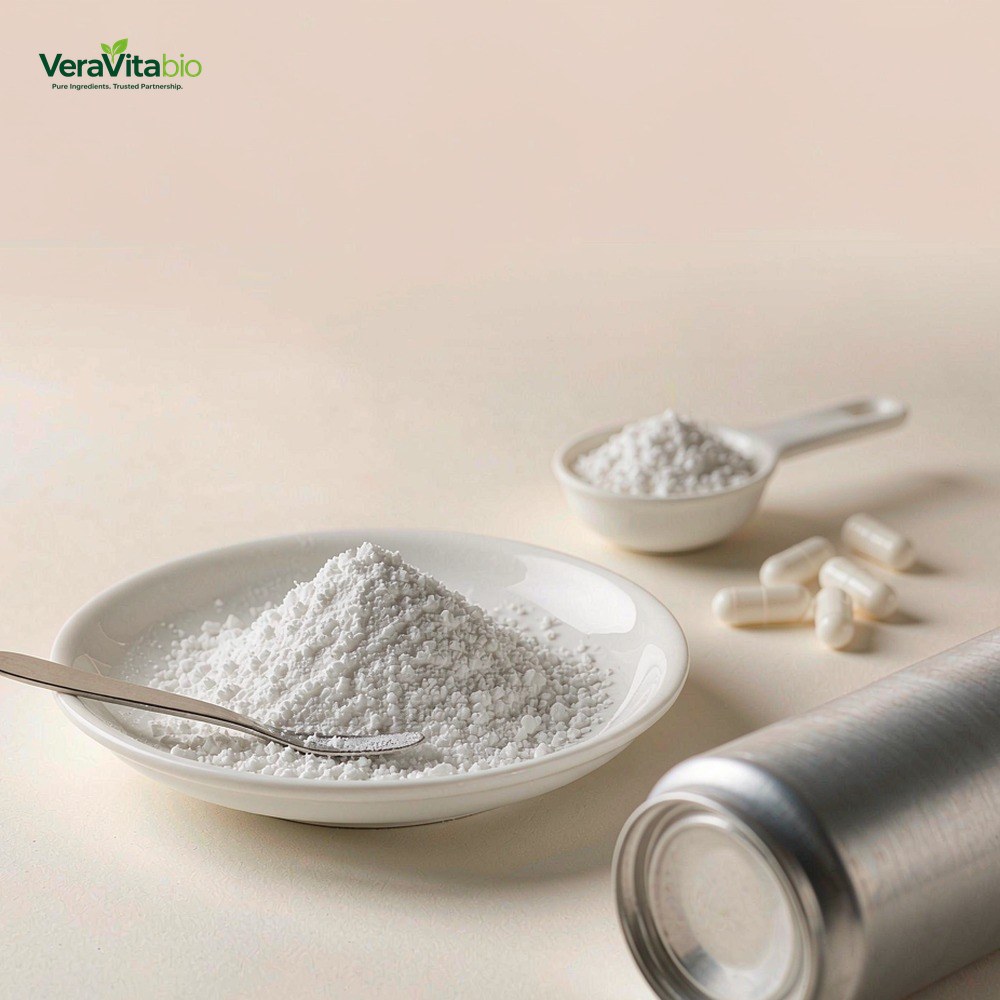
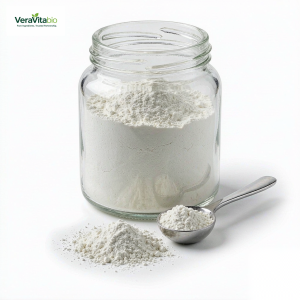
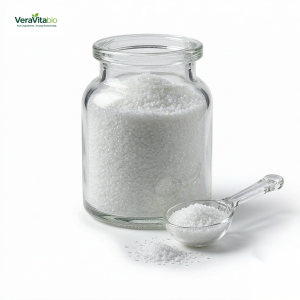
Taurine (Chinese name 牛磺酸; 2-aminoethanesulfonic acid; CAS 107-35-7, EC 203-483-8, C2H7NO3S, MW 125.15) is the small sulfur-containing molecule that the industry files under “amino acids” and biochemistry refuses to count as one. It carries a sulfonic acid group instead of a carboxylic acid, which is why it is never incorporated into a protein and never appears in a peptide sequence — and why it survives heat, acid and alkali in a way that ordinary amino acids do not. It is supplied as a white crystalline powder or free-flowing granule, odourless, with a faintly acid taste, freely soluble in water (~15% w/w at 12 °C, roughly 155 g/L) and practically insoluble in ethanol, ether and acetone. A 5% aqueous solution reads pH 4.1–5.6 because the molecule is zwitterionic across the entire food pH range (sulfonate pKa ≈ 1.5, ammonium pKa ≈ 8.7–9.1, isoelectric point ≈ 5.1).
Commercially, taurine is a single-molecule commodity produced by chemical synthesis, not fermentation and not extraction: the ethylene oxide route (ethylene oxide plus sodium bisulfite to sodium isethionate, then ammonolysis) and the ethanolamine route (monoethanolamine esterified with sulfuric acid, then cyclisation with ammonia). The ethylene oxide route has become the cost and effluent benchmark, and it is where the newest Chinese capacity is being built. There is no “natural taurine” story to sell — the honest claim is identity, purity and route, which is exactly what a spec sheet should be built on.
VeraVita Bio supplies food, pharmaceutical and feed grades from the Chinese taurine cluster that produces roughly 90% of world output. We quote the lines that actually separate one plant from another: assay basis (dried or as-is), chloride and sulfate, the sulfur-route impurity profile, mesh size and anti-caking treatment.
Key Features
- The assay number means less than the basis behind it. The USP/FCC assay (98.5–101.5%) is a nitrogen determination — each mL of 0.01 N sulfuric acid is equivalent to 1.25 mg of C2H7NO3S — calculated on the dried basis. Any nitrogen-bearing impurity is counted as taurine, and a lot with 0.3% water tested “as-is” is not the same product as one tested dry. Read the assay together with loss on drying (≤ 0.3% at 105 °C/3 h), residue on ignition (≤ 0.3%), chloride (≤ 0.05%), sulfate (≤ 0.03%), iron (≤ 30 ppm) and related substances — only the set is a specification.
- The sulfur route writes the impurity fingerprint. Both commercial routes put sulfur into the molecule, and both leave sulfate, sulfite and chloride as the realistic residues. A plant running the ethylene oxide route will show a different sulfate/chloride balance from an ethanolamine plant, and a lot with elevated ammonium points at incomplete ammonolysis. When two quotations differ by 10% on price, these three numbers usually explain the gap.
- Not a browning risk — a genuine formulation advantage. Because the amine is protonated at beverage pH, taurine is a poor participant in Maillard chemistry compared with glycine, lysine or other free amino acids. Heat-processed, retorted or shelf-stable beverages can therefore carry taurine without the colour drift that amino-acid fortification usually brings. Raise the pH toward alkaline and that advantage erodes — the amine deprotonates and reactivity climbs.
- Physically forgiving. Non-hygroscopic, free-flowing, thermally stable (no true melting point; it decomposes above roughly 300 °C), stable in aqueous solution across the normal food pH range, and compatible with the usual vitamins, caffeine, glucuronolactone, electrolytes and colours. This is a raw material that fails on documentation and price, almost never on handling.
- Grade is a commercial decision, not a technicality. Food grade (FCC/USP, 20–40 mesh crystalline or 80–100 mesh fine powder) for beverages, supplements and infant nutrition; pharma grade (API, GMP, with the tighter documentation set) for tablets, oral solutions and eye drops; feed grade, often with an anti-caking agent such as silicon dioxide, for pet food and aquafeed where flow in a dry blender matters more than a 0.2% assay difference.
- A supply chain you should price as a commodity, because it behaves like one. World capacity is estimated near 140,000 t/yr, with China holding roughly 90%; Yongan Pharmaceutical alone reports 78,000 t/yr (about half of global capacity) after its 2025 expansion, with Zhejiang NHU (~30,000 t), Yuanda Shengke (~25,000 t), Jiangyin Huachang (~10,000 t) and a further 40,000 t Shengyuan project behind it. New capacity has outrun demand growth, so quotes age quickly — buy on short validity or an index-linked formula, not on an annual fixed price.
How It Works
Bile-acid conjugation — the oldest confirmed function. Taurine is ligated to bile acids in the liver to form taurocholic and taurochenodeoxycholic acid, which are more hydrophilic, more resistant to precipitation at low pH and better at emulsifying fat than their unconjugated forms. Humans conjugate predominantly with glycine (roughly 3:1), whereas cats and rodents conjugate almost entirely with taurine — the biochemical reason taurine is dietarily essential for cats and only conditionally essential for people.
Osmolyte and membrane stabiliser. Taurine is the most abundant free amino acid in heart, retina and leukocytes, where it regulates cell volume and stabilises membranes under osmotic, oxidative and excitotoxic stress. The taurine transporter TauT (SLC6A6) concentrates it intracellularly and reabsorbs it in the kidney; the same transporter sets a renal threshold, which is why plasma taurine is tightly regulated and does not rise in proportion to oral dose. Excess is excreted largely unchanged. This is one reason very high supplementation doses produce smaller blood-level changes than the marketing implies.
The mitochondrial tRNA angle — the mechanism most suppliers cannot explain. Taurine is the precursor of τm5U (5-taurinomethyluridine), the modified base at the wobble position of mitochondrial tRNAs for leucine (UUR) and tryptophan. Without it, those tRNAs decode their codons poorly, mitochondrial translation of the respiratory-chain subunits falls, and energy output drops. Defective τm5U modification is directly implicated in MELAS (m.3243A>G) and MERRF mitochondrial disease — and it is the mechanistic basis for the “mitochondrial nutrient” positioning that the 2023 Science ageing paper brought into the mainstream.
Calcium handling, excitation and neurochemistry. Taurine modulates sarcoplasmic-reticulum calcium release and contractile function in cardiac and skeletal muscle, and acts as a weak agonist at GABAA and glycine receptors at concentrations well above normal plasma levels — the basis of its anticonvulsant and sedative signals in animal models, and a reminder that in vitro receptor data at millimolar concentrations do not translate automatically into a human effect.
Antioxidant chemistry with a specific target. Taurine’s best-characterised antioxidant role is scavenging hypochlorous acid from myeloperoxidase, forming taurine chloramine — a far less reactive species. That is a real, measurable mechanism in inflammatory tissue; the broader “master antioxidant” claim is not.
Retina and hearing. Taurine is concentrated in photoreceptors and the retinal pigment epithelium via TauT; deficiency produces retinal degeneration in cats and is associated with retinal and auditory dysfunction in other species. It is one of the few nutrients for which a structural deficiency phenotype is unambiguous.
What the Human Evidence Does and Does Not Show
Exercise performance. Meta-analyses of oral taurine in the 1–6 g/day range over one to fifteen days report improvements in time-to-exhaustion type endurance outcomes, with meaningful heterogeneity between studies and protocols. The direction is consistently positive; the size is modest and dose- and duration-sensitive. Caffeine co-administration is the commercial reality and the study designs rarely isolate taurine’s own contribution cleanly.
Blood pressure and cardiac function. Small randomised trials report reductions of a few mmHg in systolic pressure at around 1.6 g/day, and older heart-failure trials (1.5–3 g/day) reported improved exercise capacity. These are hypothesis-generating findings, not therapy: taurine is not a guideline treatment and must never be positioned as one.
Ageing — read the 2023 Science paper precisely. Singh et al. (Science 2023;380(6649):eabn9257; PMID 37289866; DOI 10.1126/science.abn9257) showed that circulating taurine declines with age in mice, monkeys and humans, and that supplementation increased healthspan in mice and monkeys and lifespan in worms and mice. The human data in that paper are cross-sectional associations, not intervention results. The animal doses were also far above supplement practice — 1,000 mg/kg bw/day in mice and 250 mg/kg bw/day in monkeys translate to roughly 81 mg/kg bw/day in humans, about 4.9 g/day for a 60 kg adult. This is a powerful marketing narrative and a weak clinical claim; keep them apart.
Safety and kinetics. The EFSA opinion on taurine in energy drinks (2009, EFSA-Q-2007-113) confirmed a NOAEL of 1,000 mg/kg bw/day from a 13-week rat neurotoxicity study and found no safety concern for mean (125 mL/day) or high-level (350 mL/day) regular energy-drink consumers — daily intakes up to about 1,400 mg. EFSA’s 2015 caffeine opinion separately concluded that taurine at the commercial energy-drink concentration of 4,000 mg/L does not affect the safety of single caffeine doses up to 200 mg. Acute toxicity is low (rat oral LD50 in the gram-per-kilogram range), absorption is rapid, and excretion is mainly renal as unchanged taurine.
Typical Applications
- Energy drinks and functional beverages — the volume driver. The international reference formula is 4,000 mg/L (1,000 mg per 250 mL can), typically with caffeine, B vitamins and glucuronolactone. Dosage is set by the destination market’s framework, not by the marketing benchmark — see the regulatory section, because the Chinese fortification ceiling is an order of magnitude lower.
- Capsules, tablets and stick powders — 500–1,000 mg per capsule or tablet, 1–3 g per stick pack in pre-workout and hydration formats. Use 80–100 mesh powder for direct compression and stick filling; coarse crystalline grades dissolve faster in bulk beverage syrup.
- Infant formula and follow-on nutrition — taurine is absent from cow’s milk at meaningful levels and is an established optional fortificant; China’s GB 10765-2021 (in force 22 February 2023) raised the permitted addition levels, which is a structural demand increase for food-grade material with a full documentation pack.
- Pet food, especially cat food — cats cannot synthesise enough taurine and must receive it pre-formed; AAFCO nutrient profiles sit in the 0.10–0.20% of diet dry matter range depending on life stage and format, with higher targets in canned and heavily processed diets to cover losses. Feed-grade taurine with anti-caking agent is the standard buy. The 2018–2019 FDA investigation into dilated cardiomyopathy in dogs on grain-free diets put taurine on every formulation sheet in the category.
- Aquafeed — osmoregulatory support and feed-attractant function in shrimp and marine fish; typically 0.2–1.0% of the diet.
- Dietary supplements for metabolic and cardiac support — often paired with L-Carnitine, Coenzyme Q10 or Magnesium L-Threonate; the mitochondrial-tRNA mechanism is the defensible story here.
- Cognitive and relaxation stacks — formulated alongside L-Theanine, GABA and Glycine; note that taurine’s GABAA activity is weak and should not carry the claim.
- Sports and body-composition formulas — with Beta-Alanine, L-Citrulline, Creatine Monohydrate and Collagen Peptides; taurine is the osmo-regulatory and calcium-handling component of the stack.
- Pharmaceutical use — taurine API for oral solutions, tablets and eye drops; pharma grade with GMP and the corresponding documentation, not food grade relabelled.
- Cosmetics and personal care — INCI Taurine, used at roughly 0.1–1% as an osmoprotectant and “energy” active in serums, eye products and after-sun formats; also a building block for Tauroursodeoxycholic Acid (TUDCA), the taurine conjugate of ursodeoxycholic acid used in bile-acid and ER-stress research.
Key Specifications
| Parameter | Specification (food / USP grade, typical commercial offer) |
|---|---|
| Chemical name | 2-Aminoethanesulfonic acid (taurine; 牛磺酸) |
| CAS No. / EC No. | 107-35-7 / 203-483-8 |
| Molecular formula / weight | C2H7NO3S / 125.15 |
| Appearance | White crystalline powder or free-flowing granules; odourless |
| Assay | 98.5–101.5% (USP nitrogen determination, on the dried basis; 1 mL 0.01 N H2SO4 ≡ 1.25 mg) |
| Loss on drying | ≤ 0.3% (105 °C, 3 h) |
| Residue on ignition | ≤ 0.3% (some suppliers ≤ 0.1% — ask which) |
| Chloride / sulfate | Cl ≤ 0.05% · SO4 ≤ 0.03% (sulfur-route fingerprint) |
| Iron / heavy metals | Fe ≤ 30 mg/kg · Pb ≤ 10 mg/kg (FCC), tighter on pharma grade |
| Related substances | Controlled by chromatography; individual impurities to the current monograph |
| pH (5% aqueous) | 4.1–5.6 |
| Solubility | ~15% w/w in water at 12 °C (≈155 g/L); practically insoluble in ethanol, ether, acetone |
| Mesh / form | 20–40 mesh crystalline · 80–100 mesh fine powder · granules · anti-caking (SiO2) feed grade |
| Microbiology | Total plate count ≤ 1,000 CFU/g · yeasts and moulds ≤ 100 CFU/g · pathogens absent |
| Typical use level | Beverages 0.1–4 g/L (market-dependent) · supplements 0.5–3 g/day · pet food 0.10–0.20% DM · cosmetics 0.1–1% |
| Packaging | 25 kg net multi-layer paper bags or fibre drums with PE liner; 500–1,000 kg jumbo bags on request |
| Shelf life | 24–36 months, unopened, cool and dry, away from direct light |
Assay arithmetic worth doing before you compare prices: a lot at 98.5% on a dried basis with 0.3% water is about 98.2% as-is; a “99.5%” quotation that does not state its basis may be the same material. On a 25-tonne order the difference between a genuine 99.5% and a 98.5% lot is 250 kg of active material — usually more than the price difference being negotiated.
Handling, Stability & Formulation Notes
- Dry blending: non-hygroscopic and free-flowing, which is why taurine is one of the easiest actives to run in a V-blender or ribbon mixer. Use 80–100 mesh to avoid segregation against fine vitamin premixes; use granules where dust is the problem.
- Beverage syrup: dissolve in the water phase at ambient temperature with moderate agitation (155 g/L at 12 °C gives ample headroom at normal use levels). Add after chelating agents and before heat treatment; taurine tolerates pasteurisation and hot fill without loss.
- pH and colour: stable from acidic through neutral. The practical caution is alkaline: above roughly pH 8 the amine deprotonates, Maillard reactivity rises and the “no browning” advantage weakens. Keep coloured, heat-treated beverages at or below neutral.
- No preservative in the raw material: aqueous stock solutions are a microbiological niche, not a chemical one. Prepare as needed, filter or treat the water, and do not hold dilute syrups warm without a preservation plan.
- Compatibility: no known incompatibility with caffeine, glucuronolactone, B-complex vitamins, ascorbic acid, electrolytes, taurine’s own conjugates, or the usual hydrocolloids. Avoid strong oxidisers in concentrated dry mixes.
- Analytical check for incoming goods: identity by IR against the reference spectrum, assay by nitrogen determination, water by Karl Fischer or 105 °C drying, chloride and sulfate by turbidimetry. Chloride and sulfate are the two fastest numbers that tell you which route the lot came from.
- Storage: keep sealed, dry, below 25 °C. The material itself is stable for years, but bags left open in humid climates pick up moisture at the seam and cake at the base — a warehouse problem that shows up as a customer complaint.
Regulatory Position
European Union. Taurine has a history of use before 1997 and is not a novel food; it is used as a food ingredient and in food supplements with no harmonised EU maximum. Energy drinks are the exception in practice: limits are set at member-state level, so a 4,000 mg/L formula that is routine in one market may need reformulation in another. The safety basis is EFSA’s 2009 opinion (NOAEL 1,000 mg/kg bw/day) and, for the caffeine combination, the 2015 caffeine opinion. Taurine is listed in CosIng with no Annex II–VI restriction for cosmetic use.
China. Taurine is regulated as a food nutrient fortifier under GB 14880-2012, with category-specific ranges: modulated milk powder 0.3–0.5 g/kg; soy powder 0.3–0.5 g/kg; soy milk 0.06–0.1 g/kg; milk-containing beverages 0.1–0.5 g/kg; special-purpose beverages 0.1–0.5 g/kg; flavoured beverages 0.4–0.6 g/kg; solid beverages 1.1–1.4 g/kg; jelly 0.3–0.5 g/kg (a revision of GB 14880 is in progress and renumbers the beverage categories — verify the edition in force at shipment). For infant formula, GB 10765-2021 (effective 22 February 2023) raised the taurine addition levels. Food-additive taurine is covered by a dedicated national product standard (GB 14759 series — confirm the current edition). In cosmetics it is listed in the IECIC.
The commercial consequence, stated plainly: China’s fortification ceiling for special-purpose beverages (0.1–0.5 g/kg, i.e. 100–500 mg/L) is roughly an order of magnitude below the 4,000 mg/L used in EU and US cans. A single global formula does not travel to China through the fortification route; either the China version is reformulated into the permitted range, or the product is positioned under a different Chinese framework with its own evidence requirements. Settle this before costing the formula — it changes the taurine quantity per container by several fold.
United States. Sold as a food ingredient and a dietary supplement ingredient under DSHEA; taurine is an optional ingredient in infant formula under 21 CFR 107.100; energy-drink use rests on GRAS status (generally self-affirmed, so keep the GRAS basis and the supporting safety file on record). There is no FDA standard of identity, and structure/function claims must stay within DSHEA.
Customs classification. Taurine is classified as an acyclic monoamine derivative under HS 2921.19; the Chinese 10-digit code 2921199090 (“other acyclic monoamines and their derivatives and salts”) carries direct Chinese declaration precedents naming 牛磺酸, with MFN import duty 6.5%, general duty 30%, VAT 13% and export VAT rebate 13%. Pharma-grade material may be declared under a different heading depending on the registration status — confirm with your broker before the first shipment.
Why Choose VeraVita Bio
VeraVita Bio (Xi’an VeraVita Biotech Co., Ltd.) supplies taurine from the Chinese producing cluster that accounts for roughly 90% of world capacity, with lot-level traceability from route to finished grade. We are deliberately specific about what matters in this molecule: the assay basis, the chloride/sulfate pair that identifies the manufacturing route, the mesh and anti-caking treatment that decide whether your blender runs cleanly, and the destination-market framework that decides how much taurine your formula may legally carry. When you send an enquiry, please tell us: (1) grade — food, pharma or feed; (2) application and target dosage, so we can flag the regulatory ceiling before you lock the formula; (3) destination market, for the documentation pack (COA, SDS, GMP/ISO certificates, HALAL/KOSHER on request); and (4) pack size and annual volume. We reply with pricing on a stated assay basis, the current lot’s COA and a sample lead time.
Email: info@veravitabio.com | WhatsApp: +86 157 7194 0528
VeraVita Bio — Xi’an VeraVita Biotech Co., Ltd. | Botanical & Functional Ingredient Sourcing Partner
Email: info@veravitabio.com | WhatsApp: +86 157 7194 0528 | veravitabio.com
Need pricing, a sample or full documentation?
Send your specification, target volume and destination country — our team replies within one business day.
Disclaimer: The information provided is for general technical and commercial reference only and does not constitute regulatory, legal, medical or formulation advice. Taurine’s regulatory status, permitted use levels, permitted claims and customs classification vary by market and change over time and must be verified against the requirements in force in the destination market before any product is formulated, labelled, marketed or shipped. Animal and mechanistic findings, including the 2023 Science study, do not establish human clinical benefit; the human data discussed are observational or from small trials and are not a basis for disease claims. EFSA opinions cited address taurine as a constituent of energy drinks and the caffeine interaction at stated concentrations, not the safety of any specific finished product or dose regimen. Specifications are subject to batch confirmation from the lot COA, and assay figures must be read together with their basis (dried or as-is). HS-code classification practice varies by destination, grade and registration status and must be confirmed with a licensed customs broker. Taurine is a raw material supplied to qualified business customers, not a finished consumer product. Responsibility for finished-product safety, stability, shelf-life, labelling, claims and regulatory compliance in the destination market remains with the manufacturer.
Reviews
There are no reviews yet.