Product Overview
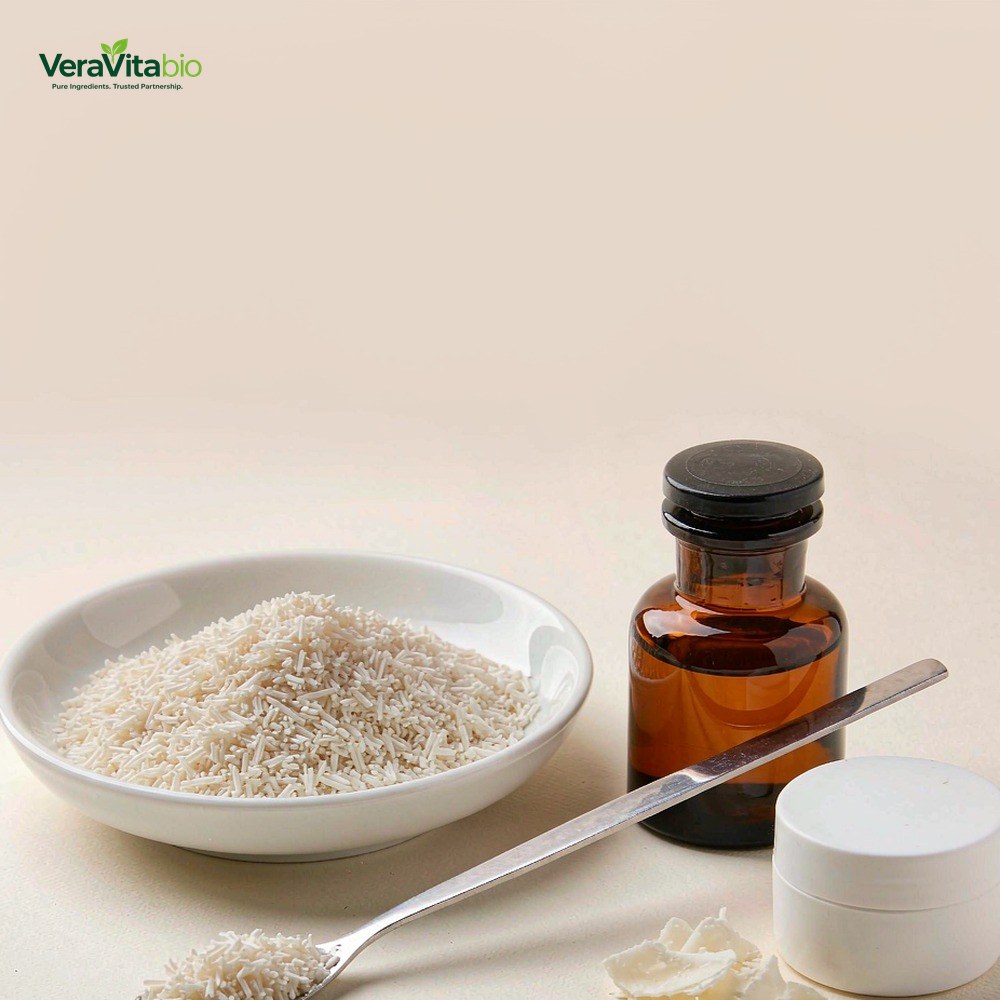
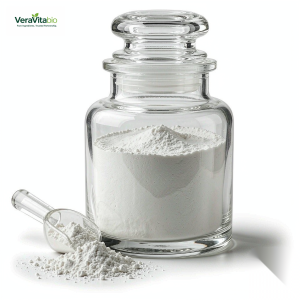
Kojic Acid Dipalmitate (KAD; INCI Kojic Acid Dipalmitate, also traded as Kojic Dipalmitate; Chinese name 曲酸二棕榈酸酯, also 曲酸双棕榈酸酯) is the di-ester of kojic acid with two palmitic acid chains — specifically 5-(palmitoyloxy)-2-[(palmitoyloxymethyl)]-4H-pyran-4-one. CAS 79725-98-7, EC (list) 616-725-6, formula C38H66O6, molecular weight 618.93. It is a white to off-white crystalline powder, melting at 92–96 °C, practically odourless.
The parent molecule has a long history: kojic acid (CAS 501-30-4, MW 142.11) was first isolated in 1907 from Aspergillus oryzae growing on steamed rice — the koji used in sake brewing — and its structure was elucidated by Yabuta in 1924. Industrial kojic acid is still made by submerged fermentation of glucose with Aspergillus strains, with China as the dominant producing country. Kojic acid is a genuine, well-documented tyrosinase inhibitor — but as a raw material it carries two liabilities that show up on the retail shelf: it oxidises and browns (light, air, pH shifts and trace metal ions all accelerate it), and it is water-soluble and chemically reactive, so it interferes with other actives and discolors emulsions over time.
KAD is the industry’s structural answer to both problems. Esterifying both reactive hydroxyls with palmitic acid removes the chromophore-prone sites, so the molecule is far more resistant to light, heat and metal-ion catalysed browning — a finished cream that would have turned amber with kojic acid keeps its colour. The two C16 chains also flip the molecule from water-soluble to oil-soluble (insoluble in water; soluble in hot oils and esters), which puts it into the lipid pathway of the stratum corneum and into every emulsion oil phase without the reactivity conflicts of the free acid. In skin, cutaneous esterases hydrolyse the ester bonds and release kojic acid in situ — KAD is best understood as a lipophilic prodrug and stabilised carrier of kojic acid, not as a different active.
VeraVita Bio supplies cosmetic-grade KAD at ≥ 98.0% (HPLC) with COA, SDS, and HALAL / KOSHER documentation. We quote the three lines that actually separate one esterification plant from another: melting range, free kojic acid content, and residual palmitic acid.
Key Features
- An ester, not a stronger kojic acid — and the quotation must not pretend otherwise. The 5-hydroxyl that chelates the copper ion at tyrosinase’s active site is one of the two hydroxyls esterified in KAD, so the intact ester is a weak tyrosinase inhibitor in vitro. Its activity in skin depends on esterase hydrolysis releasing the parent acid. Any supplier claim that KAD “significantly surpasses kojic acid” in enzyme assays should be treated as marketing; the honest case for KAD is stability + delivery, not raw potency.
- The mass arithmetic most quotations skip. Only the kojic acid core is active, and it is 22.96% of KAD by mass (142.11 / 618.93). A formula at 2% KAD delivers ~0.46% kojic acid equivalent; 3% KAD ≈ 0.69%; 5% KAD ≈ 1.15%. Any “kojic acid-free blend” or cost-per-active comparison that ignores this factor is off by a factor of 4.4.
- Browning resistance is the commercial point. Kojic acid creams yellow and amber as the active oxidises — the single most common consumer complaint on this ingredient class. Esterification removes the reactive hydroxyls, so KAD formulations keep their colour on accelerated and real-time stability. Vendor phrases such as “15× more stable” circulate widely; treat them as supplier claims and require the stability protocol and colour data (L*a*b* b*) instead.
- Oil-soluble, formulation-friendly. Insoluble in water, soluble in hot oils and esters — the active sits in the oil phase, partitions into stratum-corneum lipids, and does not chelate metal ions in the formulation (so it does not discolor, destabilise or bind other ingredients the way free kojic acid can).
- Distinct regulatory identity. SCCS opinion SCCS/1637/21 evaluated kojic acid itself and explicitly excluded its esters — including kojic acid dipalmitate and kojic acid isopalmitate — “as no data has been submitted”. KAD has no SCCS opinion and no Annex entry in Regulation (EC) 1223/2009; its safety case rests on the finished-product Responsible Person’s CPSR. It is a different molecule with different dermal absorption — the kojic acid limits neither restrict nor automatically clear it (see Regulatory Position).
- Clean compatibility. Stable across the broad pH band where emulsions live (vendor data commonly quote pH 4–9 for the ester), and compatible with niacinamide, alpha-arbutin, vitamin C derivatives and tranexamic acid — the multi-pathway brightening architecture most premium lines now build.
How It Works
Tyrosinase is a copper enzyme: the Cu2+ ions at its active site drive both the L-tyrosine hydroxylation and L-DOPA oxidation steps of melanogenesis. Kojic acid’s recognised mechanism is copper chelation — its 5-hydroxy-4-pyrone (gamma-pyrone) system binds the active-site copper and removes the enzyme’s catalytic capability, suppressing the catecholase (o-diphenolase) activity. Because it blocks the enzyme rather than the pigment already formed, visible results track the epidermal turnover cycle — typically 4–8 weeks — which is why all brightening protocols pair the active with photoprotection.
KAD delivers that mechanism as a prodrug. The di-palmitate crosses the stratum-corneum lipid matrix far more readily than the hydrophilic parent, then cutaneous esterases cleave the ester bonds in the viable epidermis (stratum granulosum and spinosum), releasing kojic acid close to the melanocyte-rich basal layer. Site-specific release confines exposure largely to the epidermis — the basis of the “stable carrier, local activation” positioning. Direct comparisons of intact KAD against kojic acid in enzyme assays are therefore misleading unless hydrolysis is accounted for.
The best-designed supporting work targets the delivery problem rather than the molecule. Tanveer et al. (Journal of Cosmetic Dermatology 2022; 21(12): 6850–6862; PMID 36156360; doi:10.1111/jocd.15408) built a KAD-loaded ethosomal gel (148 nm vesicles, −23.4 mV zeta potential, ~90% entrapment), which was stable at 8 °C and 25 °C and produced significant instrumental reductions in skin melanin, erythema and sebum with improved hydration and elasticity in non-invasive in-vivo assessment. The honest read: KAD performs when formulation and delivery carry it into the skin — which is precisely what an oil-soluble, crystallisation-prone ester needs.
KAD also contributes a secondary antioxidant effect (scavenging the UV-induced reactive oxygen species that up-regulate melanogenesis) and is conventionally described as modulating melanosome transfer to keratinocytes — useful supporting paths, but the copper-chelation prodrug mechanism remains the primary claim.
Typical Applications
- Brightening and spot-correction creams and serums — the core use; typical finished-product levels 1–3% KAD (technical data sheets commonly quote 0.5–3.0%), positioned against dark spots, melasma-support cosmetics, post-acne marks and uneven tone.
- Multi-pathway brightening systems — the architecture premium lines actually build: KAD (tyrosinase, prodrug) + niacinamide (melanosome transfer) + tranexamic acid (plasmin/UV-inflammatory path) + alpha-arbutin (tyrosinase substrate competitor) + ferulic acid / vitamin C (antioxidant shield). See our Alpha-Arbutin ≥99%, Tranexamic Acid and Ferulic Acid pages for the companion actives.
- Sun care and after-sun — as a complementary brightening active in photodamage-correction products; the ester is itself not photosensitive.
- Anti-ageing emulsions and premium whitening lines — where kojic acid’s browning would compromise the shelf presentation of a white or low-colour base.
- Anhydrous balms, oil serums and makeup systems — oil solubility opens formats kojic acid cannot enter; marketed internationally under trade names such as Brillian-MB228.
Key Specifications
| Parameter | Specification (cosmetic grade, typical offer) |
|---|---|
| INCI name | Kojic Acid Dipalmitate |
| CAS No. | 79725-98-7 |
| EC (list) No. | 616-725-6 |
| Molecular formula / MW | C38H66O6 / 618.93 |
| Appearance | White to off-white crystalline powder |
| Assay (HPLC) | ≥ 98.0% |
| Melting range | 92–96 °C (identity test — outside range, reject) |
| Free kojic acid | ≤ 0.5% (offer-spec line; the regulated, irritating, browning species) |
| Loss on drying | ≤ 0.5% |
| Residue on ignition | ≤ 0.5% |
| Heavy metals | ≤ 10 mg/kg |
| Solubility | Insoluble in water; soluble in hot oils and esters; soluble in DMSO (~10 mg/mL) |
| pH stability (vendor data) | ~4–9 (broad; the ester is not an acid-base participant) |
| Recommended use level | 0.5–3.0% in finished product |
| Storage / shelf life | Sealed, light-protected, cool & dry; 24 months |
Kojic acid equivalent arithmetic (kojic acid core = 22.96% of KAD by mass):
| KAD in formula | Kojic acid equivalent |
|---|---|
| 1.0% | 0.23% |
| 2.0% | 0.46% |
| 3.0% | 0.69% |
| 5.0% | 1.15% |
Note: a database pitfall worth screening for — some supplier listings attach EINECS 207-922-4 to KAD; that number belongs to kojic acid itself (as SCCS/1637/21 states). KAD’s own list number is 616-725-6. A COA or SDS carrying the wrong EC number is a fast read on document quality.
Formulation & Handling Notes
- Dissolve in the oil phase, hot. Add KAD to the oil phase with an ester co-solvent (isopropyl myristate or isopropyl palmitate), heat to 75–80 °C and hold ~5 minutes until fully dissolved, then combine with the hot aqueous phase and emulsify. Cold-process addition into a finished emulsion is the classic cause of recrystallisation.
- Recrystallisation is the real formulation risk. KAD has limited solubility in most emollients; a formula loaded at the top of its solubility will throw white crystals on the shelf, especially with warehouse temperature cycling. Work within measured oil-phase solubility, use IPM/IPP or octyldodecanol to hold it, and run a freeze-thaw cycle on the stability protocol.
- Stability testing should measure what actually fails: free kojic acid content (hydrolysis of the ester during storage releases the browning, regulated parent), colour (b* value), and pH. A stability file that only reports total assay can pass while the product yellows.
- Compatibility: broadly compatible with niacinamide, alpha-arbutin, vitamin C derivatives, tranexamic acid, preservatives and UV filters; the ester does not chelate metals or react with other actives the way free kojic acid does. Pair with sunscreen in any brightening claim.
- Packaging of the raw material: double PE bag in fibre drum, light-protected, cool and dry; 25 kg net is the standard export pack.
Regulatory Position
European Union. Neither kojic acid nor KAD appears in the Annexes of Regulation (EC) 1223/2009 — there is no legal maximum concentration; safety is demonstrated through the CPSR by the Responsible Person. The SCCS opinion on kojic acid (SCCS/1637/21) is frequently misquoted, and the misquotes matter commercially: the preliminary opinion (26–27 October 2021) concluded 1% “not safe” (with an illustrative 0.04% for combined twice-daily face and hand cream); the final version adopted 15–16 March 2022 was widely reported as setting 0.7%; but the corrigendum adopted 10 June 2022 revised the conclusions, and the operative final text reads: kojic acid is safe as a skin lightening agent at concentrations up to 1%. Most regulatory commentary still cites 0.7%. Critically for this page: the SCCS explicitly excluded kojic acid esters — kojic acid dipalmitate and kojic acid isopalmitate — from the opinion for lack of data. Neither the 1% conclusion nor any kojic acid restriction transfers automatically to KAD in either direction; and because KAD hydrolyses to kojic acid in skin, the parent’s hazard profile is relevant context for the assessor.
China. Kojic acid and kojic acid dipalmitate are both recorded in the IECIC (Inventory of Existing Cosmetic Ingredients in China, 2021 edition). There is no statutory maximum for the ester; products claiming whitening are special cosmetics and require registration (注册) with the NMPA before market. Documentation (IECIC numbers, COA, safety dossier support) is supplied with the shipment.
Japan. Kojic acid is an approved quasi-drug (医薬部外品) whitening active; KAD is used as a formulated cosmetic ingredient rather than the licensed active — confirm positioning with the Japanese licence holder before claims.
United States. Cosmetic use under FDA’s cosmetic framework; no OTC monograph position. “Treats melasma”-type claims create drug exposure — keep claims cosmetic.
Customs classification is genuinely contested. Chinese suppliers commonly declare KAD under HS 2915.70 (palmitic acid, its salts and esters — e.g. 2915 7090), while the pyrone ring invites an HS 2932.99 (oxygen-heterocycle) reading. Duty rates differ between the two lines; align the code with your broker before the first shipment.
Why Choose VeraVita Bio
VeraVita Bio (Xi’an VeraVita Biotech Co., Ltd.) supplies KAD from audited Chinese esterification plants with full traceability from fermentation-derived kojic acid to finished di-ester. When you send an enquiry, please tell us: (1) the grade and spec basis you need — HPLC assay, melting range, and, most tellingly, the free kojic acid line, which is where a serious esterification plant separates itself from a repacker; (2) the application — emulsion, anhydrous oil system or makeup — because the co-solvent and stability guidance follow from it; (3) the destination market, so the documentation pack (CPSR support, IECIC documentation, HALAL/KOSHER) matches the rules in force; (4) pack size and annual volume. We reply with pricing, the current-lot COA and a sample lead time.
Email: info@veravitabio.com | WhatsApp: +86 157 7194 0528
VeraVita Bio — Xi’an VeraVita Biotech Co., Ltd. | Botanical & Functional Ingredient Sourcing Partner
Email: info@veravitabio.com | WhatsApp: +86 157 7194 0528 | veravitabio.com
Disclaimer: The information provided is for general technical and commercial reference only and does not constitute regulatory, legal, medical or formulation advice. Kojic Acid Dipalmitate’s regulatory status, permitted claims, registration routes and classification vary by market and change over time; they must be verified against the requirements in force in the destination market before any product is labelled, marketed or shipped. SCCS/1637/21 evaluated kojic acid and explicitly excluded its esters; finished-product safety assessment (CPSR in the EU) remains the responsibility of the Responsible Person. Vendor stability multipliers and pH ranges are supplier data, not independent findings; recrystallisation, free-kojic-acid formation and colour stability must be confirmed in the finished-product stability programme. HS-code classification practice varies by destination and form and must be confirmed with a licensed customs broker. Specifications are subject to batch confirmation from the lot COA. Kojic Acid Dipalmitate is a raw material supplied to qualified business customers, not a finished consumer product. Responsibility for finished-product safety, stability, shelf-life, labelling, claims and regulatory compliance in the destination market remains with the manufacturer.
Need pricing, a sample or full documentation?
Send your specification, target volume and destination country — our team replies within one business day.
Reviews
There are no reviews yet.