Product Overview
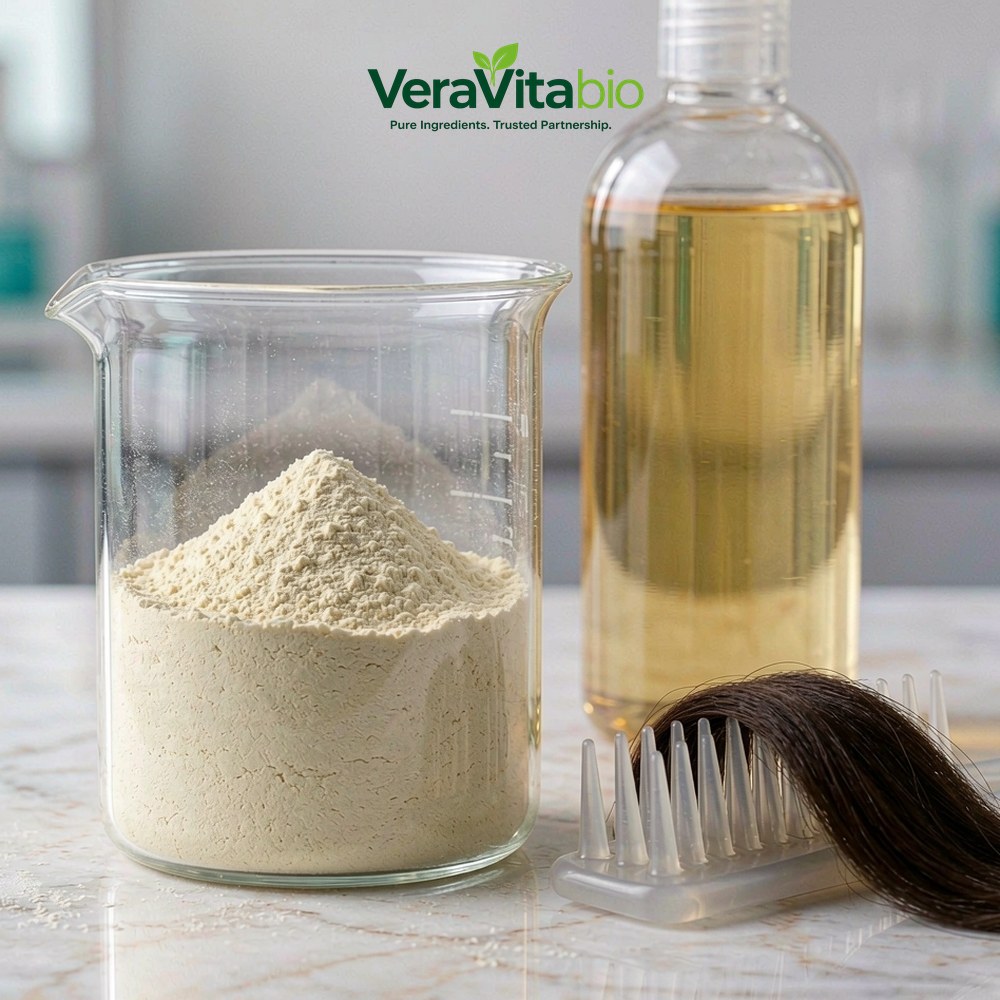
Polyquaternium-10 (PQ-10) is a water-soluble cationic cellulose ether — quaternized hydroxyethyl cellulose — and the most widely used hair-conditioning polymer in rinse-off personal care. It is the classic active behind the “2-in-1 shampoo” concept: a single formula that cleans with anionic surfactants and conditions through a polymer that carries a permanent positive charge. Supplied as a white to off-white free-flowing powder, it dissolves into clear solutions and works at very low use levels (typically 0.1–0.5%), making it one of the most cost-effective conditioning ingredients a formulator can buy.
The commercial logic of PQ-10 is simple. Hair and skin surfaces carry a negative charge, especially where hair is damaged, coloured or chemically treated. A quaternary ammonium polymer is attracted to that surface during rinsing, deposits a thin, non-greasy conditioning film, and leaves the formula itself crystal clear. Unlike esterquats or silicone emulsions, PQ-10 is a true water-soluble polymer — no emulsifiers, no instability, no greasy after-feel — which is why it remains a staple in shampoos, body washes, facial cleansers and intimate washes worldwide.
Key Features
- Cationic hydroxyethyl cellulose (quaternized cellulose ether) — permanent cationic charge that is independent of formulation pH
- Substantive to negatively charged hair and keratin: deposits a smooth conditioning film during rinsing for detangling, anti-static and manageability benefits
- Excellent mildness and low irritation — suitable for baby shampoo, sensitive-skin and scalp-care positioning
- Fully water-soluble, clear, non-clouding solutions — ideal for transparent shampoos and gels
- Compatible with the full surfactant spectrum: anionic (SLES/SLS), amphoteric (CAPB) and non-ionic (alkyl glucosides) systems
- Improves wet and dry combing force, reduces flyaway, adds body and gloss without weighing hair down
- Enhances skin feel in body wash, hand wash and facial cleanser — a soft, conditioned, non-slip after-feel
- Contributes viscosity and stabilises foam at low levels in surfactant systems
- Listed on global cosmetic ingredient inventories including China IECIC; full documentation — COA, MSDS, TDS — available on request
How It Works
- Permanent cationic charge: the quaternary ammonium groups on the cellulose backbone are positively charged at every pH value used in personal care — there is no need to buffer the formula into an alkaline window for the polymer to be active, unlike amine-based conditioners.
- Rinse-time deposition: in the concentrated surfactant phase, PQ-10 forms a soluble associative complex with anionic surfactant micelles. As the lather is diluted during rinsing, that complex becomes insoluble and deposits onto the hair shaft and skin surface — the classic “coacervate” deposition mechanism that delivers conditioning from a cleansing formula.
- Film formation and lubricity: the deposited polymer film smooths the cuticle, lowers the friction between hair strands (wet and dry combing force both drop measurably) and neutralises static charge, which is what the consumer reads as “soft, easy to comb, no flyaway”.
- Damage targeting: chemically and mechanically damaged hair carries a higher negative surface charge, so PQ-10 deposits preferentially where conditioning is needed most — a self-targeting effect that works in the formulator’s favour in repair and colour-care systems.
- Skin substantivity: the same electrostatic mechanism applies to the negatively charged stratum corneum, giving body wash and facial cleanser a soft, conditioned after-feel without the slip or tack of higher use levels of humectants.
Typical Applications
- Hair care: 2-in-1 shampoos (the benchmark application), conditioning shampoos, baby and children’s shampoo, colour-safe and keratin-safe systems, sulfate-free shampoo, scalp-care and anti-dandruff shampoo bases, low-pH and mild cleansers
- Conditioning formats: rinse-off conditioners and hair masks as co-conditioner and thickener, leave-in detanglers, styling gels and mousses for manageability and static control
- Body & bath: body wash and shower gel, foam and liquid hand soap, bubble bath, intimate and feminine wash, moisture body cleansers
- Facial cleansing: facial washes and gel cleansers, cleansing foams, micellar cleansing gels, mild amino-acid cleanser systems
- Other formats: shaving foams and gels, wet-wipe lotions, pet shampoos, solid surfactant bars where a soluble conditioning polymer is required
- OEM / ODM: full-formula development and private label for 2-in-1 shampoo, body wash and gentle cleanser lines
Key Specifications
| INCI Name | Polyquaternium-10 |
|---|---|
| Common Trade Names | PQ-10 / Quaternized Hydroxyethyl Cellulose / cationic cellulose polymer (historical references: Ucare™, JR-400 type) |
| CAS Number | 81859-24-7 |
| Chemical Type | Water-soluble cationic cellulose ether (quaternized hydroxyethyl cellulose) |
| Appearance | White to off-white free-flowing powder |
| Nitrogen Content | 1.5 – 2.2% |
| Viscosity (1% aqueous solution, 25 °C) | Grade-dependent, approx. 100 – 2,000 cP; low / medium / high viscosity grades available on request |
| pH (1% aqueous solution) | 5.0 – 7.5 |
| Loss on Drying / Moisture | ≤ 5.0% |
| Heavy Metals (as Pb) | ≤ 10 ppm |
| Arsenic (As) | ≤ 2 ppm |
| Solubility | Fully water-soluble; clear to slightly opalescent solutions; insoluble in oils and most organic solvents |
| Ionic Character | Cationic over the entire practical pH range (permanent quaternary charge) |
| Typical Use Level | 0.1 – 0.5% in 2-in-1 and conditioning shampoos; up to 1.0% in conditioners and styling products; 0.1 – 0.3% in body and facial cleansers |
| Shelf Life | 24 months in unopened original packaging |
| Packaging | 25 kg fibre drum / carton with inner PE liner (sample and LTL quantities available) |
| MOQ | Available on request |
Formulation Notes
- Hydrate it properly, and early. Disperse the powder into the water phase with moderate agitation before adding surfactants; cellulose ethers need time to fully hydrate, and dumping it into a concentrated surfactant base risks “fisheyes” — partially hydrated gels that never dissolve. Warm water (around 40 °C) and a short hydration hold (15–30 minutes) give the clearest solutions.
- Less is more. The working window is narrow: below about 0.05% the conditioning effect is negligible; above about 0.5–0.8% in a cleansing base, deposits can build up on fine or low-porosity hair and read as heavy or coated. Benchmark the feel on hair tresses, not just on a panel of hands.
- Balance against the anionic system. Deposition strength rises with the anionic surfactant’s chain length and with formula dilution behaviour. If deposition is too strong, reduce PQ-10 or shift part of the conditioning load to an amphoteric-compatible polymer; if too weak, a small increase or the addition of a fatty amphiphile (e.g. glycol distearate) typically restores it.
- Synergy with actives already in your formula. PQ-10 pairs well with D-Panthenol, hydrolysed keratin and sodium hyaluronate — the polymer provides the surface film, the actives provide the humectant and repair story. It is also the standard conditioning backbone for sulfate-free and amino-acid surfactant systems, where traditional soap-free conditioning must come entirely from polymers.
- Clarity control. PQ-10 solutions are clear, but strong coacervation with certain anionic surfactant blends can haze a transparent shampoo at rest. Screen the actual surfactant blend at finished-use concentration and, if needed, adjust the ratio of CAPB or glucoside to restore clarity.
- Preservation: standard broad-spectrum preservation applies; validate with a challenge test at the finished pH.
Storage & Handling
Store in the original, tightly closed container in a cool, dry, well-ventilated place, protected from moisture, direct sunlight and heat. Recommended storage temperature is 5–35 °C. The powder is hygroscopic — reseal partially used packaging promptly and keep the inner liner closed. Handle with standard personal protective equipment including gloves and eye protection; avoid generating airborne dust and avoid prolonged skin contact with the concentrate. As with any cosmetic raw material, review the MSDS before first use and observe the use restrictions applicable in your market.
Why Choose VeraVitabio
- Bulk B2B supply of conditioning polymers, surfactants and functional personal care ingredients — from sample quantities to full container loads
- Full documentation — COA, MSDS, TDS and specification sheets available on request
- OEM / ODM support — 2-in-1 shampoo, body wash, facial cleanser and private-label finished product development
- Export experience to the US, EU, Middle East and Southeast Asia, with documentation support for importers and brand owners
- Stable supply chain — vetted manufacturing partners with batch-level traceability and pre-shipment verification
Request a Quote — Sourcing Polyquaternium-10 for a 2-in-1 shampoo, body wash or gentle cleanser line? Send your specification, required grade and target volume to info@veravitabio.com or WhatsApp +86 157 7194 0528. Samples and full documentation are available for qualified B2B buyers. Web: veravitabio.com
.vv-contact-strip{display:flex;flex-wrap:wrap;gap:10px;align-items:center;margin:0;}
.vv-contact-strip a{
display:inline-flex;align-items:center;gap:8px;
padding:10px 16px;border-radius:8px;
font-size:0.9375rem;font-weight:600;line-height:1;
text-decoration:none;transition:all .25s cubic-bezier(.4,0,.2,1);
border:1px solid rgba(13,59,46,.18);
color:#0D3B2E;background:#FFFFFF;
}
.vv-contact-strip a:hover{
background:#0D3B2E;color:#FFFFFF;border-color:#0D3B2E;
transform:translateY(-1px);
}
.vv-contact-strip a svg{flex:0 0 auto;}
.vv-contact-strip.vv-on-dark a{
background:rgba(255,255,255,.06);
border-color:rgba(255,255,255,.22);
color:#FFFFFF;
}
.vv-contact-strip.vv-on-dark a:hover{
background:#7CBB3A;border-color:#7CBB3A;color:#0D3B2E;
}
.vv-contact-strip.vv-centered{justify-content:center;}
For cosmetic and personal care formulation use. This product is not intended to diagnose, treat, cure, or prevent any disease. Specifications shown are for general reference; full Certificate of Analysis and supporting documentation are available upon request. Formulators are responsible for confirming permitted use levels, preservative systems and claim language in their target markets.
Need pricing, a sample or full documentation?
Send your specification, target volume and destination country — our team replies within one business day.
Reviews
There are no reviews yet.