Product Overview
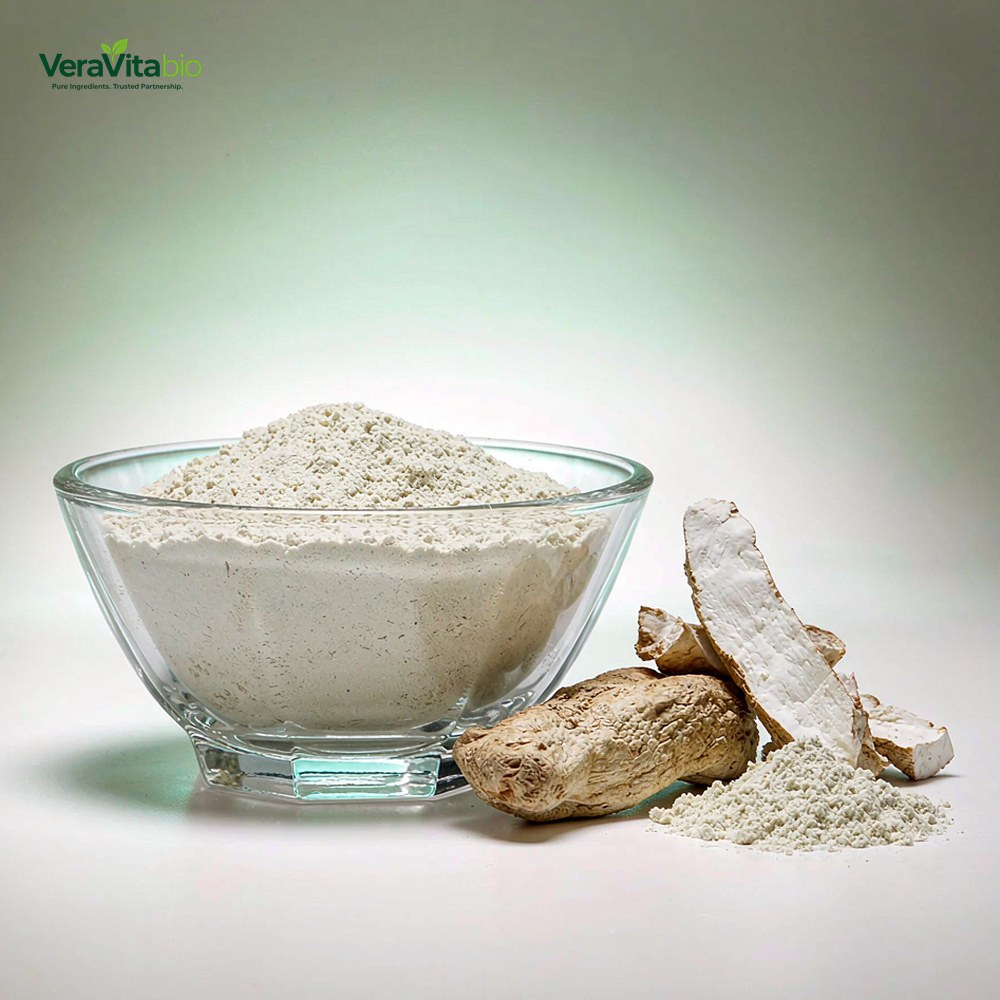
Poria cocos — botanically reclassified as Wolfiporia extensa, and known in Chinese as Fu Ling (茯苓), in Japanese as Bukuryō and historically as Hoelen or “China root” — is a wood-decay fungus whose underground sclerotium has been used in East Asian formulations for more than two thousand years. Unlike most medicinal mushrooms, the traded part is not the fruiting body but the dense, starch-rich sclerotium, which is unusually high in both water-soluble polysaccharides and a distinctive family of lanostane-type triterpenes.
This dual chemistry is the reason Poria cocos sits at the intersection of two very different markets. The polysaccharide fraction (historically called pachyman, now generally characterised as β-glucan-rich water-soluble polysaccharide) drives its use in immune, gut and general-wellness supplements. The triterpene fraction — pachymic acid, tumulosic acid, dehydrotumulosic acid and related compounds — is ethanol-soluble and is the marker set specified for traditional-style extracts and for skincare applications. Because the two fractions require different solvents, we supply hot-water grades, ethanol grades and dual-extracted full-spectrum grades so that formulators can select the profile that matches their claim strategy.
For buyers, Poria cocos is one of the most dependable items in the Chinese botanical export catalogue: raw sclerotium supply is stable and cultivated at scale in Yunnan, Hubei, Anhui and Guangxi, the material is inexpensive relative to reishi or cordyceps, and it blends readily into multi-mushroom complexes. It is also one of the few medicinal fungi with a well-established cosmetic pathway — Poria Cocos Extract is an accepted INCI name and is listed in China’s Inventory of Existing Cosmetic Ingredients.
Key Features
- Two standardisation routes in one raw material — water-soluble polysaccharides (10% / 20% / 30% / 50% by UV) or ethanol-soluble triterpenes (typically 1%–5% as pachymic acid by HPLC), plus dual-extracted full-spectrum grades
- Sclerotium, not fruiting body — the traditional and pharmacopoeial plant part, with a markedly higher polysaccharide yield than fruiting-body material
- Clean sensory profile — fine off-white to light-beige powder with a mild, slightly sweet-bitter taste and low colour impact, which makes it easy to formulate into capsules, stick packs and beverage powders
- Skincare crossover — accepted INCI name Poria Cocos Extract; used in brightening essences, soothing masks and hydrating emulsions
- Excellent blending base — pairs naturally with reishi, lion’s mane, cordyceps, astragalus, jujube, liquorice and ginseng in classic and modern multi-herb formulas
- Stable, low-cost supply — large-scale cultivation and a long-established processing base give reliable availability at container volumes
- Full documentation package — COA, MSDS, TDS, non-GMO statement, pesticide and heavy-metal reports, and irradiation / allergen declarations available with each lot
- Flexible grades — straight powder (80–200 mesh), ratio extracts (4:1, 10:1, 20:1), polysaccharide-standardised and triterpene-standardised grades
- Certification options — ISO, HACCP, HALAL and KOSHER available upon request; NOP / EU organic lots available subject to season
How It Works
- Polysaccharide / β-glucan fraction: the water-soluble glucans are the primary immunomodulatory component. They are recognised by innate immune receptors in gut-associated lymphoid tissue, supporting macrophage activity and normal immune signalling rather than acting as a stimulant.
- Lanostane triterpenes: pachymic acid, tumulosic acid and dehydrotumulosic acid are the characteristic small molecules of the sclerotium. They are credited with the anti-inflammatory and diuretic activity described in traditional use, and they are the analytical markers required for triterpene-standardised grades.
- Tyrosinase modulation (cosmetic): Poria cocos extracts have been reported to inhibit tyrosinase activity and to reduce melanin synthesis in vitro, which underpins its use in brightening and tone-evening skincare alongside niacinamide and arbutin.
- Soothing and barrier support (cosmetic): the glucan fraction forms a light, breathable film on the skin and helps reduce the visible redness response to irritation, making it useful in sensitive-skin and post-procedure formulations.
- Fluid-balance and calm positioning (supplements): traditional use centres on “draining dampness,” supporting comfortable fluid balance and a settled, calming effect; modern formulas use it in sleep, calm and mild-diuretic complexes.
- Gut comfort: the high soluble-fibre and glucan content makes the material a gentle prebiotic-style base in digestive and daily-greens powders.
Typical Applications
- Immune and daily-wellness supplements: capsules, tablets and powder sachets, alone or in multi-mushroom complexes with reishi, shiitake, maitake and turkey tail
- Sleep, calm and stress formulas: combined with jujube seed, astragalus, liquorice, L-theanine, magnesium and GABA in evening-positioned products
- Fluid-balance and “light legs” products: traditional diuretic-style complexes for comfortable water balance
- Digestive and daily-greens powders: a mild-tasting soluble base for greens blends, fibre drinks and gut-comfort formulas
- Functional beverages and instant drinks: hot-water soluble grades dissolve cleanly in instant teas, broth-style drinks and ready-to-mix botanical beverages
- Traditional and modern TCM-style formulas: granule and decoction-style preparations such as classic spleen-support and calming prescriptions
- Skincare — brightening: essences, serums and ampoules targeting uneven tone, combined with niacinamide, alpha-arbutin, tranexamic acid or vitamin C derivatives
- Skincare — soothing and hydration: masks, calming creams, after-sun gels and sensitive-skin moisturiser bases
- Scalp and hair care: used in soothing scalp tonics and anti-irritation shampoos in Asian markets
- Pet and veterinary supplements: increasing use in calming and general-wellness chews for companion animals
Key Specifications
| Product Name | Poria Cocos Extract (Fu Ling / Hoelen Sclerotium Extract) |
|---|---|
| Botanical Source | Sclerotium of Wolfiporia extensa (Peck) Ginns — syn. Poria cocos (Schwein.) F.A. Wolf, family Polyporaceae |
| Plant Part Used | Sclerotium (dried, peeled or unpeeled per grade) |
| INCI (cosmetic grade) | Poria Cocos Extract / Poria Cocos Sclerotium Extract |
| CAS Number | No single CAS applies to a multi-component botanical extract. Pachymic acid, the reference triterpene marker, is CAS 29070-92-6 |
| Standardisation Options | Polysaccharides ≥ 10% / 20% / 30% / 50% by UV; total triterpenes ≥ 1% / 2% / 5% as pachymic acid by HPLC; ratio extracts 4:1, 10:1, 20:1; straight sclerotium powder |
| Extraction Solvent | Hot water; hydro-ethanolic (dual extraction); food-grade ethanol for triterpene grades |
| Appearance | Fine, free-flowing off-white to light beige powder |
| Odour & Taste | Characteristic mild fungal note; slightly sweet with a faint bitter finish |
| Particle Size | 80 mesh (95% pass) standard; 100 / 120 / 200 mesh available |
| Solubility | Polysaccharide grades dispersible to largely soluble in hot water; triterpene grades soluble in ethanol and poorly soluble in water |
| Loss on Drying | ≤ 5.0% |
| Total Ash | ≤ 5.0% |
| Heavy Metals | Pb ≤ 3 ppm; Cd ≤ 1 ppm; As ≤ 2 ppm; Hg ≤ 0.1 ppm |
| Pesticide Residues | Compliant with EU Regulation (EC) No 396/2005 maximum residue levels |
| Microbiology | Total plate count ≤ 1,000 cfu/g; yeast & mould ≤ 100 cfu/g; E. coli absent; Salmonella absent in 25 g |
| GMO Status | Non-GMO |
| Irradiation / ETO | Non-irradiated; ethylene-oxide-free (steam treatment on request) |
| Allergen Statement | Free from major regulated allergens; produced on lines with allergen control procedures |
| Certifications | ISO, HACCP, HALAL and KOSHER available upon request; NOP / EU organic lots subject to availability |
| Shelf Life | 24 months in unopened original packaging under recommended storage conditions |
| Packaging | 1 kg aluminium foil bag (sample / small lot); 25 kg fibre drum with double food-grade PE liner. Custom retail and private-label packs on request |
| MOQ | Available on request |
Formulation Notes
- Choose the fraction deliberately: if the claim is immune or gut, specify a polysaccharide-standardised hot-water grade. If the claim is traditional activity or cosmetic brightening, specify a triterpene-standardised hydro-ethanolic grade or a dual extract. A “10:1 water extract” grade carries very little triterpene.
- Assay method matters: polysaccharide results depend on the method (phenol-sulfuric acid UV with dextran or glucose standard). Always quote the standard used when comparing supplier COAs; results can differ by several percentage points for the same material.
- Solubility: hot-water grades disperse readily above 60 °C but may show slight sedimentation in cold RTD beverages — consider a finer mesh, a small percentage of soluble fibre, or a clarified low-turbidity grade for clear drinks.
- Taste and colour: the material is mild but not neutral. In beverage applications above roughly 1–2 g per serving, mask with citrus, berry, ginger or a sweetener system.
- Cosmetic use: typically incorporated at 0.5%–5% of the water phase for brightening and soothing claims. Add below 60 °C, filter to the clarity required, and preserve appropriately because the glucan fraction is a nutrient source.
- Synergies: pairs well with reishi and astragalus for immune positioning; with jujube seed, liquorice and L-theanine for calm and sleep; and with niacinamide, alpha-arbutin and hyaluronic acid in skincare.
- Claims: Poria cocos has a long traditional-use record, but permitted health claims differ substantially between the EU, US, Canada, Australia and Southeast Asia. Validate claim wording against local regulation before launch.
Storage & Handling
Store in the original, tightly sealed packaging in a cool, dry and well-ventilated place at or below 25 °C, protected from direct sunlight, heat and moisture. Reseal opened bags immediately; the polysaccharide fraction is hygroscopic and will cake if exposed to humidity. Use standard personal protective equipment — gloves, eye protection and a dust mask when handling bulk powder. Shelf life is 24 months in unopened packaging.
Why Choose VeraVitabio
- Bulk B2B supply of mushroom extracts, plant extracts, cosmetic actives, food additives and superfood ingredients — from sample quantities to full container loads
- Specification-driven Poria cocos grades: polysaccharide-standardised, triterpene-standardised, dual-extracted and ratio extracts, with the assay method stated on every COA
- Complete documentation — COA, MSDS, TDS, pesticide and heavy-metal reports, non-GMO and allergen statements, plus regulatory support for your destination market
- OEM / ODM support — custom capsules, tablets, powder blends, stick packs and private-label skincare with formulation guidance
- Contracted processors with batch-level traceability from raw sclerotium to finished drum, and pre-shipment verification
- Responsive B2B service via email and WhatsApp for quotes, samples and technical questions
Request a Quote — Sourcing Poria cocos extract for an immune or sleep supplement, a mushroom complex, a functional beverage or a brightening skincare line? Send your required standardisation (polysaccharide %, triterpene % or ratio), grade, mesh, volume and destination market to info@veravitabio.com or WhatsApp +86 157 7194 0528. Samples, COA and full documentation are available for qualified B2B buyers. Web: veravitabio.com
Need pricing, a sample or full documentation?
Send your specification, target volume and destination country — our team replies within one business day.
This ingredient is supplied for use in dietary supplements, functional foods and cosmetic formulations. It is not intended to diagnose, treat, cure, or prevent any disease, and no therapeutic claim is made or implied. Specifications shown are for general reference; the full Certificate of Analysis, including the assay method used, is available upon request. Botanical status, permitted health claims and maximum use levels differ by destination market — buyers are responsible for confirming compliance with applicable regulation in their own jurisdiction before sale.
Reviews
There are no reviews yet.