Product Overview
Ginkgo Biloba Extract is a standardized preparation of the leaves of Ginkgo biloba L. — the ginkgo, or maidenhair tree, a living fossil native to China and today planted in large-scale commercial orchards across Jiangsu and Shandong. China is the world’s dominant producer of ginkgo leaf and ginkgo leaf extract, and the 24/6 grade (24% flavone glycosides plus 6% terpene lactones) has become the de facto international trading standard for the ingredient.
Ginkgo occupies a unique position among botanical actives for three reasons. First, unusually rigorous standardization: unlike most herbals, ginkgo extract is defined not only by total marker content but by a narrow flavone-to-terpene-lactone ratio (approximately 4:1) and by a hard toxicological ceiling on ginkgolic acids, which must stay below 5 ppm in finished extracts. Second, a well-characterized dual mechanism: the flavonol glycosides drive antioxidant and vascular-endothelial activity, while the terpene lactones — ginkgolides A, B, C and J plus bilobalide — act as platelet-activating-factor (PAF) antagonists, with ginkgolide B being one of the most potent naturally occurring PAF antagonists known. Third, durable, evidence-backed demand: ginkgo is one of the most clinically studied botanicals in the world, with a decades-long research record behind its cognitive, peripheral-circulation and microvascular positioning.
VeraVitabio supplies ginkgo biloba extract as a free-flowing powder in 24/6 standardized grade, water-soluble (spray-dried / cyclodextrin-assisted) grade for beverages, and non-standardized leaf powder ratios from 4:1 to 50:1 for cost-sensitive applications.
Key Features
- Standardized 24% flavone glycosides / 6% terpene lactones, HPLC-verified, with the characteristic 4:1 ratio and the aglycone profile (quercetin : kaempferol : isorhamnetin) specified per batch.
- Low ginkgolic acids (<5 ppm, down to <1 ppm on request) — the single most important quality differentiator in the ginkgo trade, controlled by detoxification steps rather than by leaf selection alone.
- Defined terpene lactone profile: ginkgolides A, B, C, J and bilobalide quantitated individually on the COA, not merely as a single “total lactones” figure.
- Water-soluble grade available — native standardized extract is only partially water-dispersible; for RTD beverages and instant powders we supply spray-dried grades with improved dissolution and reduced sedimentation.
- Multi-ratio leaf powders (4:1 – 50:1) for capsule, tablet, tea and pet-nutrition applications where marker standardization is not required.
- Organic and conventional leaf sourcing, with EU / US heavy-metal and pesticide limits met by default; residue testing on request.
- Available in powder (standard), fine powder (100 mesh) and granulated forms; conforms to EP / USP / Chinese Pharmacopoeia ginkgo monographs where applicable.
How It Works
Ginkgo’s activity comes from two chemically distinct fractions that address the same physiological bottleneck — blood flow and oxidative load in fine vessels.
1. Flavonol glycosides (24%) — antioxidant and vascular-endothelial support. The glycoside fraction (quercetin, kaempferol and isorhamnetin derivatives) scavenges free radicals, supports endogenous antioxidant defences and is associated with improved endothelial function, including nitric-oxide–mediated vasorelaxation. In the capillary bed this translates into a combination of reduced oxidative stress and improved vessel tone.
2. Terpene lactones (6%) — platelet-activating-factor antagonism and haemodynamics. Ginkgolide B blocks the PAF receptor, reducing platelet aggregation and PAF-driven inflammatory signalling. This is a mechanism distinct from aspirin and from most botanical antioxidants, and it underpins the ingredient’s use in microcirculation and peripheral-vascular positioning. Bilobalide contributes mitochondrial and neuroprotective effects observed in cell and animal models.
3. Combined effect. The standardization ratio is not arbitrary: the 24/6 specification with a ~4:1 flavone-to-lactone ratio reproduces the fraction composition of the clinically studied extracts. Deviating from it — for example by pushing flavones high to inflate the “total” panel — changes the product’s behaviour, which is why a full lactone profile and a ginkgolic-acid figure matter more than a single headline percentage.
Typical Applications
- Cognitive & brain-health supplements — capsules, tablets and sachets positioned on memory, focus and age-related cognitive support; frequently combined with phosphatidylserine, bacopa, lion’s mane or DHA.
- Circulation & microvascular health — legs-and-feet comfort, vein-health and cold-extremities formulas; a natural fit alongside diosmin/hesperidin, grape seed OPC or nattokinase.
- Eye & ear health — retinal perfusion, visual fatigue and tinnitus-positioned products, often stacked with astaxanthin, lutein or bilberry.
- Functional beverages & instant powders — water-soluble spray-dried grade for stick packs, RTD shots and effervescents targeting focus and circulation.
- Sports nutrition & active ageing — nitric-oxide and blood-flow narratives alongside L-citrulline, beetroot or AAKG.
- Cosmetics & skincare — antioxidant, anti-glycation and microcirculation claims; used in anti-ageing serums, eye-area products, scalp/hair tonics and “tired-skin” masks.
- Pet & veterinary nutrition — cognitive-support formulas for senior dogs and cats (low-ratio leaf powders).
- Traditional herbal & pharmaceutical-style products — monograph-compliant tablets in markets that follow EP / USP / CP ginkgo standards.
Key Specifications
| Parameter | Specification |
|---|---|
| Botanical source | Ginkgo biloba L., leaf |
| Extract ratio | 24/6 standardized (also 4:1, 10:1, 20:1, 50:1 leaf powders) |
| Total flavone glycosides | ≥ 24.0% (HPLC / UV, per EP or CP method) |
| Total terpene lactones | ≥ 6.0% (HPLC; ginkgolides A, B, C, J + bilobalide) |
| Flavones : lactones ratio | approx. 4 : 1 |
| Ginkgolic acids | < 5 ppm (standard); < 1 ppm available |
| Marker compounds | Quercetin (CAS 117-39-5), kaempferol (CAS 520-18-3), isorhamnetin (CAS 480-19-3); ginkgolide B (CAS 15291-77-7), bilobalide (CAS 33570-04-6) |
| Extract CAS reference | 90045-36-6 (Ginkgo biloba leaf extract) |
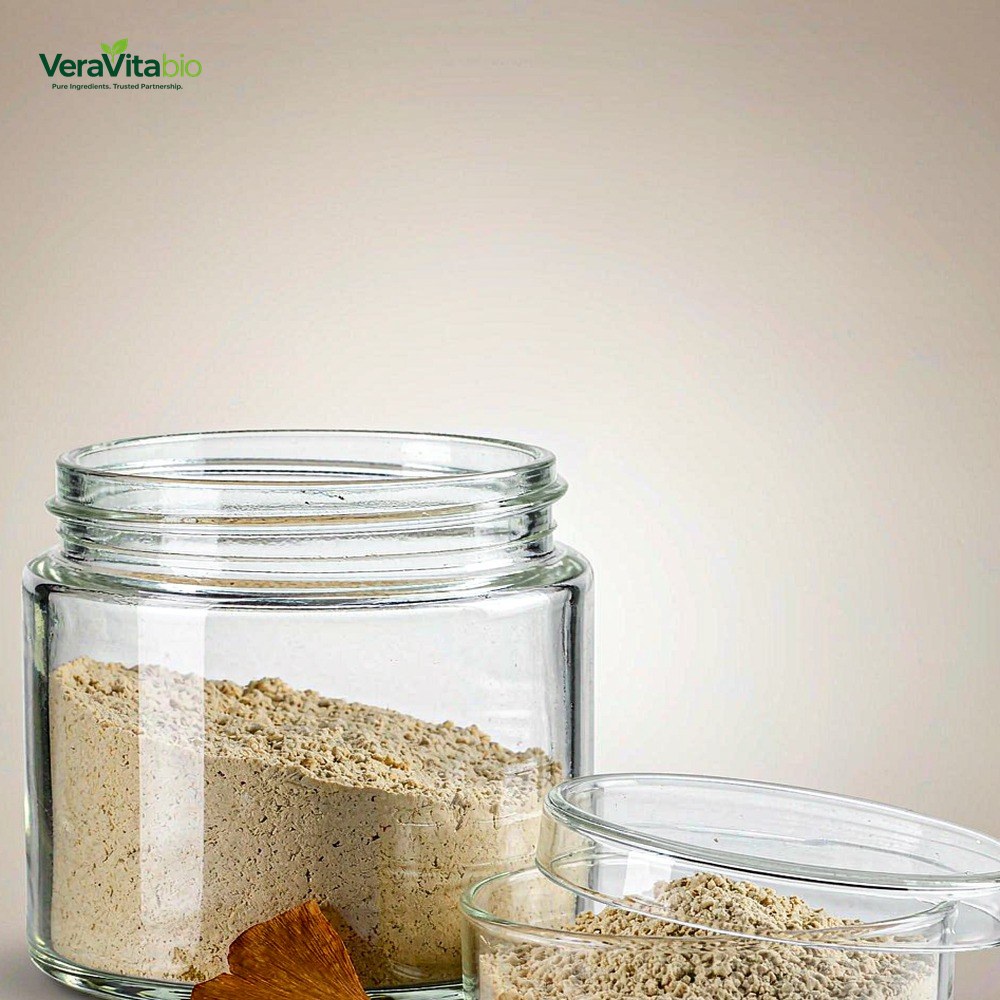
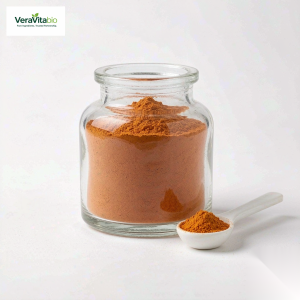
| Appearance | Light tan to brownish-yellow fine powder |
| Solubility | Partially soluble in water (standard grade); fully water-dispersible spray-dried grade available |
| Loss on drying | ≤ 5.0% |
| Heavy metals | Pb ≤ 2 ppm, As ≤ 1 ppm, Cd ≤ 1 ppm, Hg ≤ 0.1 ppm |
| Total plate count | ≤ 1,000 cfu/g; Yeast & mould ≤ 100 cfu/g; E. coli / Salmonella absent |
| Shelf life | 24 months in unopened original packaging |
| Packaging | 25 kg fibre drum, double food-grade PE liner; 1 kg / 5 kg trial packs available |
| Certifications | ISO 9001 / HACCP / HALAL / KOSHER available on request |
Formulation Notes
- Ginkgolic acids are the first thing to audit. Ask for a batch-specific ginkgolic-acid result expressed in ppm. A “24/6” certificate with no ginkgolic-acid line is incomplete, because the limit is a toxicological requirement in the EU, US and Chinese monographs and cannot be inferred from the flavone or lactone figures.
- Insist on an individual lactone profile. Total lactones can be reached with an abnormal distribution; ginkgolides A/B/C/J balanced with bilobalide indicates a genuine leaf extract rather than a re-blended or adulterated material.
- Dose reference for finished products. Clinical studies on standardized ginkgo extract most commonly use 120–240 mg per day of the 24/6 grade. Suggested-use wording and maximum daily intake must be set against the regulatory framework of each destination market.
- Beverages need the water-soluble grade. Standard extract settles in RTD systems; use spray-dried/carrier-assisted grade and validate clarity and sedimentation after pasteurisation.
- Colour and taste. The extract is tan and mildly astringent-bitter. In clear beverages and gummies, dose by flavour impact, or use encapsulated/coated grades.
- Blood-thinning caution. Ginkgo may interact with anticoagulant and antiplatelet therapy (warfarin, aspirin, clopidogrel) and with some anticonvulsants and SSRIs. Products should carry appropriate interaction labelling, and the ingredient should be listed as “not recommended before surgery” — a standard requirement in serious markets.
- Not for young children in supplement formats; pregnancy and lactation require professional advice. Include these statements on-pack where required.
- Cosmetic use. Typical use levels are low single-digit percentages in leave-on products; check the INCI entry Ginkgo Biloba Leaf Extract and confirm the ginkgolic-acid figure against the cosmetic-market requirement for your target region.
Storage & Handling
Store in a cool, dry, well-ventilated area away from direct sunlight, heat sources and strong odours. Keep the container tightly closed when not in use and reseal promptly after sampling. Recommended storage below 25 °C and below 60% relative humidity. Do not store together with oxidising agents or strongly alkaline materials. Handle with standard dust-control practice (local exhaust ventilation, dust mask and gloves); avoid generating airborne dust. Shelf life is 24 months in unopened original packaging, after which retesting against the release specification is recommended.
Why Choose VeraVitabio
- Specification-first quotation. We quote against your target specification — flavone glycosides, lactone profile, ginkgolic acids, water solubility — rather than offering a single “standard grade” and leaving compliance to you.
- Batch documentation as default. COA with the full marker panel, MSDS, and allergen, heavy-metal and microbiological statements are provided as standard; residue and pesticide reports are available on request.
- Grade flexibility from one supplier. 24/6 standardized powder, water-soluble spray-dried grade and 4:1–50:1 leaf powders can be combined in one shipment to cover an entire product portfolio.
- Trial-friendly quantities. 1 kg and 5 kg sample packs are available for formulation work, with scale-up to 25 kg drums and container-load volume at production pricing.
- Stable China-side supply. Direct access to ginkgo leaf from established orchards and to purpose-built extraction capacity keeps lead time and cost predictable.
- Responsive technical support. Formulation input on solubility, taste masking, dosing and label wording for your target market, provided during evaluation rather than after order.
Request a Quote
Tell us your required specification (24/6, water-soluble, or leaf ratio), target application and annual volume, and we will respond with a quotation, current COA and available sample lead time. Trial quantities are dispatched quickly so you can validate the ingredient in your own formulation.
Email: info@veravitabio.com | WhatsApp: +86 157 7194 0528
VeraVita Bio — Xi’an VeraVita Biotech Co., Ltd. | Botanical & Functional Ingredient Sourcing Partner
Email: info@veravitabio.com | WhatsApp: +86 157 7194 0528 | veravitabio.com
Disclaimer: The information provided is for general technical and commercial reference only and does not constitute medical, regulatory or legal advice. Ginkgo Biloba Extract is a bulk raw material supplied to qualified business customers, not a finished consumer product. Specifications are subject to batch confirmation. Suggested uses and use levels must be verified against the regulations of the destination market, and finished-product safety, labelling and health claims remain the responsibility of the manufacturer.
Need pricing, a sample or full documentation?
Send your specification, target volume and destination country — our team replies within one business day.
Reviews
There are no reviews yet.