Product Overview
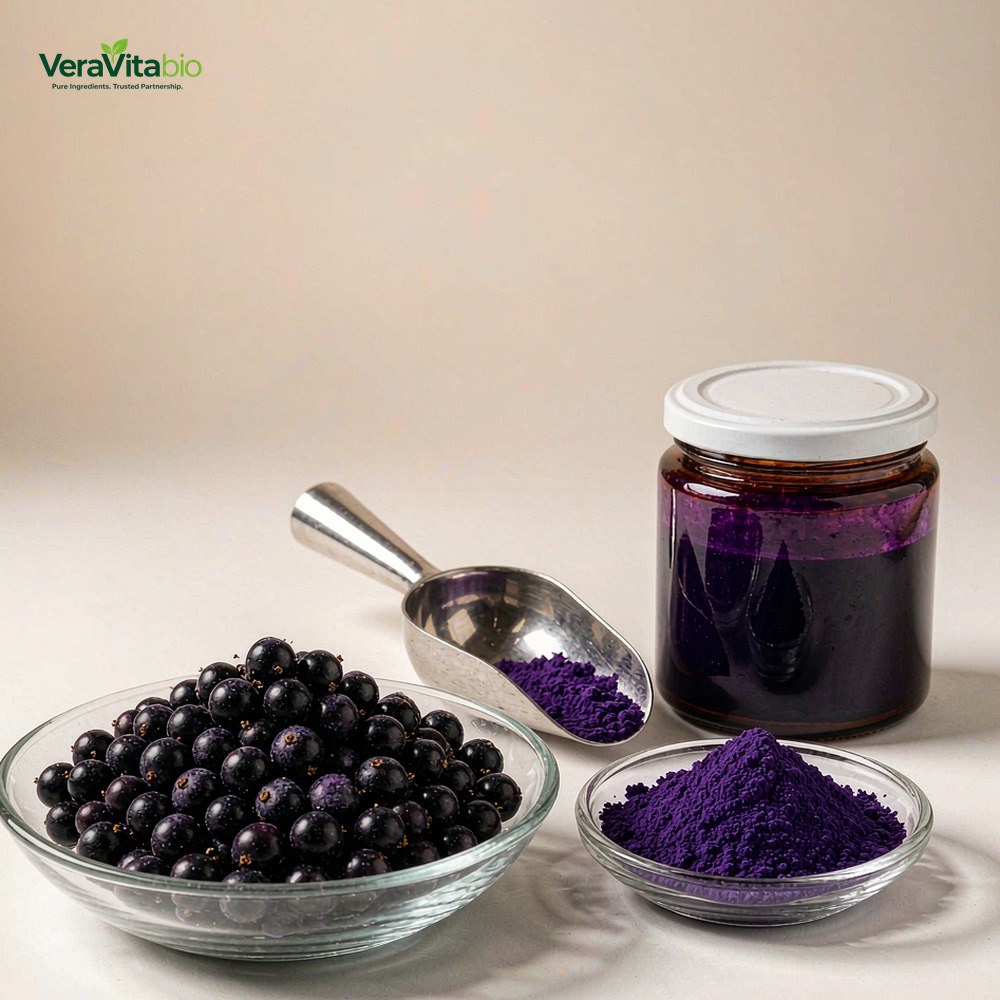
Elderberry is the dark purple-black berry of Sambucus nigra L. (black elder, European elder), a deciduous shrub of the family Adoxaceae that grows across Europe, northwest Africa and western Asia. For centuries the berries and flowers have been a staple of European folk practice — syrups, cordials, jams and hot drinks for the winter season — and since the 1990s the standardized fruit extract has become one of the top-selling immune-category botanicals in the EU and US supplement market, driven by gummies, syrups, lozenges and RTD immunity shots. Commercial raw material comes mainly from the European cultivar ‘Haschberg’ grown in Austria, Hungary, Poland and neighbouring countries; China supplies both cultivated S. nigra and the related native species Sambucus williamsii Hance (the traditional Chinese medicine Jie Gu Mu).
The active profile is built on anthocyanins — predominantly the elderberry-specific cyanidin-3-sambubioside family together with cyanidin-3-glucoside and cyanidin-3,5-diglucoside — supported by flavonol glycosides (quercetin, rutin, isoquercitrin) and chlorogenic/neochlorogenic acids. This gives elderberry two commercial identities at once: an immune-support supplement ingredient, and one of the deepest natural purple-red colours available from a fruit (in the EU it is used as a colouring foodstuff, not an E-number additive). VeraVitabio supplies standardized extracts (anthocyanins by HPLC, ratio grades 4:1 to 20:1) and freeze-dried 100% elderberry juice powder, with per-lot COA, MSDS/SDS and compliance documentation, from evaluation packs to container loads.
Key Features
- The signature elderberry fingerprint — cyanidin-3-sambubioside-5-glucoside and cyanidin-3-sambubioside (CAS 33012-73-6) dominate, with cyanidin-3-glucoside (kuromanin chloride, CAS 7084-71-9) and cyanidin-3,5-diglucoside (cyanin chloride, CAS 2611-67-8) alongside; this exact pattern is what separates genuine elderberry from cheaper anthocyanin sources (see Formulation Notes).
- Specified by HPLC, not just UV-Vis — total anthocyanins are commonly reported by the pH-differential UV method (AOAC 2005.02) as cyanidin-3-glucoside equivalents; we provide the individual anthocyanin HPLC profile per lot so you know what the number is made of.
- Anthocyanins + flavonols + phenolic acids — a fuller polyphenol spectrum than anthocyanin-only materials such as black rice or purple carrot, including quercetin, rutin, isoquercitrin and chlorogenic acid.
- Dual commercial identity — immune-support ingredient and high-impact natural purple-red colour in one material; a genuine “label-friendly” story for clean-formula brands.
- Cyanogenic-glycoside safety controlled — sambunigrin (CAS 99-19-4) is a natural constituent of elder leaves, stems and seeds, not of ripe berry pulp; our process enforces leaf/stem removal and heat treatment of whole-berry material, and supports testing on request (see Formulation Notes).
- Multiple formats — spray-dried extract powders (with or without carrier declared), freeze-dried juice powder, and liquid concentrate grades for beverage and syrup manufacturing.
- Skin-care crossover — used topically under INCI Sambucus Nigra Fruit Extract (and Sambucus Nigra Flower Extract) for antioxidant and soothing/astringent positioning in European-style skincare.
- Strong blend partner — pairs with vitamin C, zinc, echinacea, propolis and ginger in seasonal immune formulas; complements our goji, maqui, acai and camu camu berry powders for superfruit ranges.
- Per-lot contaminant panel — heavy metals, pesticide residues against EU 396/2005, mycotoxins, sulfites and microbiology tested per lot, with results available before shipment.
- Cost-effective supply chain — a commodity-scale European fruit with established Chinese cultivation capacity, which keeps pricing viable for mainstream gummy and syrup volumes.
How It Works
1. The anthocyanin fraction. Elderberry anthocyanins are cyanidin glycosides — an anthocyanidin (cyanidin, CAS aglycone chloride 528-58-5) linked to one or two sugar units, including the sambubiose sugar moiety that gives elderberry its name-marker compounds. In vitro and animal studies report antioxidant activity, inhibition of oxidative-stress markers, effects on inflammatory signalling (NF-κB and related pathways) and antiviral activity against influenza and other respiratory viruses in cell models. Anthocyanins are absorbed to a limited extent and are extensively metabolized by the gut microbiota, so the in-vivo picture is more complex than the in-vitro numbers suggest.
2. What the clinical evidence actually shows. A small number of human trials — mostly on proprietary standardized elderberry preparations — have reported shorter duration and reduced severity of cold- and influenza-like symptoms, including a study of long-haul air travellers. Reviews of the field consistently conclude that the evidence base is promising but limited: small sample sizes, heterogeneous products, and mixed results. The defensible position for your label and marketing is supports seasonal immune health and traditional use — not prevention or treatment of any disease. No major regulator has authorized a disease claim for elderberry, and the US FDA has issued warning letters to companies making treatment claims for elderberry products.
3. A caution-hypothesis to be aware of. During the COVID-19 period, it was proposed — purely as a theoretical concern — that very high-dose elderberry might contribute to excessive cytokine release in late-stage viral illness. This remains a hypothesis from indirect pharmacology, not an established risk, and it has not been demonstrated in humans. Prudent brands simply avoid aggressive late-stage-illness dosing claims and carry standard immune-ingredient cautions.
4. Why the colour is also functional information. The same anthocyanins that carry the bioactives are pH-sensitive colour bodies: bright red-violet at pH < 3.5, shifting toward blue-purple as pH rises, bleached by sulfites, and degraded by prolonged heat, oxygen and light. This behaviour is a quality signal — a vivid, stable colour in your finished product indicates intact anthocyanins — and a formulation constraint you must engineer around.
Typical Applications
- Immune gummies and soft chews — the largest current format in the US and EU; standard grades dissolve into the gummy base and contribute both actives and colour.
- Syrups and honey-based preparations — the classic European format; juice concentrates and ratio extracts both fit, with natural preservative and pH control.
- Lozenges and pastilles — throat-comfort positioning, typically combined with zinc, vitamin C or herbal actives.
- Effervescent tablets, sachets and stick packs — instant powders for the seasonal “first signs of a cold” category; flowability and colour stability matter most here.
- RTD immunity shots and juices — combined with vitamin C, zinc, echinacea, propolis or ginger; low-pH formulations maximise anthocyanin colour brightness.
- Capsules and tablets — standard extracts in seasonal immune and antioxidant complexes.
- Natural colour applications — as a colouring foodstuff in EU terminology, for beverages, confectionery, yoghurt and ice cream where a fruit-derived purple-red is required without an E-number.
- Superfruit and berry-blend SKUs — freeze-dried juice powder for smoothie blends, breakfast bars and superfood mixes alongside our acai, maqui, goji, camu camu and baobab powders.
- Skin care — under INCI Sambucus Nigra Fruit Extract in antioxidant and soothing formulations; the flower extract (Sambucus Nigra Flower Extract) has a longer European cosmetic history.
Key Specifications
| Parameter | Specification |
|---|---|
| Botanical name | Sambucus nigra L. (Adoxaceae; formerly Caprifoliaceae) |
| Related species (do not substitute) | S. nigra subsp. canadensis (American elderberry); S. williamsii Hance (TCM Jie Gu Mu); S. ebulus and S. racemosa are different plants and are not acceptable substitutes |
| Common names | Elderberry, black elder, European elder, European black elderberry, Schwarzer Holunder, sureau noir |
| Part used | Ripe fruit (berries); flowers available separately for Sambuci flos applications |
| Marker compounds | Total anthocyanins as cyanidin-3-glucoside equivalents; cyanidin-3-sambubioside-5-glucoside; cyanidin-3-sambubioside (CAS 33012-73-6); cyanidin-3-glucoside (CAS 7084-71-9, chloride); cyanidin-3,5-diglucoside (CAS 2611-67-8, chloride); cyanidin chloride CAS 528-58-5; quercetin, rutin, chlorogenic acid |
| Standard grades | Ratio extracts 4:1 / 10:1 / 20:1; standardized anthocyanins 5% / 10% / 25% by HPLC (as C3G equivalents); spray-dried juice powder; liquid concentrate 65 °Brix |
| Assay methods | Total anthocyanins by pH-differential UV-Vis (AOAC 2005.02) and individual anthocyanins by HPLC-DAD; both methods stated on the COA |
| Carrier | Declared per grade — carrier-free juice powder (100% berry solids) and maltodextrin-carrier grades available; carrier type and % stated on the COA in writing |
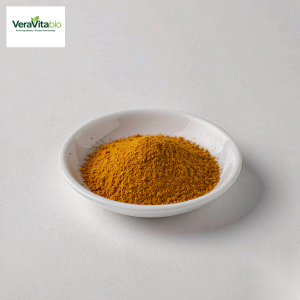
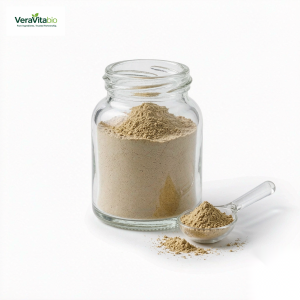
| Appearance | Fine deep purple-violet to purple-brown powder; characteristic fruity aroma |
| Particle size | 95% pass 80 mesh (finer grades available for gummy and suspension systems) |
| Loss on drying | ≤ 5.0% |
| Heavy metals | Pb ≤ 3 ppm, As ≤ 2 ppm, Cd ≤ 1 ppm, Hg ≤ 0.5 ppm (per lot; destination-market limits applied) |
| Pesticide residues | Compliant with EU Regulation 396/2005 MRLs (per lot for cultivated fruit) |
| Sulfites | Not added as preservative; residual SO2 declared per lot (EU >10 mg/kg triggers allergen labelling) |
| Mycotoxins | Aflatoxins and ochratoxin A controlled; patulin screening available for juice grades |
| Microbiology | TAMC ≤ 10,000 cfu/g; TYMC ≤ 100 cfu/g; E. coli absent in 1 g; Salmonella absent in 25 g |
| Identification | HPTLC / HPLC anthocyanin fingerprint per lot; absence of non-elderberry anthocyanin patterns (delphinidin / malvidin / pelargonidin types) verified |
| Regulatory position | EU: elderberry fruit has a documented history of consumption in Europe and is not a Novel-Food-List ingredient in its traditional form; extract/process changes should be confirmed case-by-case (status check or Article 4 consultation). Used as a colouring foodstuff, not an E-number colour. US: dietary ingredient under DSHEA (structure/function claims require notification and disclaimer). INCI: Sambucus Nigra Fruit Extract |
| HS code | 1302 19 (extracts); juice powder may classify under 2009 89 / 2106 90 depending on form — confirm with your customs broker |
| Shelf life | 24 months unopened in original sealed packaging, stored cool, dry and protected from light |
| Packaging | 25 kg fibre drum with double PE liner; 1 kg / 5 kg evaluation packs; full container loads |
| Certifications | HACCP / ISO 9001 manufacturing; HALAL / KOSHER on request; organic (EU / USDA NOP) on request for eligible lots; vegan declaration available |
Formulation Notes
- Adulteration is the defining issue in this category — buy the fingerprint, not the percentage. Elderberry extract is routinely stretched with cheaper anthocyanin sources: black rice, black carrot, purple sweet potato, mulberry, grape skin, hibiscus and aronia. The defence is an HPLC anthocyanin fingerprint, not a bigger total-anthocyanin number. Genuine elderberry shows the cyanidin-3-sambubioside family as major peaks with no delphinidin, malvidin or pelargonidin glycosides (those point to grape, red vegetables or berry blends) and no black-carrot pattern (cyanidin xylosylgalactosides). Require the fingerprint on the lot COA, and run an in-house chromatogram on first orders. A suspiciously cheap “25% anthocyanin elderberry” is almost never elderberry.
- Know exactly what “anthocyanins 25%” was measured against. The pH-differential UV method (AOAC 2005.02) reads total monomeric anthocyanins as cyanidin-3-glucoside equivalents and is rapid but method-sensitive; HPLC gives the individual peaks. Two suppliers’ “25%” values can differ by 20–30% simply from method and standard choice. Specify the method on the contract, and insist the fingerprint accompanies the total.
- Cyanogenic glycosides: get the plant-part story right and put it in writing. The cyanogenic glycoside sambunigrin (CAS 99-19-4; the (S)-prunasin diastereomer, prunasin itself CAS 99-18-3) is present in elder leaves, stems, seeds and unripe berries; the ripe berry pulp and the flowers are essentially free of it. The practical risks are (a) leaf/stem fragments carried into the process by sloppy harvesting, and (b) whole-berry products that include seeds. Both are managed by mechanical de-stemming and leaf removal plus heat treatment, which destroys the cyanogenic potential. Require a written statement of plant-part composition and process heat treatment; hydrogen-cyanide testing is available on request for whole-berry grades. Raw, unheated homemade-style “raw elderberry” claims are a red flag.
- Carrier disclosure decides the real strength per gram. Spray-dried elderberry juice powder commonly carries 20–40% maltodextrin. A “juice powder” with 30% carrier delivers 30% less berry solids — and if a supplier will not state the carrier type and percentage in writing, treat the whole COA as suspect. We declare carrier, percentage and solids origin on every grade.
- Colour is pH chemistry — engineer it, don’t fight it. Anthocyanins are red-violet at pH below about 3.5 and shift blue-purple above it; keep the target formulation acidic. Sulfites bleach anthocyanins — avoid sulfited ingredients in the same formula and check residual SO2 on all downstream inputs. Avoid prolonged holds above ~60 °C, minimize headspace oxygen, and protect from UV in clear packaging. Ascorbic acid can accelerate anthocyanin degradation over shelf life (via peroxide formation) — run accelerated stability on high-vitamin-C combinations rather than assuming compatibility.
- Gummies need dispersibility and water-activity discipline. Fine, agglomerated grades disperse into the gummy base without colour specking; check the effect of the cooking step on colour (anthocyanins are heat-sensitive) and validate colour retention across real shelf life with transparent packaging excluded.
- For beverages, clarify or embrace the haze. Straight juice powders give a natural suspension; clarified grades exist for clear RTD. Anthocyanin colour intensifies with acidity — lemon-berry and raspberry pairings both taste and look correct. Validate pasteurization colour drift on the actual process.
- Sourcing story: know your species and cultivar. The benchmark material is European S. nigra, ‘Haschberg’-type, from Austria/Hungary/Poland. American material is S. nigra subsp. canadensis; Chinese TCM material is S. williamsii — all are real elderberries, but they are not interchangeable with the EU/US consumer expectation, and blends should be declared. S. ebulus (dwarf elder) and S. racemosa (red elder) are different plants with different safety profiles and have no place in an elderberry supply chain.
- Contaminant gates for fruit materials. Berries are exposed to pesticide programmes (EU 396/2005 MRLs per lot), field yeasts and moulds (full micro panel per lot), and mycotoxins in dried fruit fractions (aflatoxins, ochratoxin A; patulin screening for juice grades). Sulfite residues from juice processing must be declared — above 10 mg/kg in the EU they trigger allergen labelling. All of these are per-lot gates on our COA, not annual certificates.
- Regulatory status must be confirmed per market before launch. In the EU, elderberry fruit in its traditional form is treated as a food with a history of consumption rather than an authorised-list item, but extract grades and new processes can change the analysis — obtain a written status check or an Article 4 consultation where the launch is process-dependent, and remember that EU “immune support” claims remain restricted. In the US, elderberry is a dietary ingredient under DSHEA; structure/function claims require notification and the standard disclaimer, and the FDA has actively warning-lettered disease claims for elderberry products. No claims should be made without confirming the destination market’s rules.
- Label cautions for immune-positioning products. Standard cautionary language for pregnancy and lactation, and for customers taking immunosuppressive therapy or with autoimmune conditions, is prudent for any immunomodulatory botanical; given the theoretical late-stage-illness cytokine hypothesis, brands commonly avoid high-dose claims during acute severe illness. Confirm final wording with your regulatory reviewer.
Storage & Handling
Store in the original sealed packaging in a cool (<25 °C), dry, well-ventilated area away from direct sunlight — light and oxygen are the two main enemies of anthocyanin colour and content. Powders are moderately hygroscopic: once opened, reseal immediately with desiccant protection, and use low-WVTR liners for any repacked material. Use FIFO stock rotation and avoid temperature cycling in transit. For colour-critical applications, consider nitrogen-flushed packaging and request a colour-retention re-test before use late in shelf life. Shelf life is 24 months unopened under the stated conditions; re-test anthocyanins, moisture and appearance before use beyond the stated date. Standard dust control applies when decanting kilogram-scale powder: local extraction, gloves, eye protection and a dust mask.
Why Choose VeraVitabio
- Fingerprint-verified authenticity. Every lot ships with the HPLC anthocyanin fingerprint that proves it is genuine elderberry — the single most valuable document in a category where dilution with black rice and black carrot is routine.
- Methods stated, not implied. Total anthocyanins by AOAC 2005.02 pH-differential UV plus individual anthocyanins by HPLC, both named on the COA, so your QC lab compares like with like.
- Safety documentation on the cyanogenic question. Written plant-part composition, de-stemming/leaf-removal and heat-treatment declarations, with HCN testing available on request for whole-berry grades.
- Carrier honesty in writing. Carrier type and percentage declared per grade, including genuinely carrier-free freeze-dried juice powder.
- Full per-lot contaminant panel. Heavy metals, EU 396/2005 pesticides, mycotoxins, sulfites and microbiology on every lot, with results available before you release payment.
- Documentation for regulated markets. MSDS/SDS, allergen, GMO, HALAL/KOSHER and organic (where eligible) statements, vegan declarations, and EU status-support material for Novel Food discussions.
- Trial-to-tonnage formats. 1 kg and 5 kg evaluation packs, 25 kg drums for production, container-load pricing for contract programmes; liquid concentrate grades for syrup and beverage plants.
Request a Quote
Tell us your format (gummy, syrup, lozenge, sachet, beverage or cosmetic), your target anthocyanin specification and assay method, whether you need extract or juice powder — and carrier-free or declared-carrier — plus your annual volume. We will respond with a quotation, the current lot’s COA including the HPLC anthocyanin fingerprint and the full contaminant panel, and a sample lead time, so you can verify authenticity and colour performance in your own laboratory before committing.
Email: info@veravitabio.com | WhatsApp: +86 157 7194 0528
VeraVita Bio — Xi’an VeraVita Biotech Co., Ltd. | Botanical & Functional Ingredient Sourcing Partner
Email: info@veravitabio.com | WhatsApp: +86 157 7194 0528 | veravitabio.com
Disclaimer: The information provided is for general technical and commercial reference only and does not constitute medical, regulatory or legal advice. Research findings cited for elderberry are drawn from in vitro, animal and limited human studies and are not evidence of clinical efficacy; no disease prevention or treatment claims are made or implied. Elderberry extract is a raw material supplied to qualified business customers, not a finished consumer product, and is not intended to diagnose, treat, cure or prevent any disease. Specifications are subject to batch confirmation from the lot COA. Safety, stability, claims substantiation and regulatory compliance of finished formulations remain the responsibility of the manufacturer and must be verified against the regulations of the destination market.
Need pricing, a sample or full documentation?
Send your specification, target volume and destination country — our team replies within one business day.
Reviews
There are no reviews yet.