Product Overview
Squalane is the fully hydrogenated form of squalene, a C30 triterpene hydrocarbon that is one of the principal lipids of human sebum. Hydrogenation saturates the six double bonds of squalene (C30H50, CAS 7683-64-9) to give squalane (C30H62, CAS 111-01-3, EINECS 203-825-6, INCI Squalane), converting an oxidatively fragile molecule into one of the most chemically inert and shelf-stable emollients available to cosmetic and personal-care formulators.
Its commercial position rests on three facts. First, it is biomimetic: squalene accounts for roughly 12–15% of human sebum, and squalane shares the identical branched C30 skeleton, differing only in saturation — which is why it spreads within seconds, absorbs without a heavy film and is tolerated by oily, sensitive and acne-prone skin. Second, it is exceptionally stable: with an iodine value of ≤ 4 g I2/100 g it has essentially nothing left to oxidise, so it does not go rancid, does not yellow, requires no antioxidant or chelator, and survives heating, UV exposure and long warehousing. Third, it is now 100% plant-derived: modern squalane comes from olive or sugarcane, not from shark liver, which is what responsible brands and retailers now require in writing.
VeraVitabio supplies plant-derived squalane from two documented routes — olive-derived (recovered from olive-oil deodoriser distillate, then purified and hydrogenated) and sugarcane-derived (yeast fermentation of sugarcane sugars) — in cosmetic grade 92%, premium 95% and high-purity 99%+ grades, from 1 kg evaluation packs to 180 kg drums and full container loads.
Key Features
- Oxidatively inert saturated hydrocarbon — iodine value ≤ 4 g I2/100 g, peroxide value ≤ 5 meq/kg: no rancidity, no colour drift, no antioxidant required, multi-year shelf stability.
- Sebum-identical C30 structure — the same branched skeleton as a major sebum lipid, giving immediate skin affinity, light non-occlusive feel and excellent tolerance across skin types.
- Very high spreading value, dry silky afterfeel — low viscosity (~30 mPa·s at 25 °C) and low surface tension give rapid, uniform coverage without greasiness; the standard natural answer to cyclomethicone and light dimethicone.
- Two purity tiers — cosmetic grade ≥ 92% for emulsions, oils and haircare; high-purity ≥ 95% / ≥ 99% for clear serums, pharma/topical vehicles and applications demanding the lowest odour and colour.
- Chemically compatible with everything — no ester bond, no hydrolysis, no reactivity with acids, bases, salts or oxidising actives; stable across the full cosmetic pH range and heat-stable to normal emulsion processing temperatures.
- Outstanding pigment and UV-filter vehicle — improves dispersion of zinc oxide and titanium dioxide, reduces whitening and raises the uniformity of the film in mineral sunscreens, foundations and concealers.
- Ideal carrier for anhydrous actives — water-free and non-reactive, it is the preferred vehicle for L-ascorbic acid suspensions, retinol oils and water-sensitive actives.
- 100% shark-free, vegan and animal-free — written origin declaration provided with every lot; REACH registered and listed on China’s IECIC inventory of existing cosmetic ingredients.
- No silicone-style build-up — removed by ordinary cleansing, unlike non-volatile dimethicone, making it suitable for daily-use hair and scalp products.
How It Works
1. Biomimetic affinity. Human sebaceous glands secrete squalene as a major component of sebum (commonly cited in the 12–15% range). Squalane keeps the same branched 2,6,10,15,19,23-hexamethyltetracosane skeleton, so it is recognised and spread by the skin’s own lipid film: it lays down as a thin, uniform lubricating layer that reduces transepidermal water loss and restores suppleness without the occlusive, “heavy” film of many triglycerides and butters. This is the mechanistic basis of its light sensory profile and its acceptance in oily and blemish-prone formulations.
2. Saturation is the whole point. Squalene’s six double bonds oxidise readily into peroxides and aldehydes — that oxidation is what historically produced rancid odour, yellowing and the comedogenicity attributed to old “squalene” oils. Complete hydrogenation removes every double bond, so there is no peroxidation chain to propagate. Practically: the material needs no tocopherol or chelator, tolerates heating to normal processing temperatures, does not degrade under UV exposure in pack, and holds specification for years rather than months.
3. Physical performance. Squalane combines unusually low viscosity (~30 mPa·s) with low surface tension (~28–30 mN/m), which translates into a very high spreading value: a given dose covers more surface, more evenly, than heavier emollients of similar molecular weight. In sunscreens and colour cosmetics this uniformity is what reduces the perceived whitening of mineral filters and improves pigment wetting; in haircare it delivers slip and shine without a residual coating, because the molecule is a pure hydrocarbon that rinses out with normal shampooing.
Typical Applications
- Facial oils and serums — the core use: 20–60% in blended facial oils, up to 100% as a single-ingredient “squalane oil”.
- Moisturisers, creams and lotions — 2–10% in O/W or W/O emulsions for light afterfeel, spreadability and barrier support; combine with butters or waxes for body and structure at higher oil loads.
- Anhydrous active systems — 30–60% as the carrier for L-ascorbic acid suspensions (typically 10–20% vitamin C), retinol oils and other water-sensitive actives, where its inertness and zero water content protect the active.
- Sun care — 3–10% as the dispersion vehicle for ZnO / TiO2 in mineral SPF creams, sticks and fluid sunscreens.
- Colour cosmetics — 5–25% in lipsticks, lip balms, foundations, concealers and cream blush for pigment wetting, glide and shine.
- Hair and scalp care — 30–80% in hair oils, 10–40% in shine and split-end serums, 1–3% in leave-in conditioners and scalp treatments; gives slip without silicone build-up.
- Sensitive, baby and after-sun care — low comedogenicity and high purity make it a default base for minimalist, fragrance-free and baby ranges.
- Pharmaceutical and topical (high-purity grade) — ointment and suppository vehicle, solubilising excipient and penetration-modifying component in topical drug-delivery systems.
Key Specifications
| Parameter | Specification |
|---|---|
| INCI / Chemical name | Squalane; 2,6,10,15,19,23-hexamethyltetracosane; CAS 111-01-3; EINECS 203-825-6 |
| Molecular formula / weight | C30H62 / approx. 422.8 g/mol (squalene precursor C30H50, CAS 7683-64-9) |
| Origin | Plant-derived: olive (from olive-oil deodoriser distillate) or sugarcane (yeast fermentation). 100% shark-free, animal-free, vegan |
| Assay (purity, GC) | Cosmetic grade ≥ 92.0%; premium ≥ 95.0%; high-purity ≥ 99.0% |
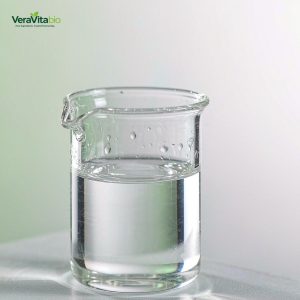
| Appearance | Clear, colourless, odourless oily liquid; free of visible particles |
| Iodine value | ≤ 4.0 g I2/100 g (residual unsaturation — the key stability indicator) |
| Peroxide value | ≤ 5.0 meq/kg |
| Acid value | ≤ 0.5 mg KOH/g |
| Saponification value | ≤ 1.0 mg KOH/g |
| Refractive index (20 °C) | 1.4520–1.4560 |
| Density (20 °C) | 0.810–0.820 g/cm³ |
| Viscosity (25 °C) | approx. 25–35 mPa·s |
| Surface tension (20 °C) | approx. 28–30 mN/m |
| Cold behaviour | Pour point below −30 °C; wax-free premium grades remain clear (no clouding) after 24 h at 5 °C |
| Flash point | ≥ 200 °C (open cup) |
| Heavy metals | Pb ≤ 10 ppm; As ≤ 2 ppm; Cd ≤ 1 ppm; Hg ≤ 1 ppm (typical cosmetic-raw-material limits) |
| Microbiology | Total plate count ≤ 100 cfu/g; yeast & mould ≤ 10 cfu/g; pathogens absent |
| Solubility | Miscible with mineral oil, silicones, esters and vegetable oils; insoluble in water and ethanol |
| Regulatory references | EU CosIng listed, no use restriction; REACH registered; listed on China IECIC (Inventory of Existing Cosmetic Ingredients); CIR has assessed squalane and squalene as safe as used in cosmetics |
| Shelf life | 24 months in unopened original packaging (nitrogen-headed for high-purity grade) |
| Packaging | 1 kg and 5 kg aluminium bottles / HDPE jerrycans; 20 kg and 180 kg lined steel or PE drums |
| Certifications | ISO 9001 / HACCP / HALAL / KOSHER; written shark-free and non-animal origin declaration; route-specific COSMOS / ECOCERT documentation available on request |
Formulation Notes
- Buy on iodine value and peroxide value, not on the purity headline alone. A “92% squalane” that still carries significant unhydrogenated squalene will generate peroxides in pack, producing odour, yellowing and the comedogenicity that gave the old material its bad reputation. Require iodine value ≤ 4 and peroxide value on the COA, and re-test odour and colour after 3–6 months of accelerated storage before approving a new source.
- Choose the route for the story and the certification, not only for price. Olive-derived squalane is recovered from olive-oil deodoriser distillate — an upcycled by-product with a strong Mediterranean origin story — but its availability and price move with the olive harvest. Sugarcane-derived squalane comes from controlled yeast fermentation: fully traceable, batch-consistent and independent of agricultural cycles, usually at a premium. Note that some fermentation routes use engineered yeast strains, which affects COSMOS / NATRUE acceptance — confirm the certificate against the customer’s standard before you promise “certifiable natural”.
- Ask for a cold test. Residual long-chain saturated hydrocarbons and waxes inherited from olive distillate make lower grades haze or partially solidify in the cold chain. For clear bottles, clear serums and winter distribution, specify a wax-free / winterised grade and require a stated cloud point or a 24 h hold at 5 °C with no clouding.
- Identity checks are fast and cheap. Refractive index 1.452–1.456 and density 0.810–0.820 g/cm³ immediately expose most dilution; a GC fingerprint centred on the C30 peak is definitive. Material offered well below market is typically cut with mineral oil, isododecane or caprylic/capric triglyceride, all of which shift these values.
- Do not confuse squalane with squalene. They are different molecules with different CAS numbers and different handling. Squalene (C30H50, CAS 7683-64-9) is unsaturated: it is used as an oral supplement and as the oil phase of vaccine adjuvant emulsions, and it requires antioxidants and an inert headspace. Squalane is the saturated cosmetic emollient described here and needs none of that.
- Silicone replacement: mind the volatility difference. Squalane is the default natural substitute for light dimethicone and for cyclomethicone, whose use has been progressively restricted in the EU. But squalane is non-volatile — it does not evaporate. If the formula relies on cyclomethicone’s flash-off dry-down, pair squalane with a volatile natural alkane or a light ester rather than expecting a one-to-one swap.
- Watch emulsion body at high oil loads. Because squalane is very low in viscosity, pushing it above roughly 15% of an O/W cream can thin the system and reduce cream body. Balance it with butters, fatty alcohols or waxes where a rich texture is required.
- Processing is forgiving. Squalane has no ester bond and no unsaturation, so it can be added to the oil phase at normal emulsion temperatures (up to about 80 °C) or post-emulsification in cold-process systems, and it is compatible with anionic, cationic and nonionic surfactant systems alike.
- Origin documentation is a sales requirement, not a formality. Shark-derived squalene is the single most-asked question in this category. Supply a written “no shark, no animal origin” declaration with the lot, plus vegan and, where relevant, HALAL / KOSHER statements.
Storage & Handling
Store in tightly closed containers in a cool, dry, well-ventilated area away from direct sunlight and heat sources. Although squalane is far more oxidation-resistant than unsaturated oils, keep headspace to a minimum and reseal promptly after sampling; for the 99% high-purity grade, nitrogen blanketing of partially filled drums is recommended. Suitable packaging is HDPE, PP, lined steel and glass; verify compatibility with rubber gaskets and elastomeric seals in pump and valve assemblies, as with any light hydrocarbon oil. Shelf life is 24 months in unopened original packaging; retest appearance, iodine value and peroxide value before use beyond that date. Standard industrial hygiene applies: gloves and eye protection, and absorbent containment for spills.
Why Choose VeraVitabio
- Both routes, one supplier. Olive-derived and sugarcane-derived squalane can be quoted side by side, so you can match the origin story, certification requirement and budget of each product line without changing vendors.
- Stability data stated up front. Every quotation carries purity, iodine value, peroxide value, refractive index and density — the five numbers that actually predict how the material will behave in your pack.
- Batch documentation as default. Full COA, MSDS, allergen statement, shark-free / non-animal origin declaration, and HALAL / KOSHER certificates; route-specific COSMOS / ECOCERT evidence supplied where the customer’s standard requires it.
- Grade breadth from trial to tonnage. 92% cosmetic and 95% / 99% high-purity grades in 1 kg and 5 kg evaluation packs, scaling to 20 kg and 180 kg drums and container-load volumes at production pricing.
- Cold-chain-aware supply. Wax-free / winterised grades specified and verified for clear formulations and winter distribution, avoiding the haze complaints that follow a supplier switch.
- Practical formulation support. Guidance on silicone replacement strategies, pigment and mineral-filter dispersion, anhydrous vitamin C systems and use levels — provided during evaluation, not after the order.
Request a Quote
Tell us the grade you need (cosmetic 92%, premium 95% or high-purity 99%+), the origin route (olive or sugarcane), your application and annual volume, and we will respond with a quotation, current COA and sample lead time. Evaluation packs are dispatched quickly so you can validate sensory, clarity and stability in your own formulation.
Email: info@veravitabio.com | WhatsApp: +86 157 7194 0528
VeraVita Bio — Xi’an VeraVita Biotech Co., Ltd. | Botanical & Functional Ingredient Sourcing Partner
Email: info@veravitabio.com | WhatsApp: +86 157 7194 0528 | veravitabio.com
Disclaimer: The information provided is for general technical and commercial reference only and does not constitute medical, regulatory or legal advice. Squalane is a bulk raw material supplied to qualified business customers, not a finished consumer product. Specifications are subject to batch confirmation. Use levels, purity criteria, origin documentation and cosmetic-regulatory status must be verified against the regulations of the destination market, and finished-product safety, labelling and claims remain the responsibility of the manufacturer.
Need pricing, a sample or full documentation?
Send your specification, target volume and destination country — our team replies within one business day.
Reviews
There are no reviews yet.